Top 10 Canny Alternatives in 2026 (Compared)

Ruben Buijs
13 min read · Updated on Feb 10, 2026 · Written on Mar 11, 2024
13 min read · Updated on Feb 10, 2026 · Written on Mar 11, 2024
| Canny | #1 Productboard | #2 ProductLift | |
|---|---|---|---|
| Starting Price | Free | Free | $14/mo |
| Best For | GitHub/Intercom Users | Customer Insights | Workflow Flexibility |
| G2 Rating | 4.6/5 | 4.3/5 | 4.8/5 |
| Free Trial | Free plan | Free plan | 14 days |
Looking for Canny alternatives? If you need enterprise-grade features, Productboard and Aha! are established players. For a free option, try Fider (open-source, self-hosted). For teams wanting affordable feedback without tracked-user pricing, ProductLift offers everything at $14/month per admin.
Canny built a genuinely good product, but their pricing model has become a point of friction for growing companies. The free tier caps at just 25 tracked users, and once you outgrow it, you jump to $19/mo (Core) or $79/mo (Pro) for PM integrations. Features like SSO and CRM require custom Business pricing.
If you're under 25 users and plan to stay small, Canny works fine. For everyone else, alternatives offer flat pricing with more features included.
In May 2025, Canny changed their pricing model. The headline prices look cheap, but they scale with tracked users:
| Tracked Users | Core (annual) | Pro (annual) |
|---|---|---|
| 25 | Free | Free |
| 100 | $19/mo | $79/mo |
| 200 | $49/mo | $129/mo |
| 300 | $75/mo | $179/mo |
| 700 | $175/mo | $379/mo |
| 1,250 | $275/mo | $579/mo |
| 2,500 | $399/mo | $829/mo |
The $19/mo and $79/mo advertised on Canny's pricing page are the starting prices for ~100 tracked users. A growing SaaS with 700 users pays $175-379/mo. At 1,250 users, you're looking at $275-579/mo.
Cost comparison with alternatives:
| Tool | 100 Users | 700 Users | 1,250 Users |
|---|---|---|---|
| Canny (Pro) | $79/mo | $379/mo | $579/mo |
| Canny (Core) | $19/mo | $175/mo | $275/mo |
| ProductLift (3 admins) | $42/mo | $42/mo | $42/mo |
| Featurebase | $49/mo | $49/mo | $49/mo |
| Fider | Free | Free | Free |
With ProductLift at $14/mo per admin, a 3-person team pays $42/mo regardless of tracked users, compared to $379/mo for Canny Pro at 700 users. That's a 9x price difference.
Beyond pricing, several gaps push teams to look elsewhere:
Limited workflow flexibility. Canny gives you fixed statuses and a rigid board structure. If your process doesn't fit their template, you're stuck. Alternatives like ProductLift let you create unlimited columns, custom statuses, and tab configurations that match your actual workflow, whether that's a simple 3-column board or a 12-stage enterprise process.
Limited localization. Canny recently added auto-translation via Google Translate, but the interface and admin dashboard remain English-only. Auto-translate can work for basic use cases, but it's not the same as native multi-language support with proper translations. Automated translations can miss context or sound awkward to native speakers.
No knowledge base. Modern product teams want feedback and documentation in one place. With Canny, you need a separate tool for help docs, which means another subscription, another login, and fragmented customer experience.
No prioritization frameworks. Voting counts are a popularity contest, not a prioritization strategy. Without built-in RICE, ICE, or MoSCoW scoring, you're left exporting data to spreadsheets to make actual decisions.
No revenue integration. A vote from a $10/month customer shouldn't carry the same weight as a vote from a $10,000/month enterprise account. Canny can't connect to Stripe to show you which feedback comes from your most valuable customers.
Limited white-labeling. Even on expensive plans, Canny branding can persist. If you want your feedback portal to look like part of your product, you need full custom CSS, themes, and domain support.
Real feedback from users:
Real feedback from G2 reviews and Reddit:
"Outgrew Canny's 25-user free plan and the jump to $79/mo Pro felt steep for what you get"
"I've been requesting localization for 9 years. Still English-only in 2026"
"Tried to cancel but can't do it self-service - had to email support"
"On Pro at $79/mo I still have 'Powered by Canny' branding on my site"
| Tool | G2 Rating | Best For |
|---|---|---|
| ProductLift | 5.0 | Workflow Flexibility |
| Nolt | 5.0 | Clean & Simple |
| Frill | 4.8 | Dev Integration |
| Sleekplan | 4.8 | Budget-Friendly |
| Featurebase | 4.8 | Canny Migration |
| Canny | 4.6 | GitHub/Intercom Users |
| Upvoty | 4.5 | Simple Voting |
| UserVoice | 4.5 | Enterprise |
| Productboard | 4.3 | Customer Insights |
| Aha! | 4.3 | Strategic Planning |
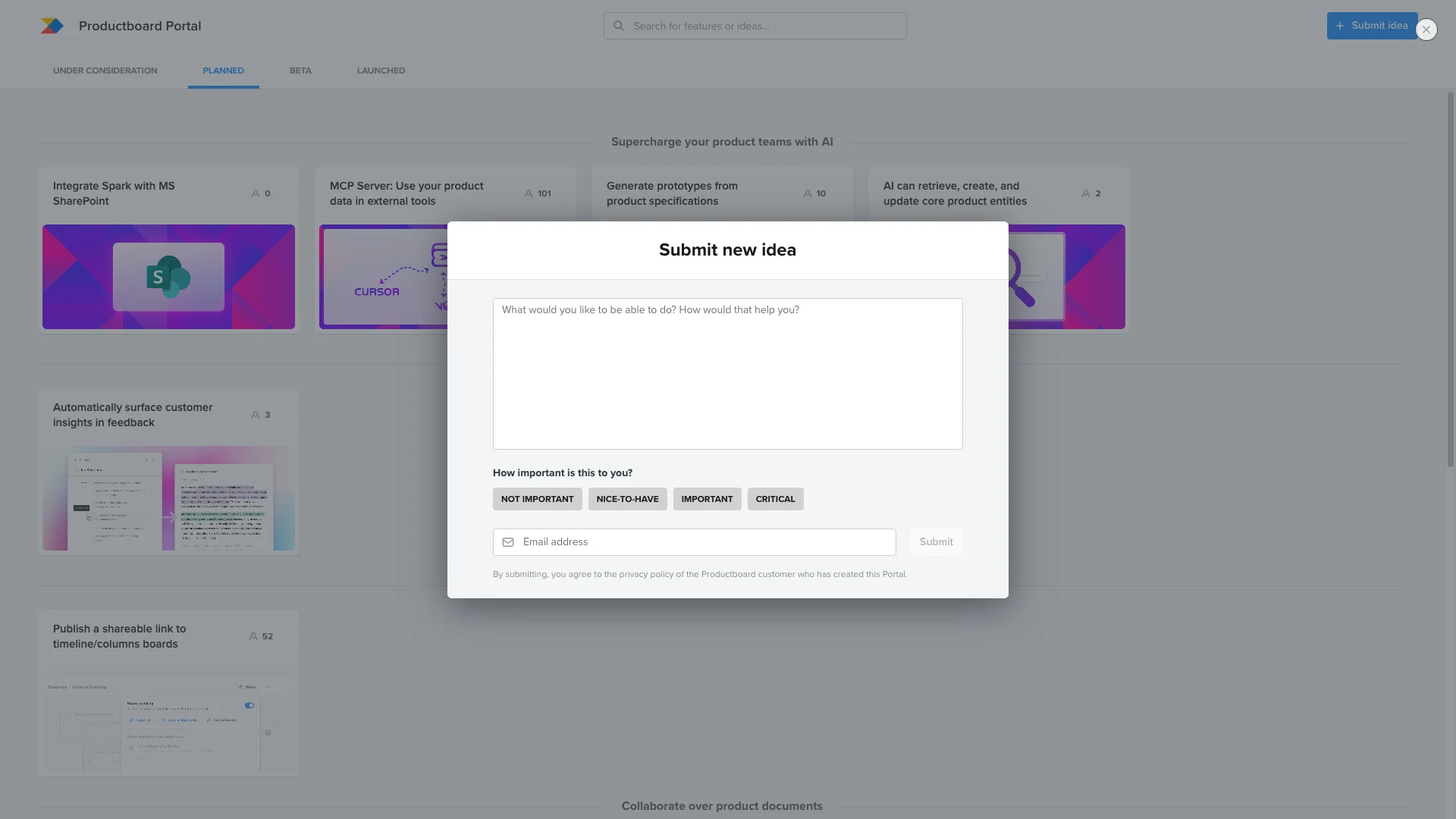
What it does: Productboard is a product management platform focused on customer insights and prioritization. It offers a free Starter tier and paid plans from $19 to $59 per maker/month (annual). Enterprise requires contacting sales.
Best for: Customer Insights
Pricing: Free plan available
Free trial: Free plan
| Product | G2 | Capterra | Trustpilot |
|---|---|---|---|
| Canny | 4.6/5 | 4.7/5 | 3.1/5 |
| Productboard | 4.3/5 | 4.7/5 | 3.2/5 |
Productboard was awarded G2 Leader 2025
Read more: 12 Productboard Alternatives
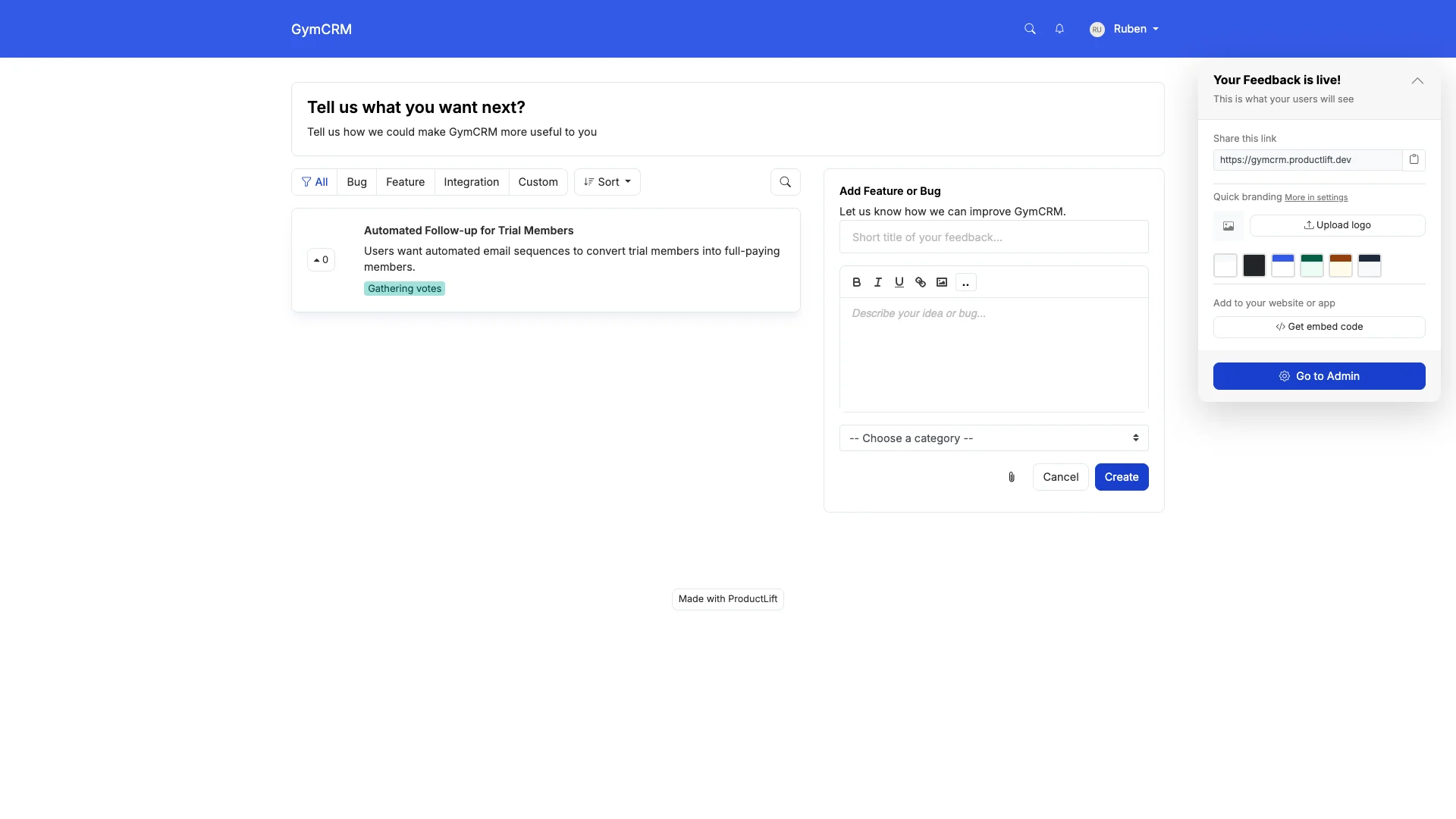
What it does: ProductLift is the most flexible feedback platform. You design the workflow, not them. Unlimited columns, custom statuses, and tab configurations. Feedback boards, roadmap, changelog, and knowledge base replace 4 separate tools. Full white-label, 22 languages, flat $14/mo pricing. EU-based, GDPR compliant.
Best for: Workflow Flexibility
Pricing: Starting at $14/mo
Free trial: 14 days
| Product | G2 | Capterra | Trustpilot |
|---|---|---|---|
| Canny | 4.6/5 | 4.7/5 | 3.1/5 |
| ProductLift | 4.8/5 | 4.9/5 | 4.6/5 |
ProductLift was awarded G2 - High Performer Winter 2026
Read more: 10 ProductLift Alternatives
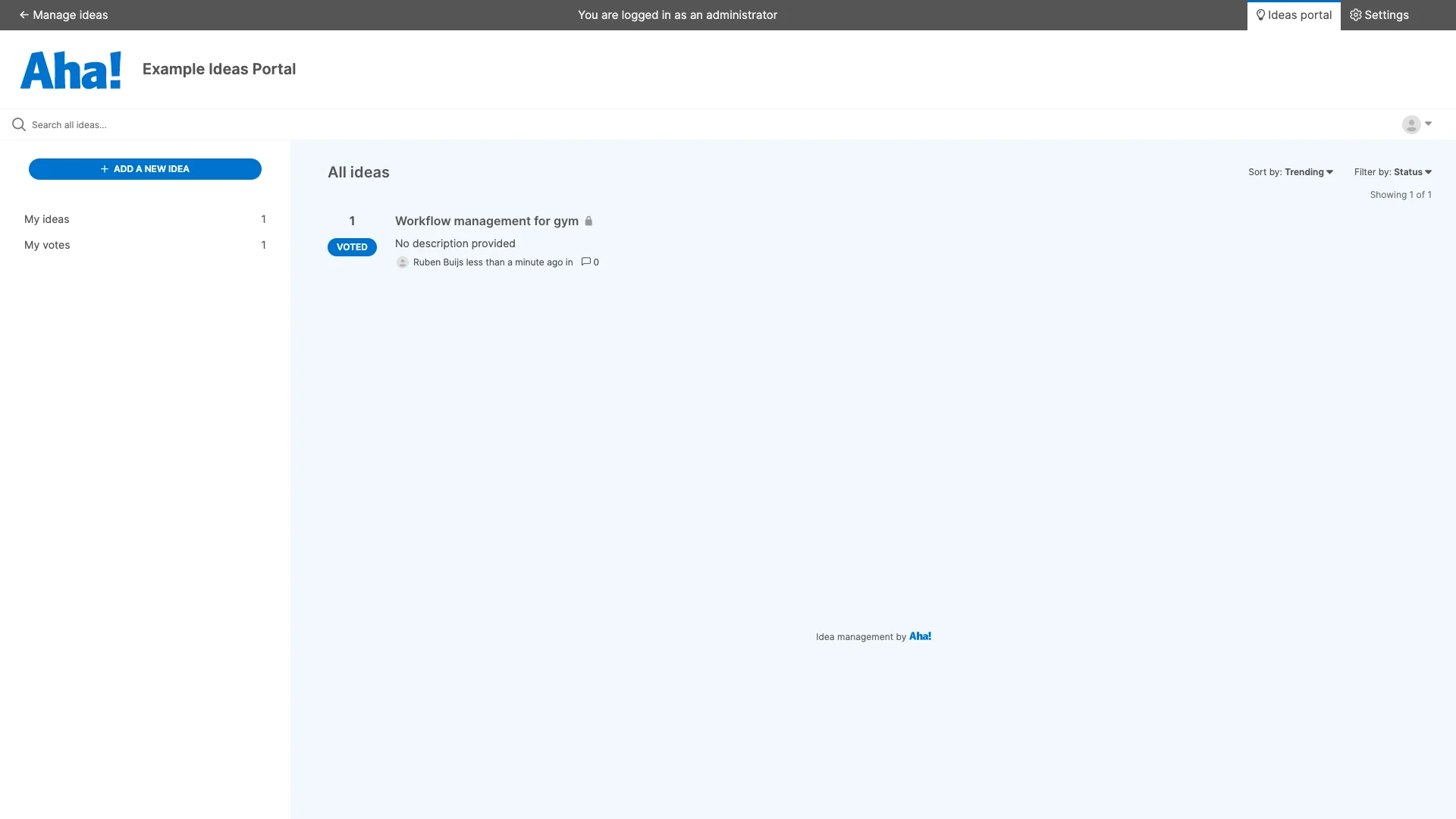
What it does: Aha! is a comprehensive product management suite that includes roadmapping, idea management, and strategic planning. Roadmaps starts at $59/user/month and now bundles Ideas Essentials, Whiteboards, and Knowledge. Aha! Discovery (customer interviews) is $39/user/month separately.
Best for: Strategic Planning
Pricing: Starting at $39/mo
Free trial: 30 days
| Product | G2 | Capterra | Trustpilot |
|---|---|---|---|
| Canny | 4.6/5 | 4.7/5 | 3.1/5 |
| Aha! | 4.3/5 | 4.7/5 | N/A |
Read more: 12 Aha! Alternatives
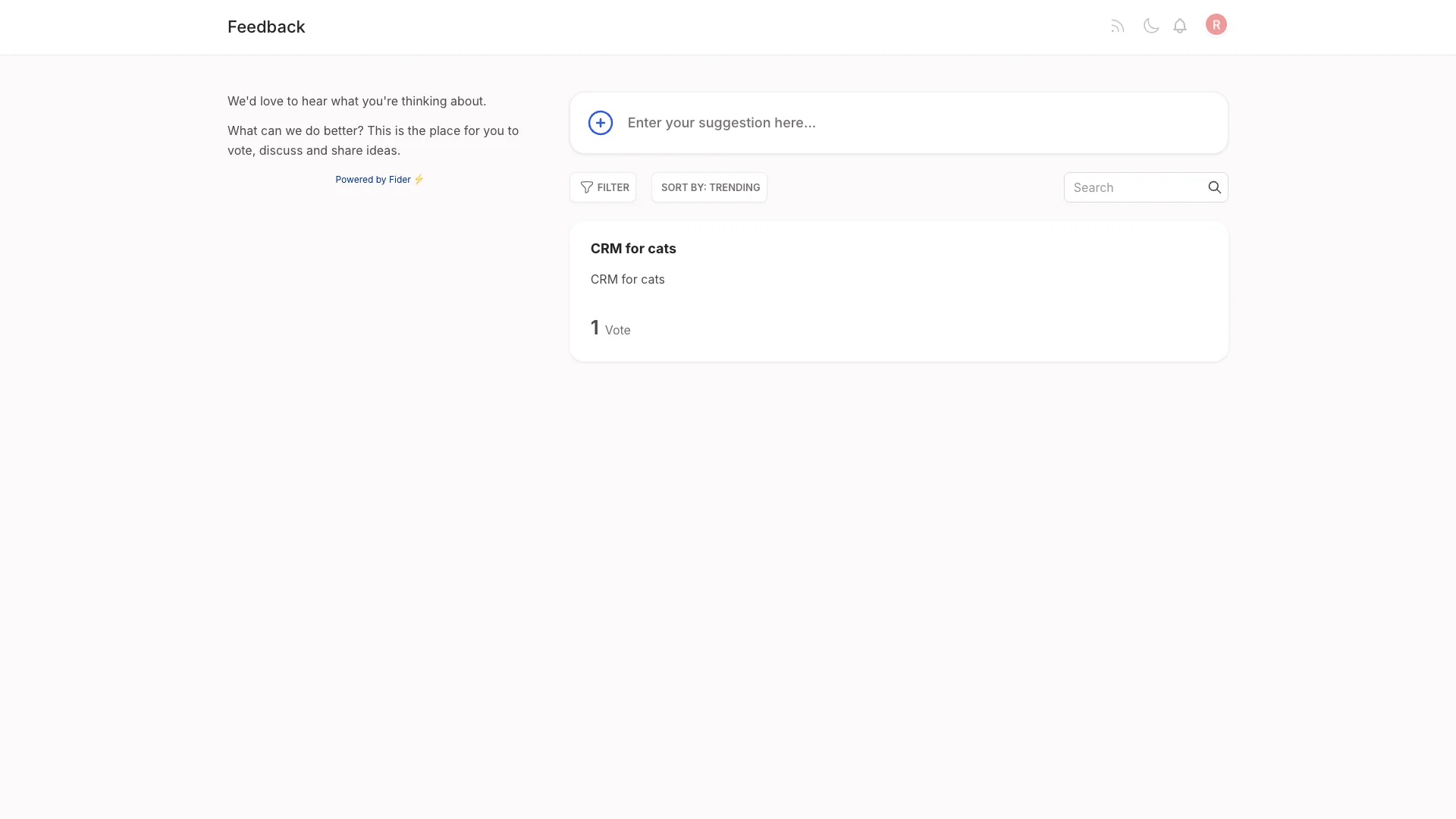
What it does: Fider is a free, open-source feedback platform you can self-host. Perfect for technical teams who want full control and no recurring costs. Lacks advanced features like AI, integrations, and analytics.
Best for: Self-Hosted/Free
Pricing: Free plan available
Free trial: Free (Open Source)
| Product | G2 | Capterra | Trustpilot |
|---|---|---|---|
| Canny | 4.6/5 | 4.7/5 | 3.1/5 |
| Fider | N/A | N/A | N/A |
Read more: 6 Fider Alternatives
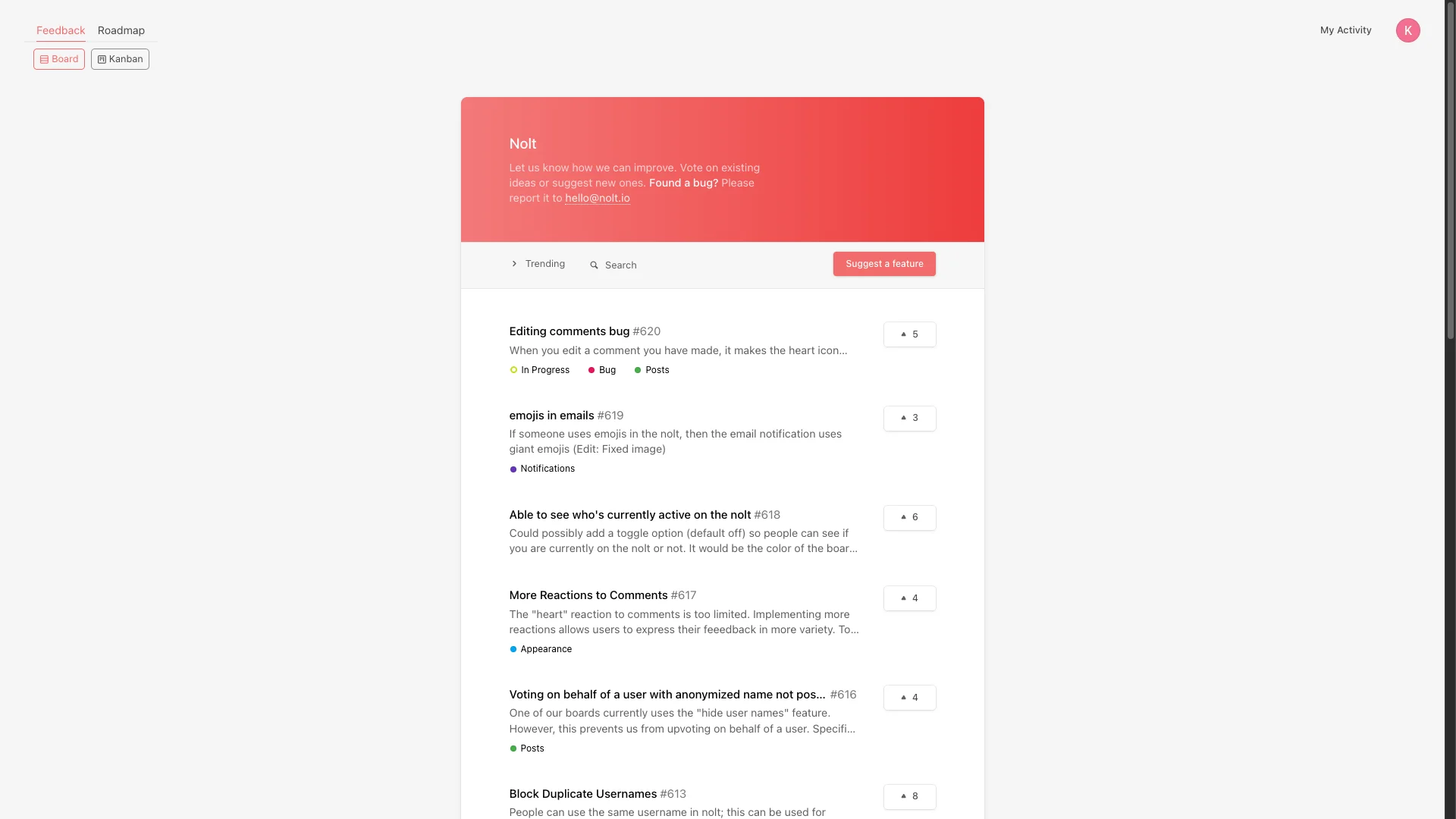
What it does: Nolt is a beautifully designed feedback platform with a perfect 5.0 G2 rating. It's known for its clean UI and simplicity but lacks API access, AI features, and Jira integration. English-only.
Best for: Clean & Simple
Pricing: Starting at $25/mo
Free trial: 10 days
| Product | G2 | Capterra | Trustpilot |
|---|---|---|---|
| Canny | 4.6/5 | 4.7/5 | 3.1/5 |
| Nolt | 5/5 | 4.9/5 | N/A |
Read more: 6 Nolt Alternatives
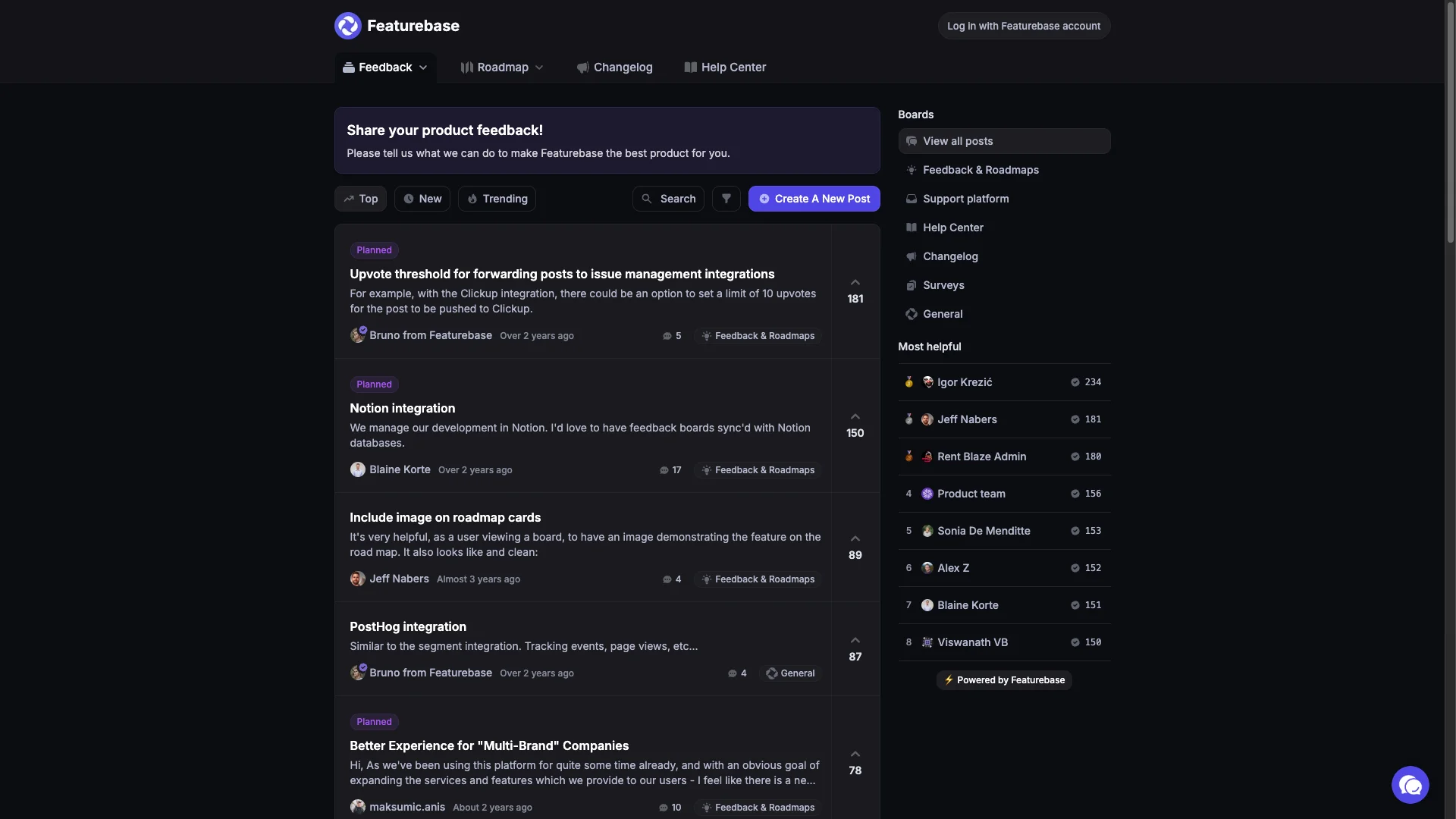
What it does: Featurebase positions itself as a direct Canny alternative, offering similar features at $49/mo with free migration from Canny. It includes feedback boards, roadmap, changelog, and AI duplicate detection.
Best for: Canny Migration
Pricing: Free plan available
Free trial: Free plan
| Product | G2 | Capterra | Trustpilot |
|---|---|---|---|
| Canny | 4.6/5 | 4.7/5 | 3.1/5 |
| Featurebase | 4.8/5 | N/A | N/A |
Read more: 10 Featurebase Alternatives
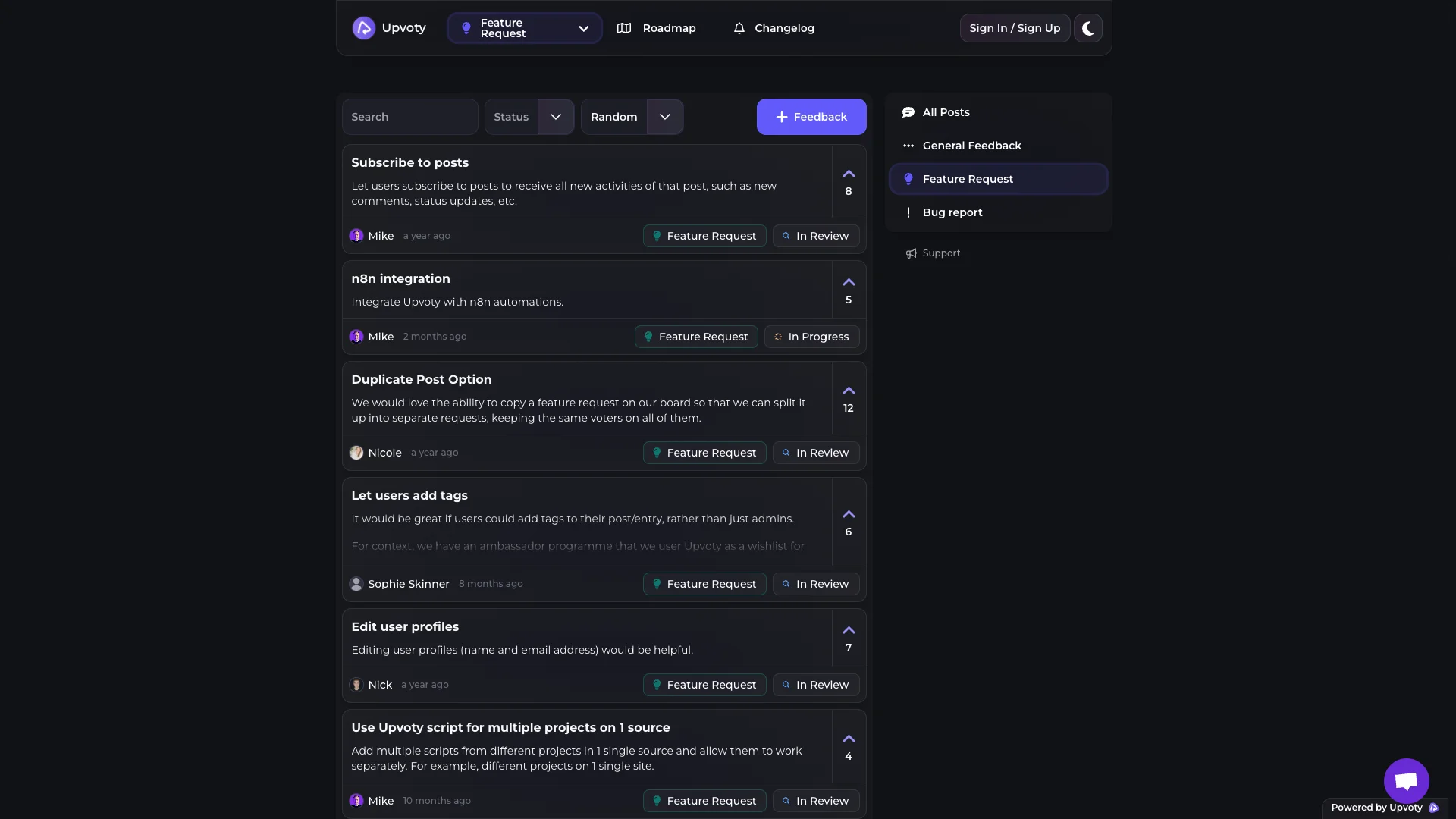
What it does: Upvoty is a simple, affordable feedback tool at $15/mo that supports anonymous voting. It's great for basic voting boards but lacks AI features, prioritization frameworks, and a knowledge base.
Best for: Simple Voting
Pricing: Starting at $15/mo
Free trial: 14 days
| Product | G2 | Capterra | Trustpilot |
|---|---|---|---|
| Canny | 4.6/5 | 4.7/5 | 3.1/5 |
| Upvoty | 4.5/5 | 5/5 | N/A |
Read more: 10 Upvoty Alternatives
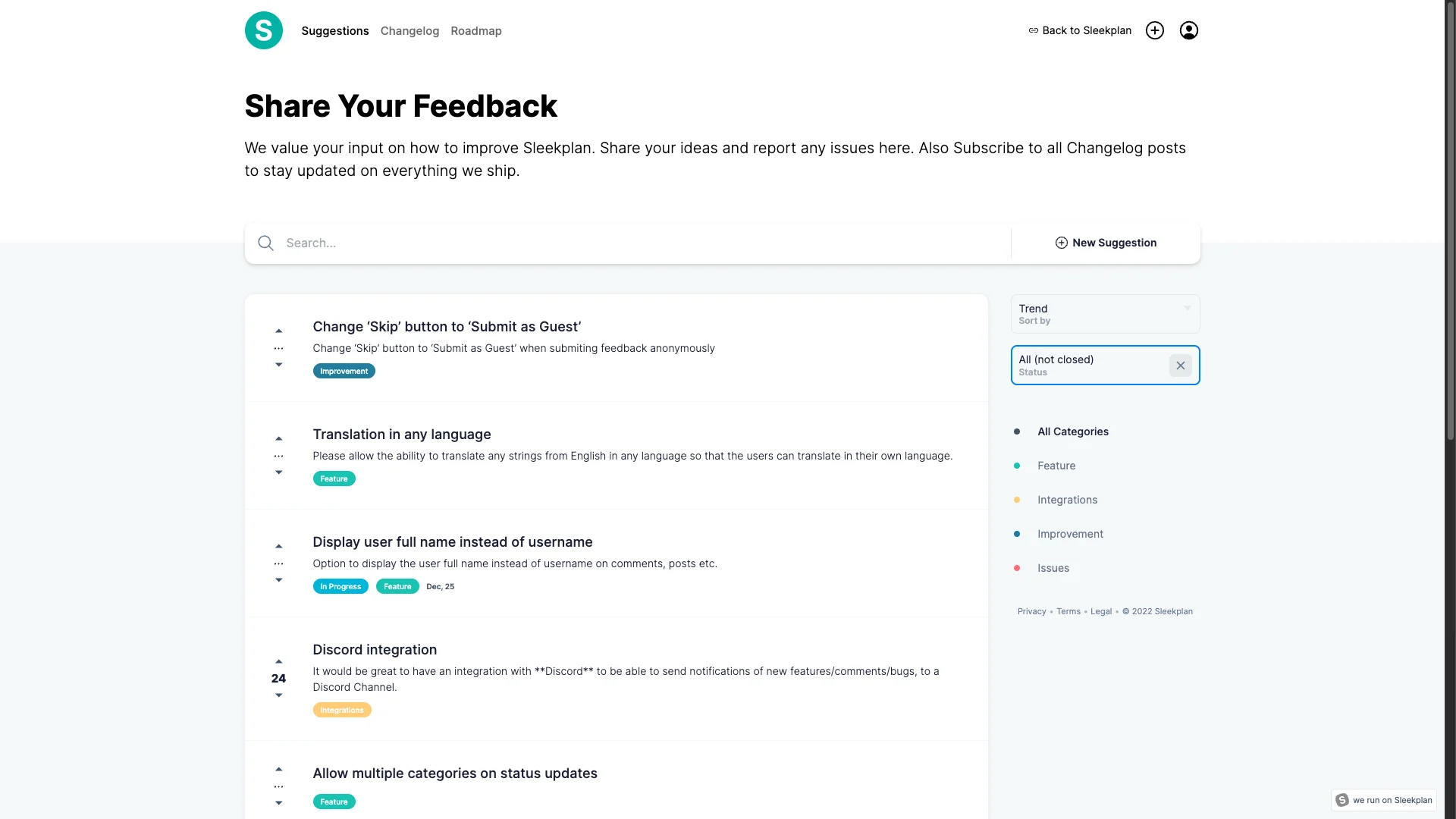
What it does: Sleekplan is a budget-friendly feedback platform at $15/mo that uniquely includes built-in NPS and CSAT surveys. It offers a 30-day trial but lacks private boards, anonymous voting, and AI features.
Best for: Budget-Friendly
Pricing: Starting at $15/mo
Free trial: 30 days
| Product | G2 | Capterra | Trustpilot |
|---|---|---|---|
| Canny | 4.6/5 | 4.7/5 | 3.1/5 |
| Sleekplan | 4.8/5 | 5/5 | 4/5 |
Read more: 10 Sleekplan Alternatives
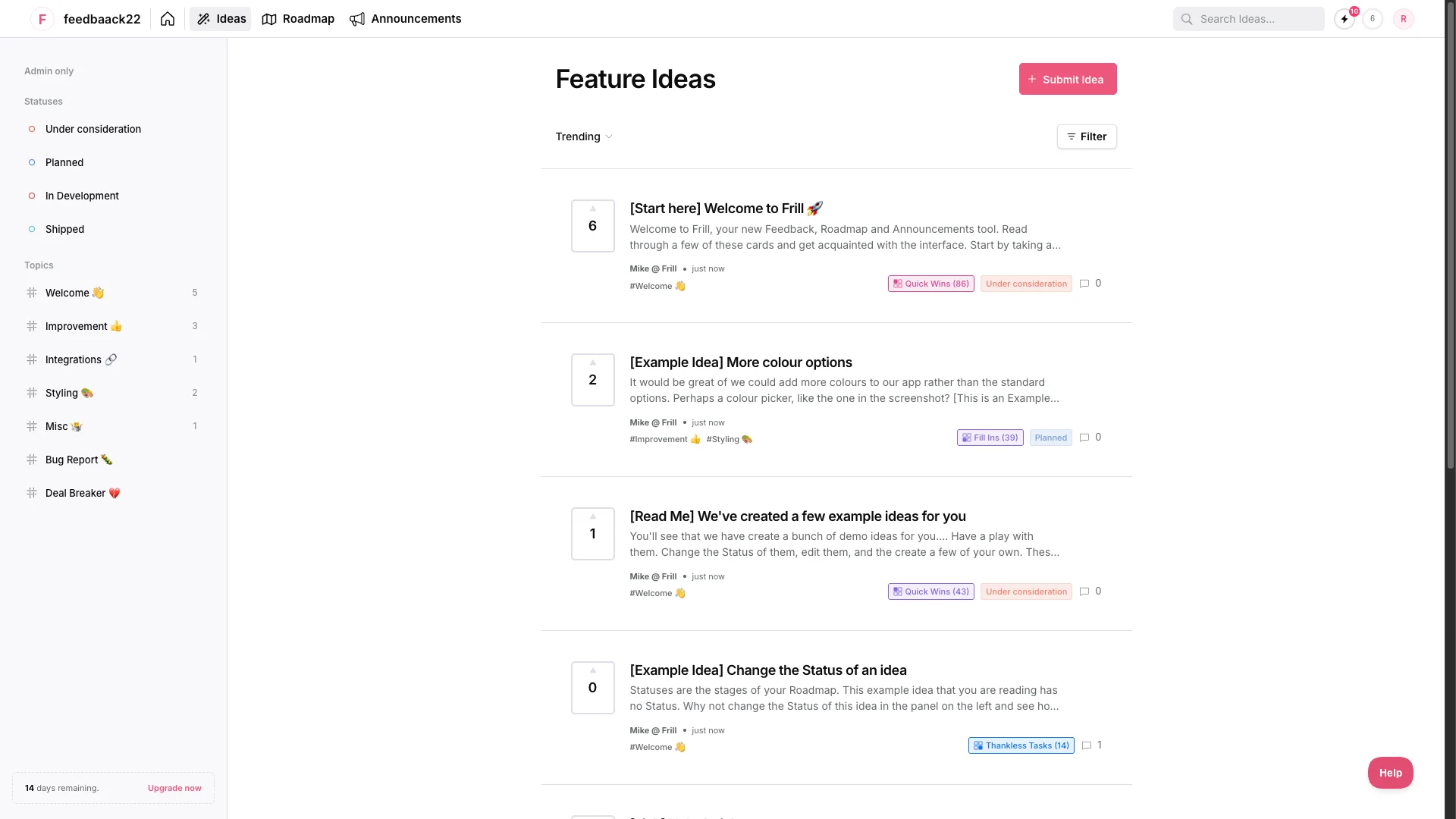
What it does: Frill is a developer-friendly feedback platform with strong GitHub and Jira integrations plus AI features. At $25/mo it offers prioritization scoring but lacks internal comments, knowledge base, and multi-language support.
Best for: Dev Integration
Pricing: Starting at $25/mo
Free trial: 14 days
| Product | G2 | Capterra | Trustpilot |
|---|---|---|---|
| Canny | 4.6/5 | 4.7/5 | 3.1/5 |
| Frill | 4.8/5 | 4.7/5 | 4.6/5 |
Read more: 10 Frill Alternatives
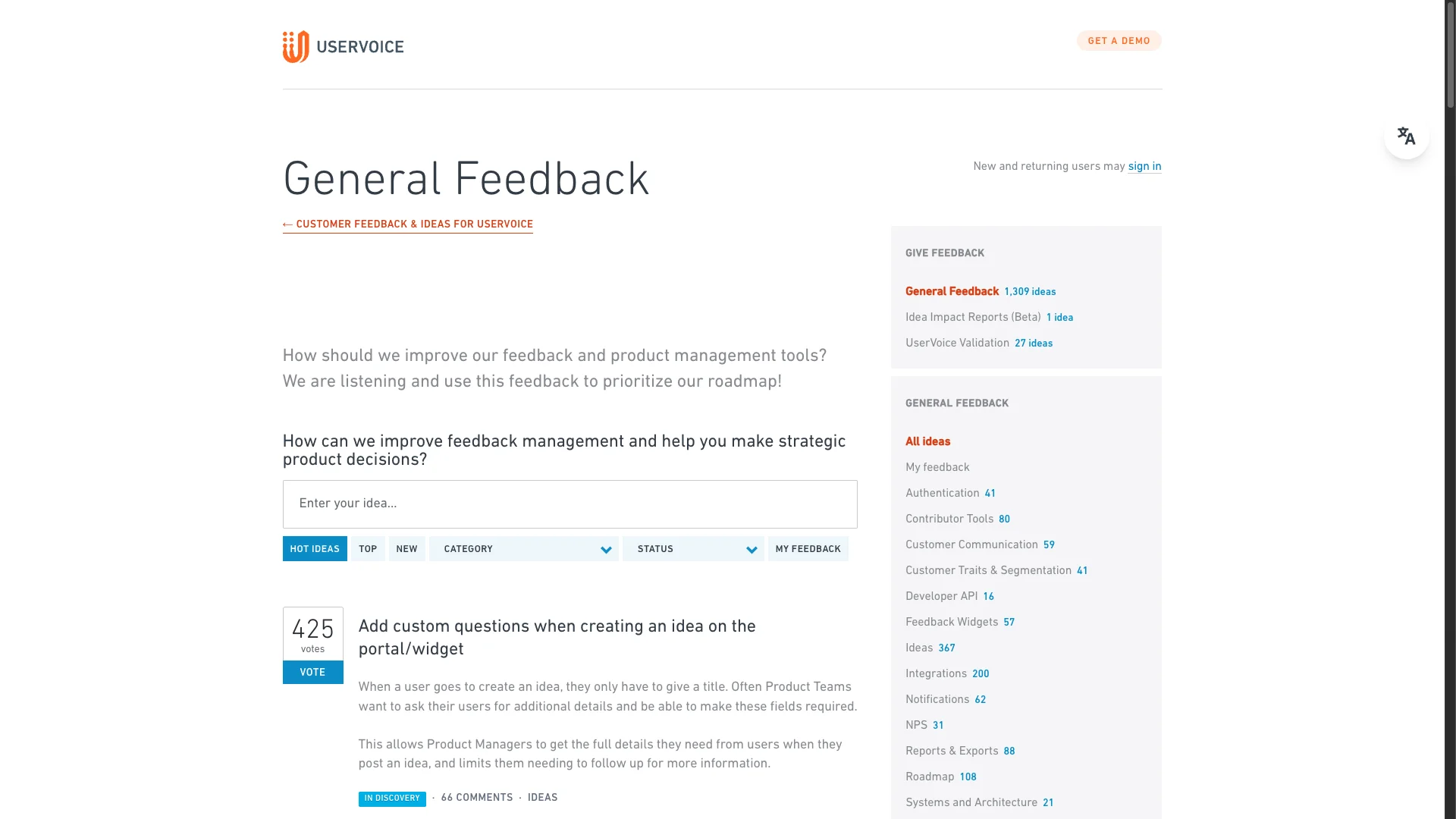
What it does: UserVoice is an enterprise-grade product feedback platform trusted by Fortune 500 companies. It offers advanced analytics and prioritization tools with pricing starting at $16,000/year. No per-seat charges. 30-day trial available after talking to their team.
Best for: Enterprise
Pricing: Starting at $1333/mo
Free trial: 30 days
| Product | G2 | Capterra | Trustpilot |
|---|---|---|---|
| Canny | 4.6/5 | 4.7/5 | 3.1/5 |
| UserVoice | 4.5/5 | 4.2/5 | 2.8/5 |
Read more: 12 UserVoice Alternatives
We evaluated several other feedback tools but didn't include them in the top 10 to keep this guide focused and actionable:
Jira Product Discovery ($8.15/user/month): Great for Atlassian-native teams but lacks a public-facing feedback portal. Customers can't vote directly, which defeats the purpose for most teams seeking Canny alternatives.
Pendo ($7,000-35,000/year): Primarily a product analytics platform that happens to include feedback features. If you just need feedback collection, you're paying for analytics you won't use.
Beamer ($49/month): Excellent for changelog and product announcements but weak on actual feedback collection. No voting boards or prioritization.
Rapidr ($49/month), Feedbear ($49/month), Hellonext ($65/month): Solid tools but don't differentiate enough from the options above to warrant inclusion. They lack features like AI, knowledge base, or prioritization frameworks that the top 10 offer.
UserJot (Free tier): Promising newer entrant with generous free tier, but too new to evaluate long-term reliability. No G2 rating yet.
Headway (Free): Changelog only. No feedback collection, voting, or roadmap features.
Trello (Free): A project management tool, not a feedback platform. Some teams hack it for feedback via Power-Ups, but purpose-built tools work better.
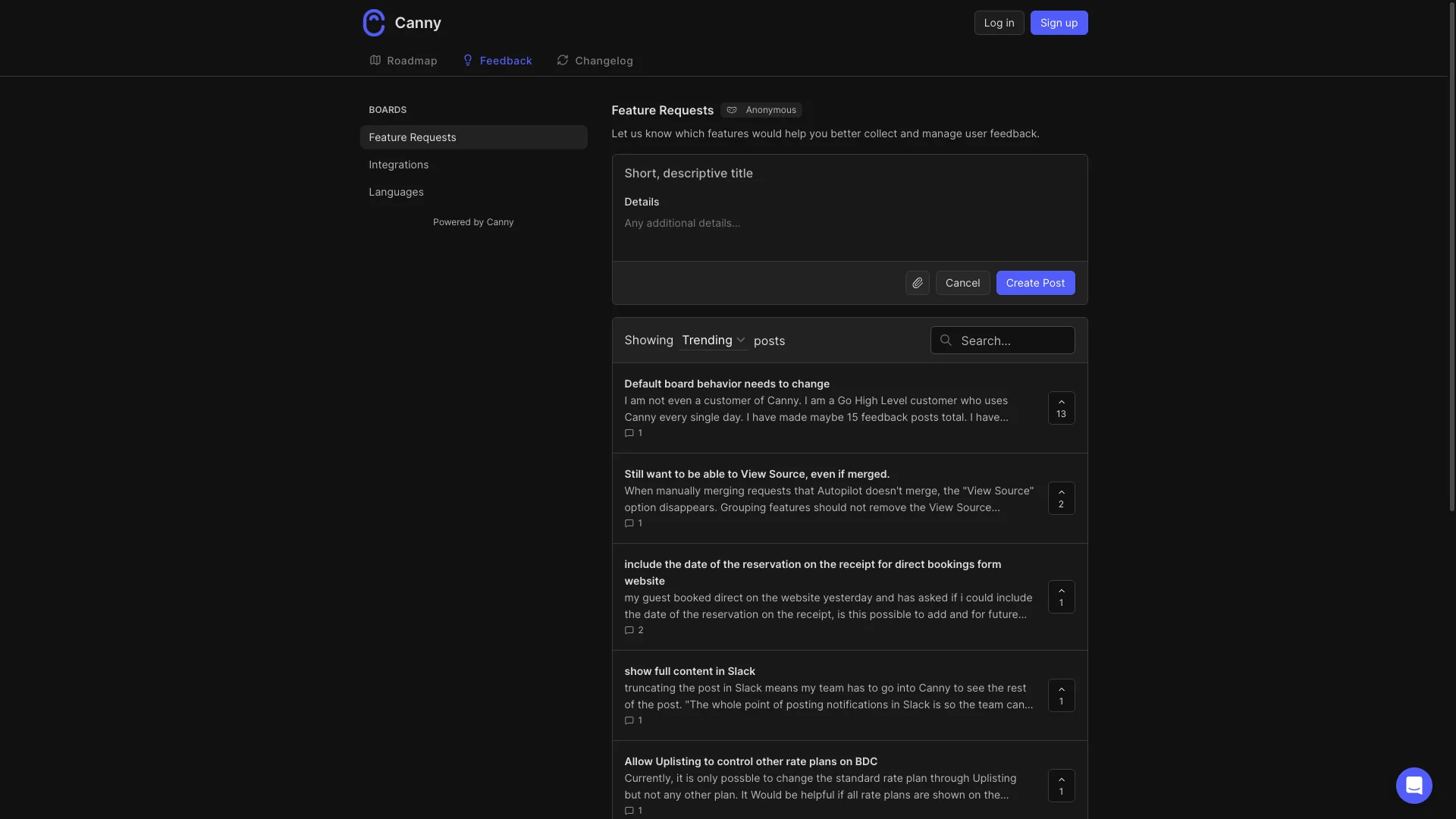
Canny is a feedback management platform built primarily for software companies. At its core, you get voting boards where customers can submit feature requests and upvote ideas they care about. The interface is clean, arguably one of the best-designed in the category, and it integrates well with developer tools like GitHub and Intercom.
The company has grown steadily since 2017, now serving over 1,000 customers including some recognizable names. They've added AI features for categorization and a changelog for announcements. But the fundamental product hasn't changed much: collect feedback, let users vote, show a roadmap.
Credit where it's due. Canny isn't all frustration:
Beautiful, intuitive interface. The design is clean and modern. Users understand how to vote and submit ideas without instructions. This matters for adoption.
Rock-solid GitHub integration. If your engineering team lives in GitHub, Canny connects feedback directly to issues. This is legitimately best-in-class.
Intercom integration. Support conversations can flow into feedback boards, which helps capture requests that might otherwise get lost in ticket queues.
Reliable infrastructure. Downtime is rare. The product works as advertised.
Free tier exists. For very small teams under 25 tracked users, you can use Canny without paying. This makes it easy to start, though it also makes the eventual pricing jump feel more jarring.
Canny makes sense in specific situations:
Consider alternatives if any of these apply:
Switching from Canny is straightforward. Here's the process:
1. Export your data Canny offers CSV export and API access. Download your feedback posts, votes, comments, and user data. Most exports complete within minutes.
2. Choose your new tool Based on your needs:
3. Import to new platform Most alternatives offer migration assistance:
4. Update your embeds Replace Canny widgets with your new tool's embed code. Update any links in your app pointing to Canny boards.
5. Notify users (optional) Consider announcing the switch in your changelog. Users who bookmarked your old feedback board will need the new URL.
Timeline: Plan for 1-2 weeks for a complete transition, including testing.
Here's how Canny and its top alternatives compare on key features:
| Feature | Canny | Productboard | ProductLift | Aha! |
|---|---|---|---|---|
| Contribute Without Logging In | ||||
| Private Boards | ||||
| Weekly Reports | ||||
| User Profiles | ||||
| Internal Comments | ||||
| Prioritization Matrix | ||||
| Embeddable Widget | ||||
| API Access | ||||
| Single Sign-On (SSO) | ||||
| Custom Statuses | ||||
| Intercom Integration | ||||
| Estimated Dates | ||||
| Knowledge Base | ||||
| AI Features | ||||
| Slack Integration | ||||
| Stripe Integration | ||||
| Jira Integration | ||||
| Azure DevOps Integration | ||||
| Zapier Integration | ||||
| GitHub Integration | ||||
| User Segments | ||||
| Changelog | ||||
| Public Roadmap | ||||
| Webhooks | ||||
| Vote on Behalf | ||||
| Custom CSS |
Canny's advertised $19/mo (Core) and $79/mo (Pro) are starting prices for ~100 tracked users. The real cost scales with your user base:
A growing SaaS team with 700 tracked users needing PM integrations pays $379/mo ($4,548/year) on the Pro plan, not the $79/mo shown on the pricing page.
For comparison, ProductLift charges $14/month per admin regardless of tracked users, a 3-person team pays $42/mo ($504/year) with all features included.
Yes. Canny offers CSV export and API access, so your data isn't locked in. Several alternatives, including ProductLift, offer free migration assistance to help transfer your feedback history, votes, and user data. Plan for 1-2 weeks to fully transition, including redirecting any embedded widgets.
Canny recently added auto-translation powered by Google Translate, which can translate user-submitted content. However, the admin interface remains English-only, and auto-translation quality varies. It works for simple text but can struggle with technical terms or nuanced feedback. For teams needing polished multi-language experiences, alternatives like ProductLift (22 native languages) offer professionally translated interfaces.
It depends on your growth trajectory. Canny's free plan only allows 25 tracked users. That's roughly 25 people who can vote, comment, or submit feedback. Most products blow past this within weeks of launch.
Once you exceed 25 users, you jump to $19/month on the Core plan for ~100 users. But those prices scale with tracked users. At 700 users you're paying $175-379/month. If you need PM integrations like Jira or GitHub, you need the Pro plan which starts at $79/mo and climbs fast.
If you expect any growth at all, starting with a flat-rate tool (ProductLift at $14/mo, Featurebase at $49/mo) avoids the eventual migration hassle.
For small teams prioritizing value, these options stand out:
Yes, Canny added AI capabilities for categorizing and analyzing feedback. However, these features don't address the core pricing and localization concerns. Competitors like ProductLift, Frill, and Featurebase also offer AI features at lower price points.
Despite being one of the original feedback tools, Canny lacks several features competitors offer:
Yes, several options:
Canny changed their pricing model in May 2025, switching from per-admin pricing to a tiered plan model. The current tiers are Free (25 users), Core ($19/mo), Pro ($79/mo), and Business (custom). The free tier was reduced from 100 tracked users to just 25.
Join over 3,051 product managers and see how easy it is to build products people love.





Did you know 80% of software features are rarely or never used? That's a lot of wasted effort.
SaaS software companies spend billions on unused features. In 2025, it was $29.5 billion.
We saw this problem and decided to do something about it. Product teams needed a better way to decide what to build.
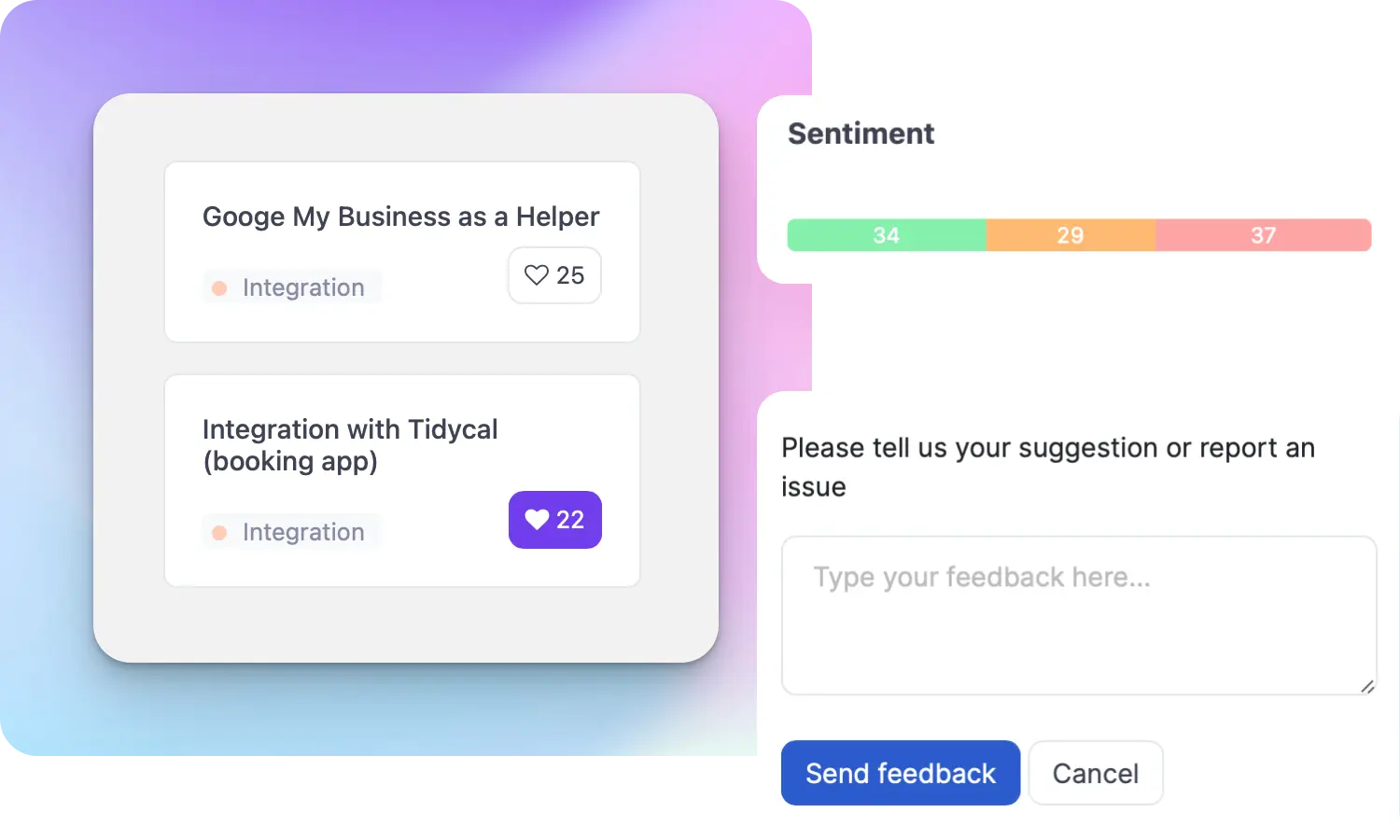
That's why we created ProductLift - to put all feedback in one place, helping teams easily see what features matter most.
In the last five years, we've helped over 3,051 product teams (like yours) double feature adoption and halve the costs. I'd love for you to give it a try.
Founder & Digital Consultant
With bike energy  from Utrecht
KVK: 20145923 - BTW: NL001143413B86