Aha! vs Productboard (2026): Features & Pricing Compared

Ruben Buijs
Updated on Jan 23, 2026 · Written on Mar 11, 2024 · 5 minutes
Aha! vs Productboard: Two enterprise product management heavyweights with different philosophies. Aha! offers a comprehensive suite with roadmapping focus. Productboard emphasizes customer research and prioritization. Both charge per user with costs that scale quickly. For teams wanting product management without enterprise pricing, ProductLift offers core features at $14/month.
The Verdict
Aha! is the traditional product management suite: roadmaps, strategy, OKRs, and ideas all in one platform. It's powerful but complex, with a dated UI and steep learning curve. At $59/user/month for Roadmaps, costs add up fast.
Productboard takes a more modern approach centered on customer insights. Better UI, stronger prioritization frameworks, and deeper Salesforce integration. But at $19-59/maker/month, it's equally expensive, and most teams use only a fraction of features.
Bottom line: Both are enterprise tools with enterprise pricing. Aha! for teams prioritizing roadmap visualization. Productboard for teams prioritizing customer research. Neither ideal for SMBs or budget-conscious teams.
Quick Comparison
| Feature | Aha! | Productboard |
|---|---|---|
| Starting Price | $39/user/mo | $19/maker/mo (annual) |
| 10-User Cost | $590-1,490/mo | $190-590/mo |
| Primary Focus | Roadmapping | Customer research |
| G2 Rating | 4.3/5 | 4.3/5 |
| UI/UX | Dated but functional | Modern, clean |
| Key Strength | Visual roadmaps | Prioritization |
| Key Weakness | Complexity, UI | Feature overload |
| Best For | Traditional PM | Customer-centric PM |
Table of contents
- The Verdict
- Quick Comparison
- What is Aha!?
- What is Productboard?
- Features comparison
- Languages comparison
- Reviews comparison
- Price comparison
- When to Choose Productboard
- Consider ProductLift Instead
- Conclusion
- FAQ
What is Aha!?
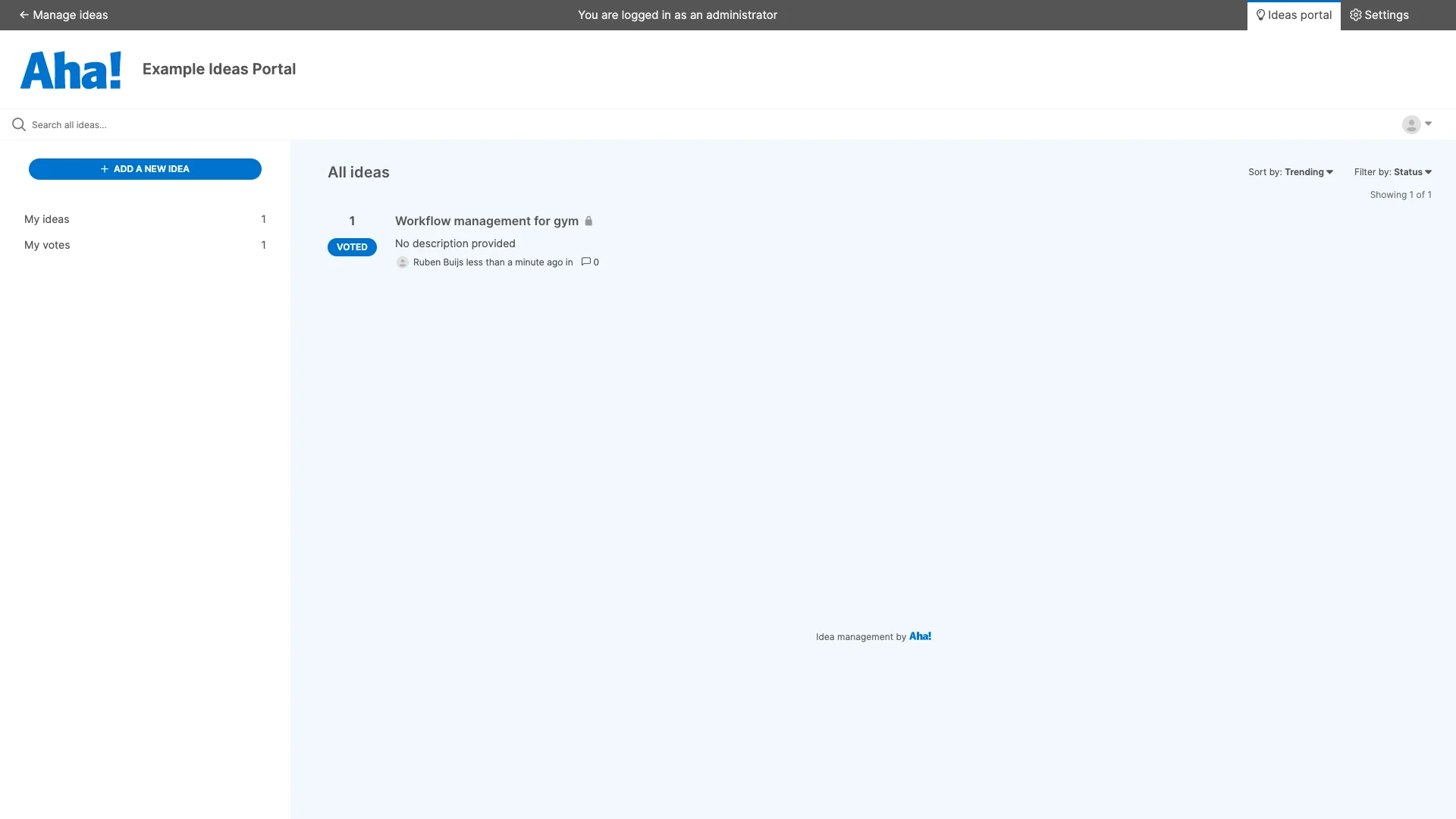
Aha! is a comprehensive product management suite that includes roadmapping, idea management, and strategic planning. Roadmaps starts at $59/user/month and now bundles Ideas Essentials, Whiteboards, and Knowledge. Aha! Discovery (customer interviews) is $39/user/month separately.
Read more: 12 Aha! Alternatives
What is Productboard?
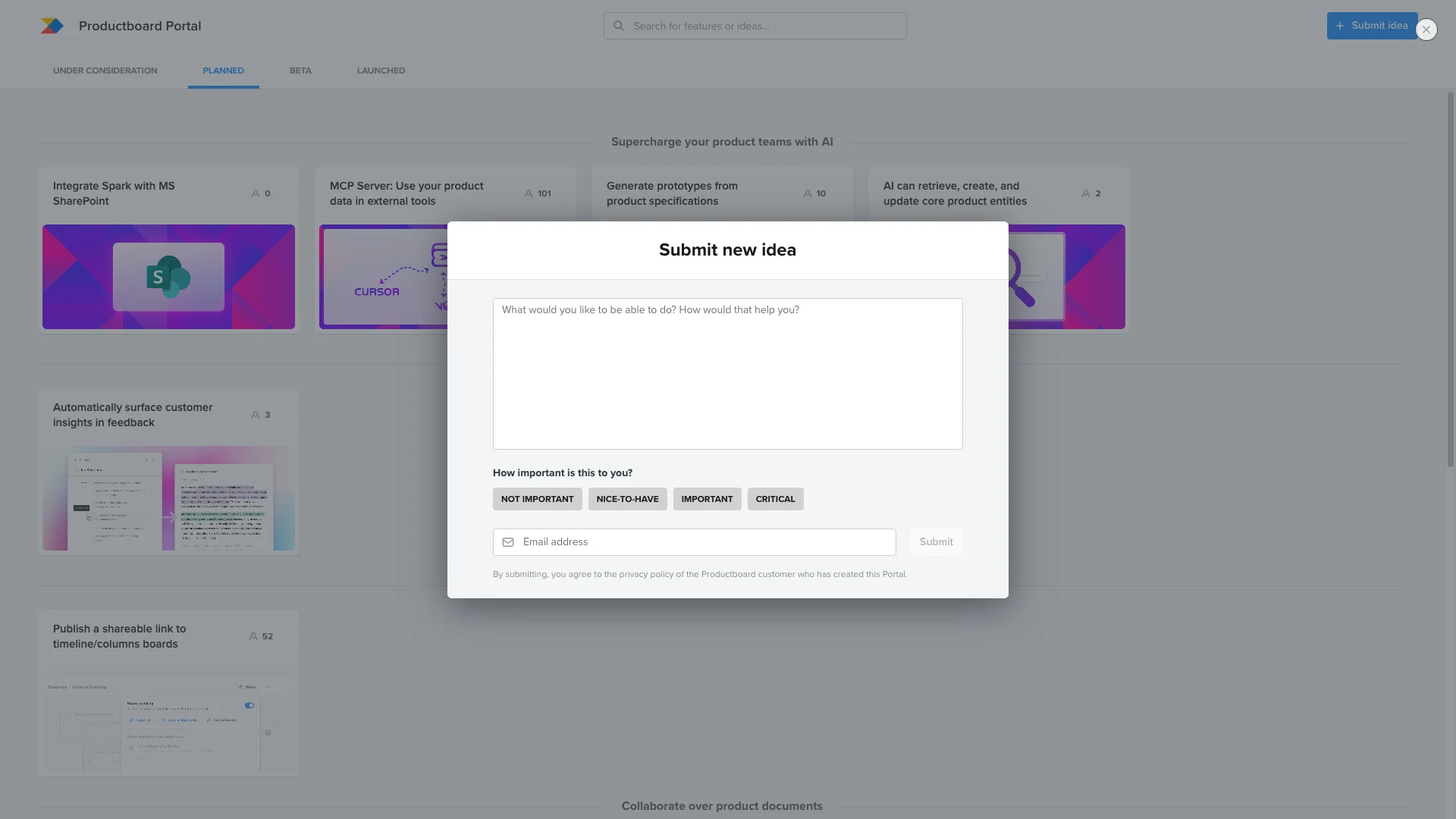
Productboard is a product management platform focused on customer insights and prioritization. It offers a free Starter tier and paid plans from $19 to $59 per maker/month (annual). Enterprise requires contacting sales.
Read more: 12 Productboard Alternatives
Features comparison
| Feature | Aha! | Productboard |
|---|---|---|
| Contribute Without Logging In | ||
| Private Boards | ||
| Weekly Reports | ||
| User Profiles | ||
| Internal Comments | ||
| Prioritization Matrix | ||
| Embeddable Widget | ||
| API Access | ||
| Single Sign-On (SSO) | ||
| Custom Statuses | ||
| Intercom Integration | ||
| Estimated Dates | ||
| Knowledge Base | ||
| AI Features | ||
| Slack Integration | ||
| Stripe Integration | ||
| Jira Integration | ||
| Azure DevOps Integration | ||
| Zapier Integration | ||
| GitHub Integration | ||
| User Segments | ||
| Changelog | ||
| Public Roadmap | ||
| Webhooks | ||
| Vote on Behalf | ||
| Custom CSS |
Features Productboard has that Aha! doesn't
- Provides weekly reports, ensuring up-to-date insights into user feedback and trends.
- Includes user profiles, personalizing the feedback process and improving user management.
- Offers direct integration with Intercom, enhancing customer communication and support.
Features Productboard misses
- No knowledge base feature, requiring a separate tool for documentation.
Languages comparison
| Language | Aha! | Productboard |
|---|---|---|
 Czech
Czech
|
||
 German
|
||
 English
|
||
 Spanish
|
||
 French
|
||
 Japanese
|
||
 Dutch
Dutch
|
||
 Portuguese
|
Reviews and awards comparison
| Product | G2 | Capterra | Trustpilot |
|---|---|---|---|
| Aha! | 4.3/5 | 4.7/5 | N/A |
| Productboard | 4.3/5 | 4.7/5 | 3.2/5 |
Price comparison
Both tools are expensive at scale:
| Team Size | Aha! (Roadmaps) | Productboard (Pro) | Difference |
|---|---|---|---|
| 5 users | $295/mo | $295/mo | Equal |
| 10 users | $590/mo | $590/mo | Equal |
| 20 users | $1,180/mo | $1,180/mo | Equal |
Pricing is now comparable for the same team size on annual plans. Productboard's "maker" model means viewers don't count, so actual costs depend on team structure. If only 5 of 20 people edit content, Productboard's $295/mo beats Aha!'s $1,180/mo.
When to Choose Productboard
Choose Productboard if:
- Customer research focus:Need to segment feedback by customer attributes
- Prioritization frameworks:Value vs effort scoring is important
- Salesforce integration:Deep CRM connectivity required
- Modern UI matters:Team prefers contemporary interfaces
- Few editors, many viewers:Maker-only pricing may be cheaper
Consider ProductLift Instead
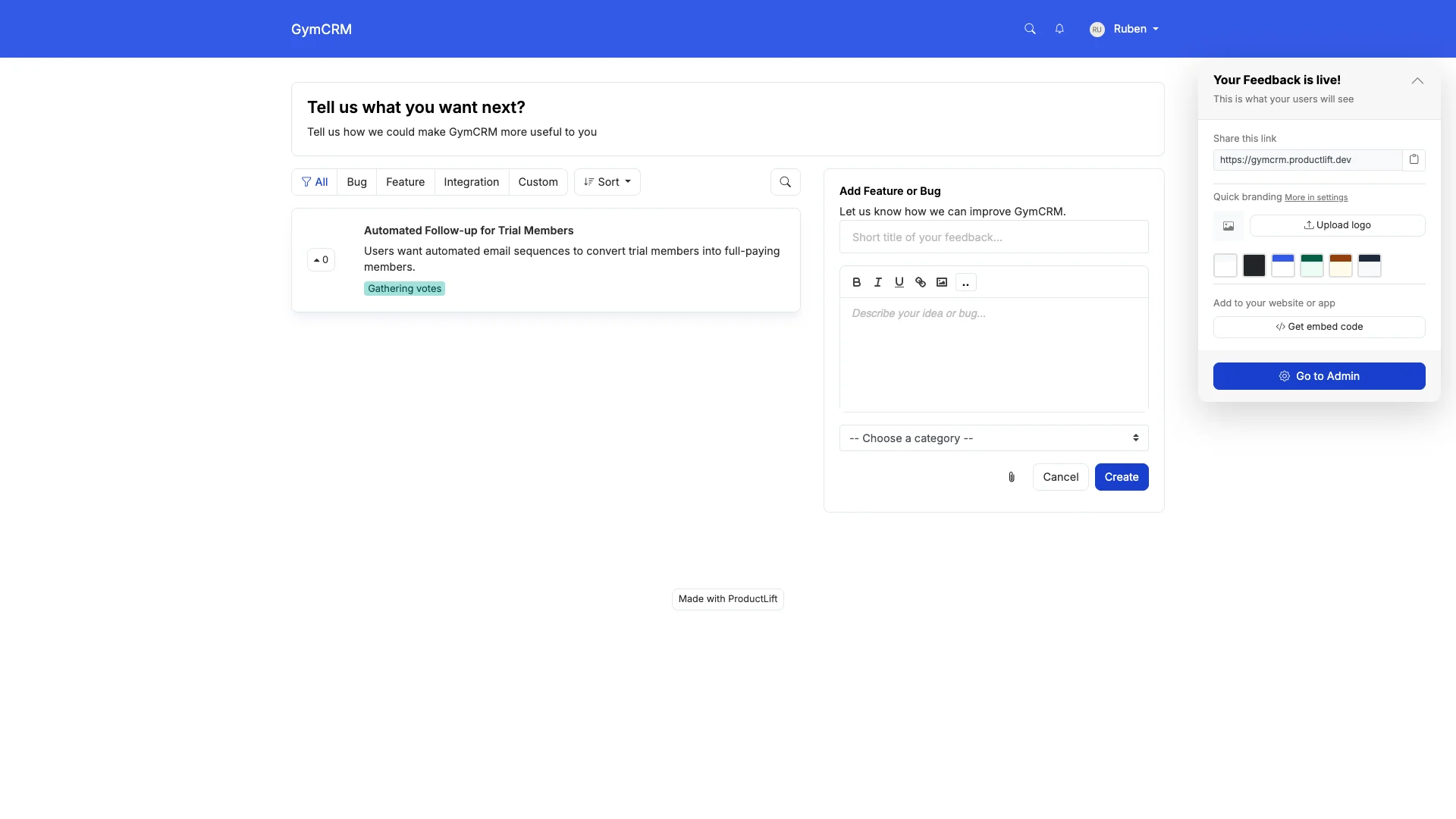
Both Aha! and Productboard are enterprise tools with enterprise pricing. Most SMBs don't need, or want to pay for, their complexity.
ProductLift offers a simpler path:
- $14/month per admin:Not $590/month for either tool
- Feedback + Roadmap + Changelog:Core features of both tools
- Knowledge Base:Neither Aha! (basic) nor Productboard includes this
- RICE, ICE, MoSCoW:Prioritization frameworks like Productboard
- 22 Languages:Superior internationalization
- Stripe Integration:Connect feedback to MRR/LTV
- No Training Required:Use immediately, not after weeks
For teams wanting product feedback and roadmapping without enterprise complexity, ProductLift delivers.
Conclusion
Aha! is best for traditional enterprise product teams prioritizing roadmap visualization and strategic planning. Strong on visuals, weaker on modern UX.
Productboard is best for customer-centric product teams emphasizing research and prioritization. Modern interface, strong Salesforce integration.
Both are overkill for most SMBs. ProductLift offers the core features teams actually use at a fraction of the enterprise pricing.
Frequently Asked Questions
Is Aha! or Productboard better?
It depends on priorities. Aha! is better for roadmap visualization and strategic planning. Productboard is better for customer research and prioritization frameworks. Both are enterprise tools with significant costs.
How much do Aha! and Productboard cost?
Aha! Roadmaps costs $59/user/month. Productboard Pro costs $59/maker/month (annual). A 10-person team pays $590/month for either tool, assuming all 10 are makers in Productboard.
Which tool has better roadmapping?
Aha! has stronger roadmap visualization with Gantt charts, timeline views, and dependencies. Productboard's roadmaps are more basic, focused on sharing priorities rather than detailed project planning.
Which tool has better prioritization?
Productboard has more sophisticated prioritization frameworks including value vs effort scoring and customer segment weighting. Aha! has prioritization features but they're not as central to the product philosophy.
Can I use Aha! and Productboard together?
Some teams use Productboard for customer research and Aha! for roadmapping, but this doubles your cost and creates integration challenges. Most teams choose one or the other, or find a simpler alternative.
Is there a cheaper alternative to both?
Yes. ProductLift offers feedback collection, roadmap, changelog, and knowledge base for $14/month per admin. It has the core features of both tools without enterprise complexity or pricing.
Which tool has better integrations?
Both have extensive integrations. Aha! is stronger with Azure DevOps and traditional tools. Productboard excels with Salesforce and modern SaaS stack. Both integrate well with Jira and Slack.
Which tool is easier to learn?
Productboard has a more modern, intuitive interface. Aha! has a notoriously steep learning curve, many teams require weeks of training. For quick adoption, Productboard wins. ProductLift is simpler than either.





 from Utrecht