8 Best Customer Feedback Management Software for SaaS in 2026

Collect, organize, and act on customer feedback systematically. We compared 8 feedback management tools on pricing, features, and real-world fit so you can pick the right one for your SaaS.

Ruben Buijs Ruben Buijs February 2026 15 min read
Last updated: February 2026
8 tools compared
Real pricing at scale

Why This Guide Is Different

Most "best customer feedback management software" lists are thinly disguised ads. This guide gives you the numbers, trade-offs, and real weaknesses that vendor marketing pages won't mention.

What you'll find here:

Why SaaS Needs Dedicated Feedback Management

Spreadsheets, Slack channels, and email inboxes are where customer feedback goes to die. SaaS teams face unique challenges:

Full disclosure: ProductLift is our product, so it's on this list. We've tried to be objective about where it excels and where other tools are a better fit.

Quick Picks

Best Overall for SaaS: ProductLift. Feedback collection, roadmap, changelog, and knowledge base in one platform. $14/mo per admin, unlimited tracked users. Stripe integration for revenue-based prioritization.

Best Free Starter: Featurebase. Modern UI with AI duplicate detection and a generous free tier. Great for teams just starting out with feedback management.

Best for Enterprise Workflows: Canny. Deep GitHub and Intercom integration with strong categorization. But tracked-user pricing gets expensive fast.

Must-Have Features in Customer Feedback Management Software

Before comparing tools, here's the checklist of features that separate real feedback management platforms from glorified suggestion boxes:

1. Centralized Feedback Collection

Your tool should capture feedback from multiple channels. In-app widgets, public portals, email, support tickets, and sales conversations. Into a single, searchable database. If your team has to check 4 different places to understand what customers want, you've already lost.

2. Voting and Prioritization

Let customers upvote existing requests so demand signals are clear. But raw vote counts aren't enough for SaaS. You need structured prioritization frameworks (RICE, ICE, MoSCoW) to weigh reach, impact, confidence, and effort. The best tools calculate scores automatically.

3. Revenue-Weighted Feedback

A vote from a $500/mo customer should carry more weight than one from a free user. Tools with Stripe integration (like ProductLift) auto-fetch MRR, plan tier, and customer status so you can prioritize by revenue impact, not just popularity.

4. Feedback-to-Roadmap Workflow

The best feedback tools don't just collect ideas. They move them through a lifecycle. Look for a journey model where a feedback post becomes a roadmap item, then a changelog entry. This eliminates manual copy-pasting between tools and keeps voters notified at every stage.

5. Closing the Loop

When you ship a feature, every customer who requested it should be notified automatically. This builds trust, drives re-engagement, and is the single highest-impact thing you can do with a feedback tool. If your tool doesn't auto-notify voters, you'll spend hours on manual follow-up or simply never do it.

6. Duplicate Detection and Merging

Without duplicate management, votes get split across 3 versions of the same request. AI-powered detection saves hours of manual cleanup and gives you accurate demand signals.

7. Segmentation and Filtering

Filter feedback by customer plan, company size, MRR, or custom attributes. This lets you answer questions like "What do our enterprise customers want most?" without exporting to a spreadsheet.

1. ProductLift. Best Overall Customer Feedback Management for SaaS

G2 Rating: 5.0/5 | Price: $14/mo per admin (unlimited tracked users) | Free trial: 14 days

Best for: SaaS teams who want a complete feedback-to-shipped workflow with predictable pricing and revenue-based prioritization

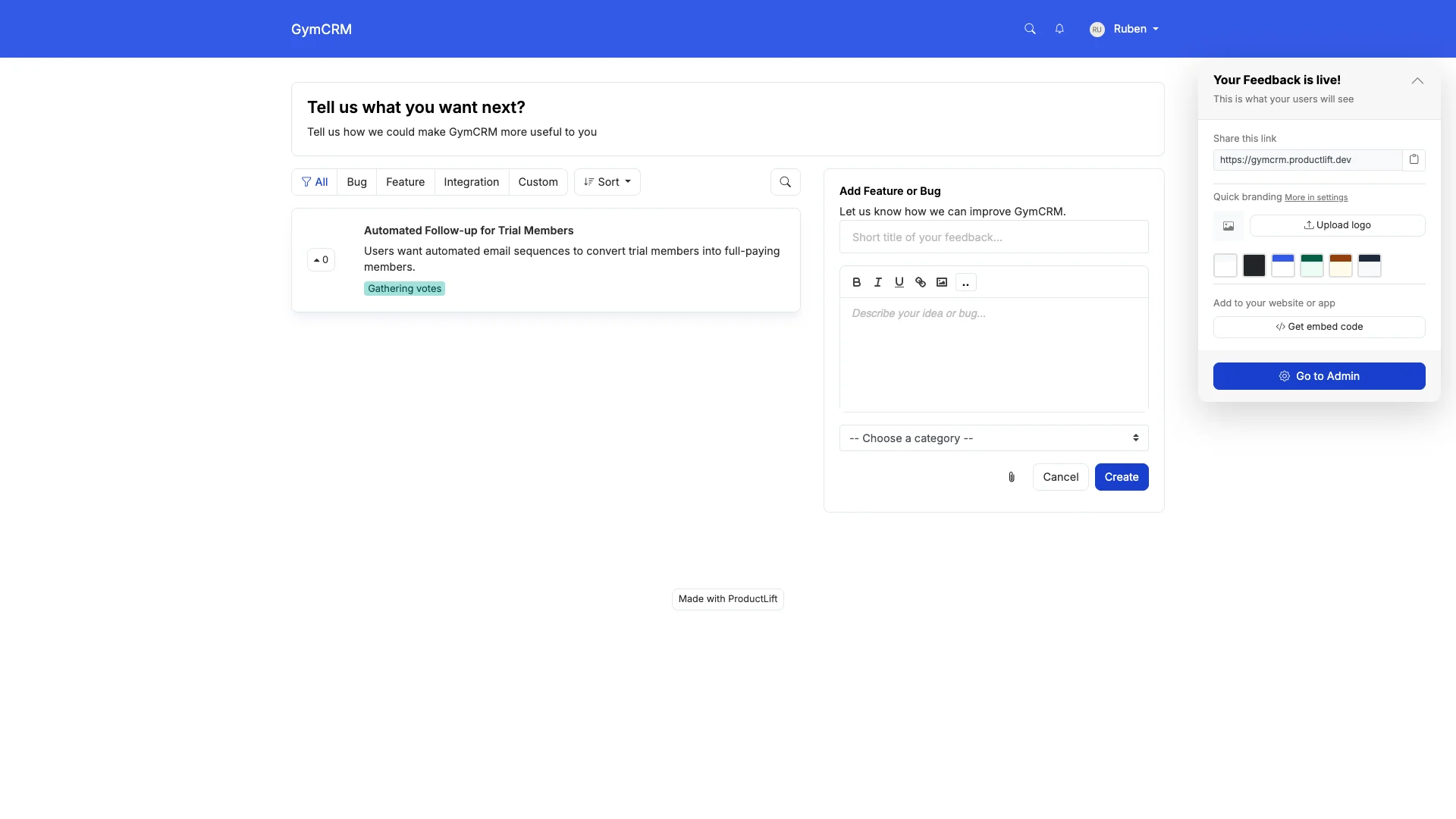
ProductLift customer feedback management board

ProductLift is built specifically for SaaS feedback management. Rather than being just a collection tool, it provides a complete journey model where feedback posts travel from Feedback to Roadmap to Changelog. The same item, with all context preserved and voters notified automatically at every stage.

Key Strengths

Where It Falls Short

Pricing

Bottom line: The best value for SaaS teams who want more than just a feedback inbox. The journey model, Stripe integration, and flat pricing make it ideal for growing SaaS companies that need to connect customer feedback to revenue outcomes.

Try ProductLift Free →

2. Canny. Strong Integrations, Costly at Scale

G2 Rating: 4.6/5 | Price: Free (25 tracked users), Core from $19/mo | Free plan: Yes

Best for: Early-stage startups under 25 users who need GitHub and Intercom integration

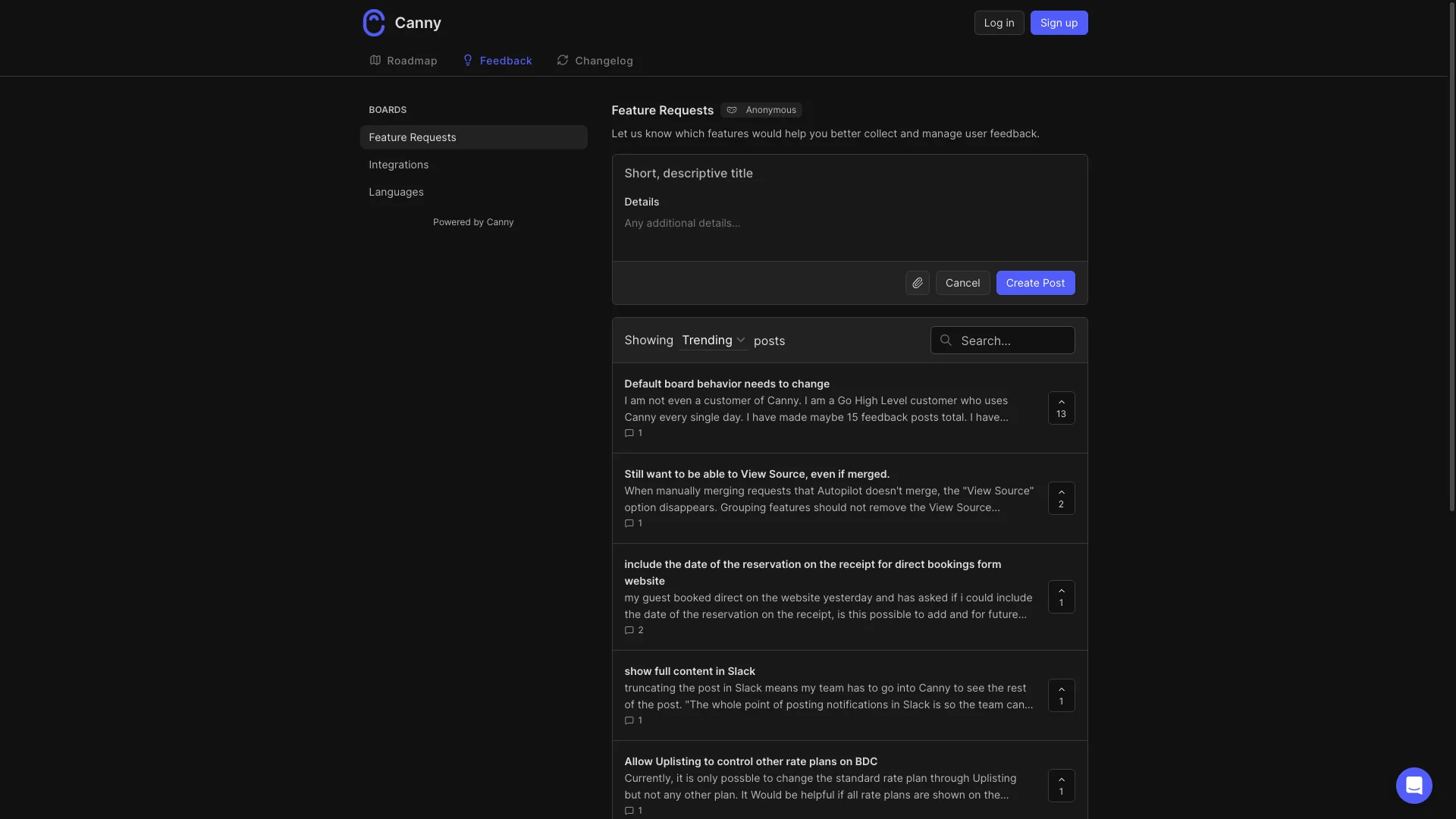
Canny feedback board screenshot

Canny is the most well-known name in customer feedback management software. The free plan is generous for tiny teams. The GitHub integration is the deepest available, and Intercom lets you capture feedback directly from support conversations. But the tracked-user pricing model can become a budget killer as your SaaS grows.

Key Strengths

The Pricing Trap

Canny's pricing page shows $19/mo (Core) and $79/mo (Pro), but those are starting prices for ~100 tracked users. The cost scales as your user base grows:

For a SaaS with 1,000 active users giving feedback, you're looking at ~$500/mo for Canny Pro vs. $70/mo for ProductLift (5 admins). That's a 7x price difference.

Where It Falls Short

Bottom line: Great free starter option if you're under 25 users and live in GitHub. Plan for a migration once you outgrow the free tier. The tracked-user pricing gets steep fast.

3. Featurebase. Modern AI-Powered Feedback Platform

G2 Rating: 4.9/5 | Price: Free tier, paid from $49/mo | Free plan: Yes

Best for: Teams wanting a modern interface with AI features and a free starting point

Featurebase feedback board screenshot

Featurebase is a newer entrant that's gained rapid traction with a polished interface and AI-powered duplicate detection. It covers feedback, roadmap, changelog, and help desk in one product.

Key Strengths

Where It Falls Short

Bottom line: A strong modern option with a generous free tier and solid AI features. Good for teams who prioritize UX and don't need advanced revenue-weighted prioritization.

4. Savio. Feedback Tracking for B2B SaaS

G2 Rating: 4.7/5 | Price: From $39/mo | Free trial: Yes

Best for: B2B SaaS teams who need to centralize feedback from Intercom, Slack, and support tools

Savio focuses on capturing feedback from where it already lives. Intercom conversations, Slack messages, support tickets, and sales call notes. It pulls feedback from your existing tools rather than asking customers to visit a separate portal.

Key Strengths

Where It Falls Short

Bottom line: Best for B2B teams who want to centralize feedback from internal tools without a public-facing portal. If you want customers to self-serve and vote, look at ProductLift or Canny instead.

5. Frill. Budget-Friendly All-Rounder

G2 Rating: 4.7/5 | Price: $25/mo flat | Free trial: Yes

Best for: Small teams who need feedback boards + roadmap + changelog on a budget

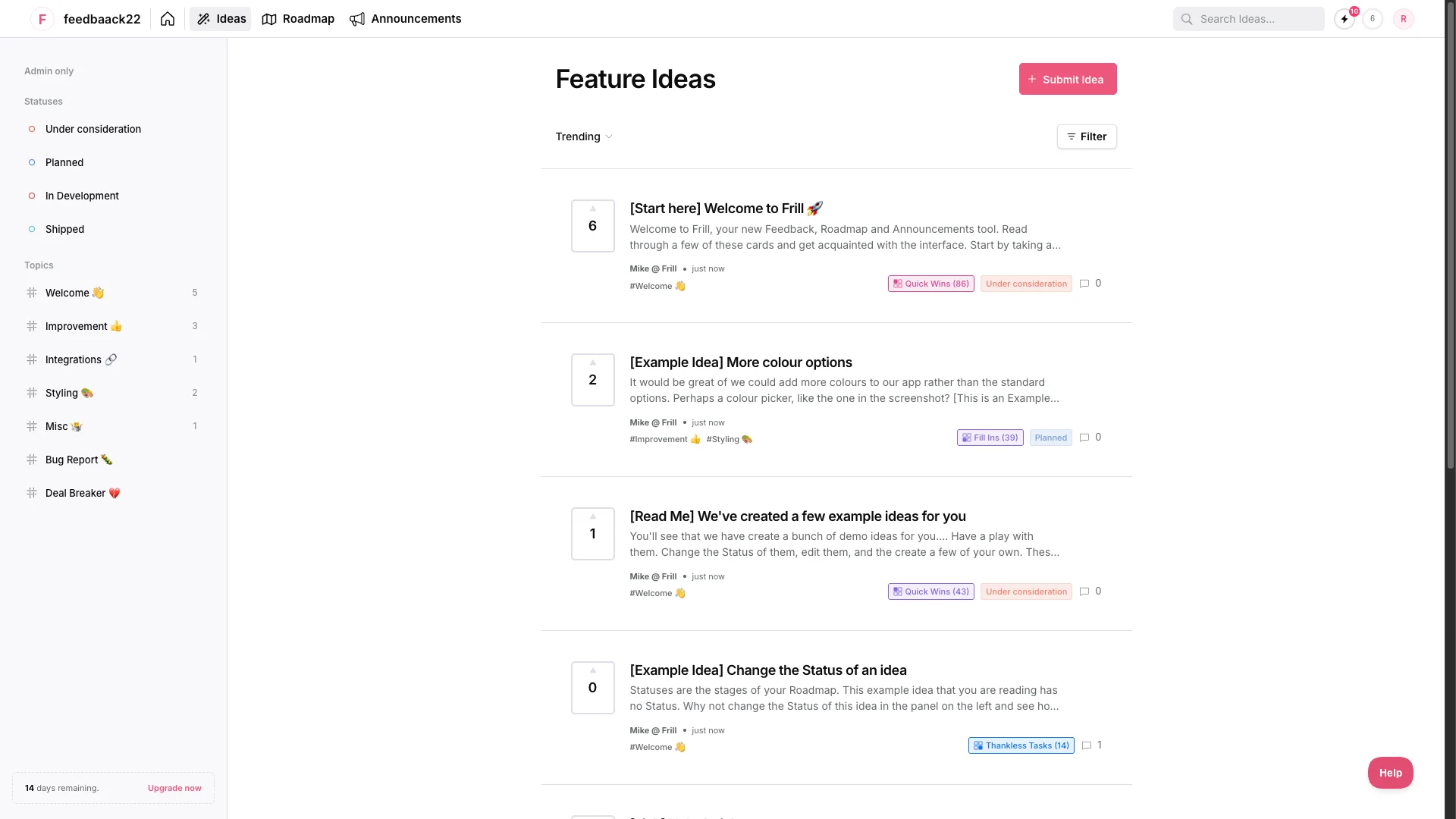
Frill feedback board screenshot

Frill offers feedback collection, roadmap, and changelog at a flat $25/mo. It's one of the few budget tools with built-in prioritization scoring and dev tool integrations.

Key Strengths

Where It Falls Short

Bottom line: Solid budget option for English-only teams who need feedback management with dev tool integrations. You'll miss advanced features like revenue weighting and multi-language support.


6. Rapidr. Feedback Boards with Clean Workflow

Price: $49/mo | Free trial: 14 days

Best for: Teams wanting feedback + roadmap + changelog without enterprise complexity

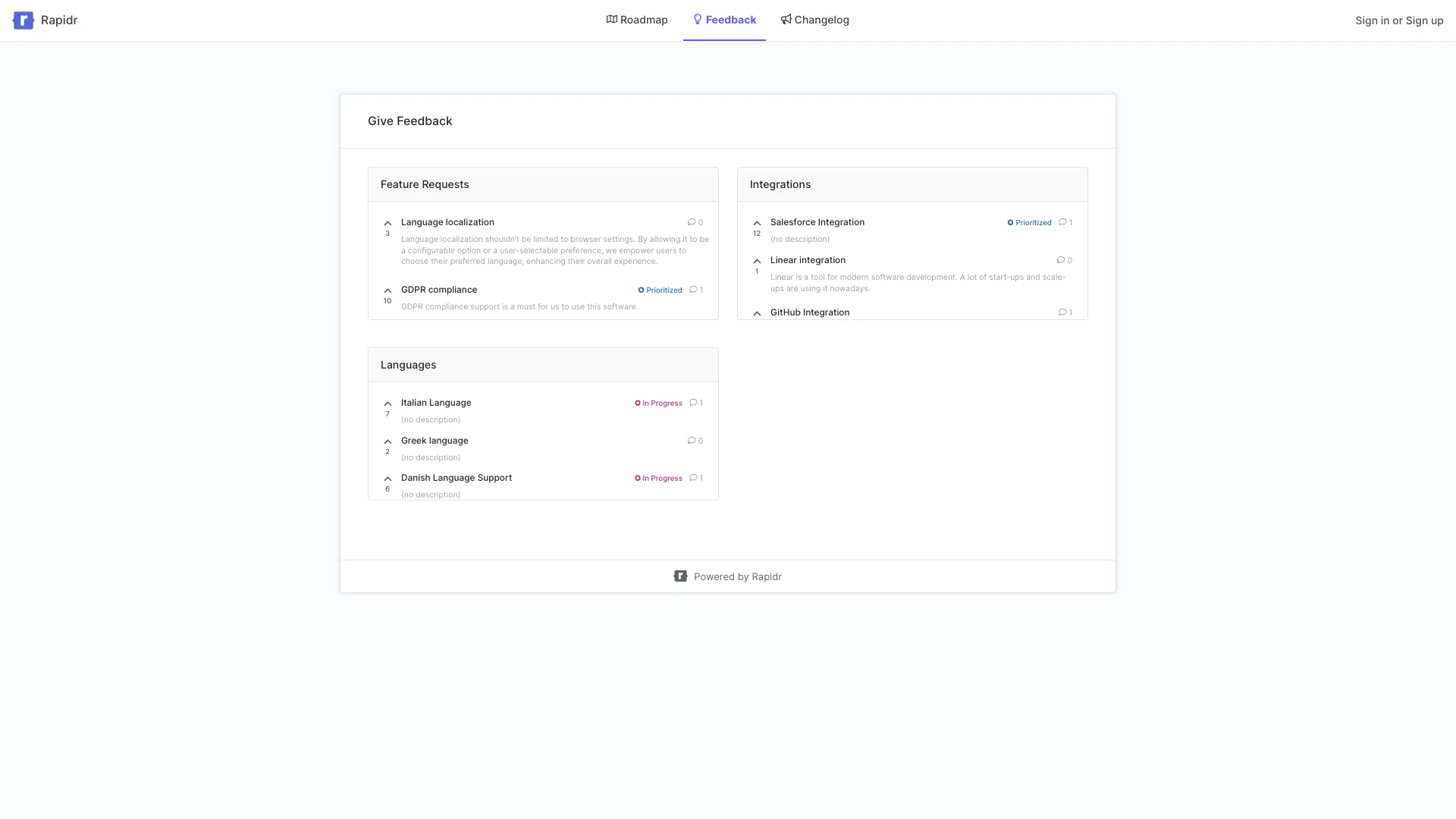
Rapidr feedback board screenshot

Rapidr provides feedback boards, a roadmap, and a changelog in a straightforward package. It sits between budget tools and enterprise platforms, offering clean workflows without overwhelming configuration.

Key Strengths

Where It Falls Short

Bottom line: A capable mid-tier option with clean workflows. Compare the feature set and pricing against ProductLift before deciding. You get more features for less per admin.


7. Sleekplan. In-App Feedback Widget Focus

Price: Free tier, paid from $13/mo | Free plan: Yes

Best for: Teams who want an in-app feedback widget as the primary collection method

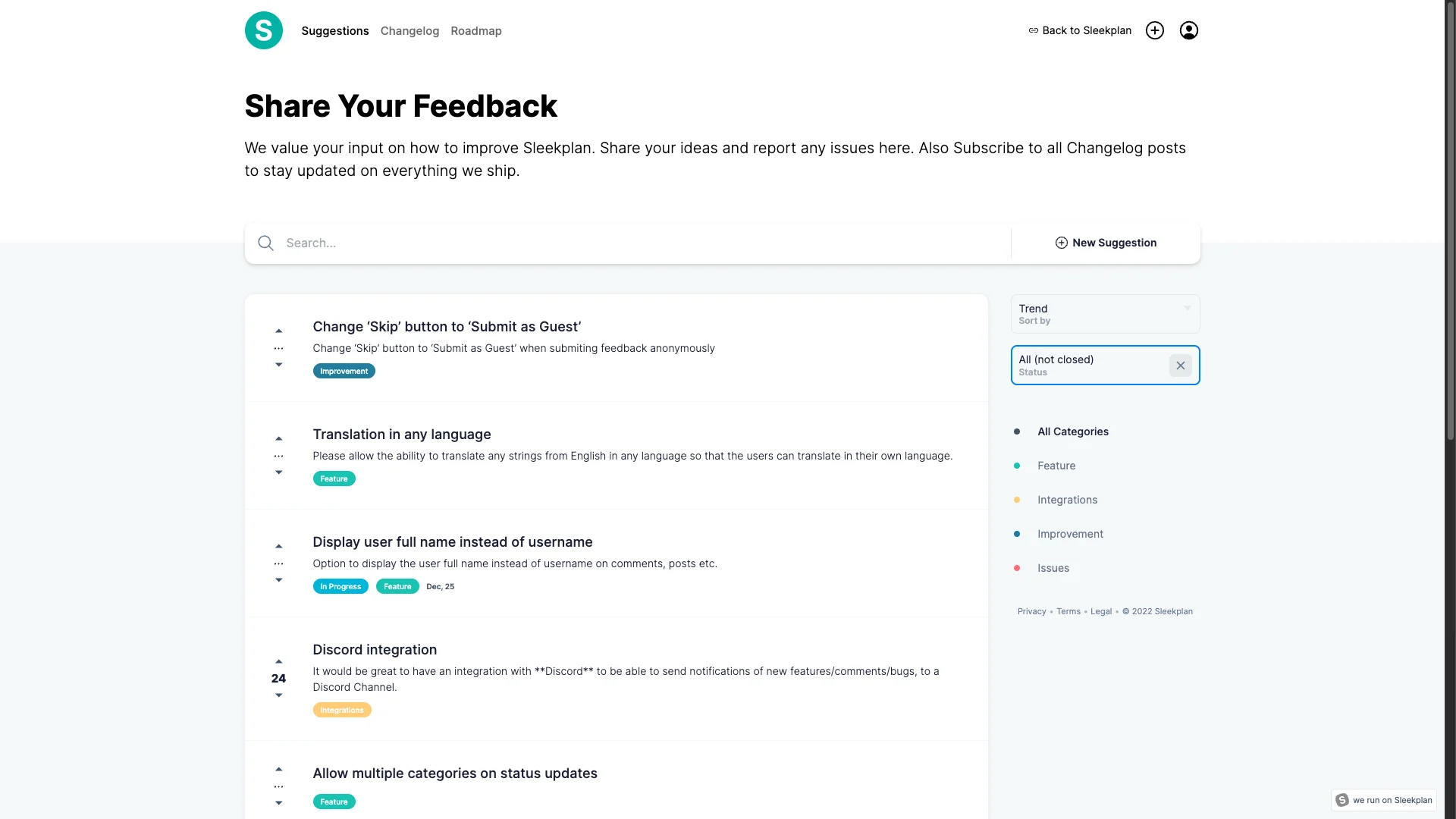
Sleekplan feedback board screenshot

Sleekplan differentiates itself with a strong in-app widget that combines feedback collection, roadmap display, and changelog notifications in a single sidebar widget. It's designed to live inside your app rather than on a separate portal.

Key Strengths

Where It Falls Short

Bottom line: Good choice if your primary goal is an in-app feedback widget. For a full feedback management platform with prioritization frameworks and revenue weighting, ProductLift offers more depth.


8. UserVoice. Enterprise Feedback at Enterprise Prices

G2 Rating: 4.1/5 | Price: Custom (typically $800-2,000+/mo) | Free trial: Demo only

Best for: Large enterprises with 100+ person product teams and six-figure software budgets

UserVoice is the original feedback management tool, founded in 2008. It's built for enterprise product teams with complex organizational structures, multiple product lines, and large-scale feedback operations.

Key Strengths

Where It Falls Short

Bottom line: The right choice for large enterprises with big budgets and complex feedback needs. For 95% of SaaS companies, ProductLift delivers better value at a fraction of the cost.

Feature Comparison Table

How all tools compare on key customer feedback management features:

Feature ProductLift Canny Featurebase Savio Frill
Public Feedback Portal
Anonymous Feedback
Roadmap⚠️ Basic
Changelog
Knowledge Base⚠️ Help Desk
RICE/ICE/MoSCoW Prioritization⚠️ Basic
Stripe Integration (MRR)⚠️ Manual
Feedback-to-Changelog Journey⚠️ Manual⚠️ Manual⚠️ Manual
AI Features
Multi-Language✅ (22)
Embedded Widget
White-Label✅ (paid)✅ (paid)
SSO✅ (paid)✅ (paid)
Auto Voter Notifications✅ Auto

Pricing Comparison: What You'll Actually Pay

Here's what each customer feedback management tool costs at different scales. No "starting at" tricks. Real numbers for SaaS teams:

Tool 3 Admins
100 Users
5 Admins
500 Users
10 Admins
1,000 Users
Model
ProductLift$42/mo$70/mo$140/moPer admin
Canny (Pro)$79/mo~$279/mo~$529/moTracked users
FeaturebaseFree$49/mo$49+/moTiered
Savio$39/mo$79/mo$249/moTiered
Frill$25/mo$25/mo$25/moFlat rate
Rapidr$49/mo$49/mo$49/moFlat rate
Sleekplan$13/mo$33/mo$63/moTiered

Key insight: Canny's $79/mo Pro price is for ~100 tracked users. At 500 users it's ~$279/mo, at 1,000 users ~$529/mo. ProductLift scales linearly with team size only, so voter count never affects your bill. Flat-rate tools like Frill stay predictable but offer fewer features. UserVoice is excluded from this table because its enterprise pricing ($800-2,000+/mo) is in a different category entirely.

Which Feedback Management Tool Should You Choose?

You're a growing SaaS ($100K-$5M ARR)

Choose ProductLift. You need the full lifecycle: collect feedback, prioritize by revenue impact (Stripe integration), plan on a public roadmap, and close the loop with changelog notifications. The journey model means one post travels from idea to shipped feature. $14/mo per admin with unlimited users keeps costs predictable as you grow.

You're pre-revenue or early stage (<$100K ARR)

Choose Featurebase or Canny for their free tiers. Featurebase has better AI features and a more modern UI; Canny has deeper GitHub and Intercom integrations. Plan your migration path. Both get expensive or limited once you grow past the free tier.

You're a B2B SaaS with feedback scattered across tools

Choose Savio if your feedback lives in Intercom, Slack, and support tickets. Savio pulls it all together without asking customers to visit a separate portal. But if you also want public voting and a roadmap, ProductLift gives you both.

You're bootstrapped and need the basics

Choose Frill ($25/mo) for feedback boards + roadmap + changelog with dev tool integrations. Choose Sleekplan ($13/mo) if in-app feedback collection and satisfaction surveys matter most. Both are limited compared to full platforms but cover the essentials.

You serve international customers

Choose ProductLift (22 languages). Most feedback management tools are English-only, which creates friction for non-English speaking customers. ProductLift's built-in localization covers 22 languages out of the box.

You need revenue-weighted prioritization

Choose ProductLift. It's the only tool on this list with native Stripe integration that auto-fetches MRR, plan tier, LTV, and customer status. See which features your highest-paying customers want most, and prioritize using RICE, ICE, MoSCoW, or Impact-Effort frameworks.

You're an enterprise with 100+ person product teams

Choose UserVoice if budget is not a constraint and you need Salesforce integration, advanced analytics, and multi-team support. For everyone else, ProductLift delivers 90% of the value at 5-10% of the cost.

Frequently Asked Questions

What is customer feedback management software?

Customer feedback management software helps SaaS teams collect, organize, prioritize, and act on feedback from their users. It replaces scattered spreadsheets, Slack messages, and email threads with a centralized system where feedback is tracked, voted on, and connected to your product roadmap. The best tools also close the loop by notifying customers when their requested features ship.

How is feedback management software different from a survey tool?

Survey tools (like Typeform or SurveyMonkey) collect one-time responses to specific questions. Feedback management software is ongoing. It creates a living database of feature requests, bug reports, and ideas that accumulate votes over time. It also includes workflow features like prioritization frameworks, roadmap planning, and changelog notifications that survey tools don't offer.

Should I use a free feedback tool or pay for one?

Free tools (Canny free, Featurebase free, Sleekplan free) work well for very early-stage startups. But free tiers have real limits. Canny caps at just 25 tracked users, and features like SSO or white-labeling require paid plans. If you're past the early stage, a paid tool like ProductLift ($14/mo per admin) gives you predictable costs, all features included, and no growth penalties.

Can I weight customer feedback by revenue or MRR?

Only ProductLift offers native Stripe integration that auto-fetches MRR, plan tier, LTV, and customer status for every voter. This lets you prioritize features by revenue impact, not just raw vote count. A request from 3 enterprise customers paying $500/mo each should carry more weight than 50 votes from free-tier users. Savio allows manual MRR tagging but doesn't auto-sync with Stripe.

What prioritization frameworks should I use for customer feedback?

The four most common frameworks are RICE (Reach, Impact, Confidence, Effort) for data-driven scoring and ICE (Impact, Confidence, Ease) for faster estimates. MoSCoW (Must/Should/Could/Won't have) covers release planning. Impact-Effort matrices handle visual prioritization. ProductLift includes all four with automatic score calculation. Most other tools require you to do this manually in spreadsheets.

How do I close the feedback loop with customers?

The best approach is automatic status notifications. When a feature request moves from 'under review' to 'planned' to 'in progress' to 'shipped,' every customer who voted for it should receive an update. ProductLift's journey model does this automatically. A single post travels from Feedback to Roadmap to Changelog, notifying voters at each stage without your team sending manual emails.

Can customers submit feedback without creating an account?

Only some tools support anonymous feedback. ProductLift allows feedback submission and voting without login. Canny, Featurebase, Frill, and Savio require users to create an account first. Requiring login reduces participation significantly. Anonymous feedback can increase submission volume by 50-70%. If maximizing feedback volume matters, choose a tool that supports anonymous submissions.

How do feedback management tools handle duplicate requests?

Without duplicate management, votes get split across multiple versions of the same request, giving you inaccurate demand signals. Featurebase and Canny use AI to detect and suggest duplicates automatically. ProductLift lets admins merge duplicate posts, combining all votes and comments into one item. Manual merging gives you more control but requires admin attention.

Can I migrate from one feedback tool to another?

Most tools offer CSV export of feedback posts, votes, and comments. ProductLift provides free migration assistance. Send your data export and the team will import everything with votes, comments, and user data intact. The migration process typically takes 2-4 hours depending on data volume. Always verify your current tool allows full data export before committing to a switch.

Do I need separate tools for feedback, roadmap, and changelog?

Not anymore. All-in-one platforms like ProductLift combine feedback boards, public roadmap, changelog, and knowledge base into a single product. This is better than using separate tools because feedback flows directly into your roadmap and changelog without manual copy-pasting, and customers get a unified experience. ProductLift is the only tool that includes all four plus built-in prioritization frameworks (RICE, ICE, MoSCoW, Impact-Effort) at a flat $14/mo per admin.

Related Comparison Guides

Explore more tool comparisons to find the right software for your team:

Browse all comparison guides

Try ProductLift Free

ProductLift combines feedback boards, roadmap, changelog, and knowledge base in one platform. $14/mo per admin, unlimited tracked users, all features included.

No credit card required · 14-day free trial · Free migration from any tool · $14/mo flat. Unlimited tracked users