14 Best Feature Request Tools for SaaS in 2026

Find the perfect tool to collect, prioritize, and ship customer feature requests. Compare tools that connect voting to roadmap to changelog automatically.

Ruben Buijs Ruben Buijs January 2026 15 min read
Last updated: January 2026
14 SaaS-focused tools
Voting & prioritization

Why This Comparison is Different

Most feature request tool comparisons focus on features. This guide focuses on workflow—because the real question for SaaS teams is: "What happens after customers vote?"

What makes this guide useful for SaaS teams:

Full disclosure: ProductLift is a feature request tool where requests automatically become roadmap items and notify voters when shipped. Yes, it's on this list, but we'll be honest about where specialized tools have more advanced features.

Why SaaS Teams Need Different Feature Request Tools

SaaS feature request management is fundamentally different from traditional product feedback:

1. Requests Should Automatically Become Roadmap Items

In traditional tools, feature requests live in a separate "ideas" bucket:

Modern SaaS workflow (ProductLift's journey model):

Same item, same votes, complete history. No manual syncing between tools.

2. Anonymous Voting Drives 3-10x More Participation

Most feature request tools require account creation to vote. This kills participation:

Tools with anonymous voting: ProductLift, Upvoty. Most others require login: Canny, Productboard, Aha!, UserVoice.

3. Prioritization Should Use Data, Not Just Votes

Vote count alone is misleading. 200 votes from free users ≠ 20 votes from enterprise customers:

Tools with advanced prioritization: ProductLift (RICE/ICE/MoSCoW + Stripe MRR weighting), Productboard (custom scoring), Aha! (strategic alignment). Tools with vote-only: Canny, Nolt, Frill.

4. Feature Requests Shouldn't Live in Email/Slack Chaos

SaaS teams get feature requests from 5+ channels:

Without a feature request tool, you're tracking this in spreadsheets (or worse, not tracking it). You need:

Bottom line: Generic feedback tools treat requests as static. SaaS teams need requests that travel through a journey (Requested → Planned → In Progress → Shipped) with automatic notifications at each stage.

Quick Picks by Use Case

🏆 Best All-in-One (Requests + Roadmap + Changelog): ProductLift – Journey model where requests become roadmap items automatically. $14/mo.

📊 Best for Advanced Prioritization: Productboard – Custom scoring, customer research, strategic alignment. $59+/maker/mo.

🎯 Best Public Voting Board: Canny – Clean interface, GitHub integration. Free (25 users) or $19+/mo.

💰 Best Budget Option: Frill or Upvoty – Both $15-25/mo flat with core features.

⚡ Best Anonymous Voting: ProductLift or Upvoty – No login required to vote.

🔓 Best Open Source: Fider – Free, self-hosted, full control.

💼 Best for Enterprise: UserVoice or Aha! – Enterprise features, expensive ($1,333+/mo).

🚀 Best Workflow (Request → Roadmap → Ship): ProductLift – Only tool with automatic journey model.

What SaaS Teams Should Look For

✅ Must-Have Features

🚀 SaaS-Specific Features

📊 Prioritization Capabilities

⚡ Integration & Workflow

1. ProductLift – Best Request → Roadmap → Ship Workflow

⭐ G2 Rating: 5.0/5 | 💰 Starting Price: $14/mo flat (unlimited requests)

Best for: SaaS teams who want feature requests to automatically become roadmap items and notify voters when shipped

ProductLift feature requests

What ProductLift Does Well

The Workflow That Closes the Loop

Traditional feature request workflow (separate tools):

  1. Customer submits feature request → Canny/UserVoice ($80-200/mo)
  2. Gets 200 votes → You manually create roadmap item in Productboard ($200-500/mo)
  3. You ship it → Manually create changelog in Beamer ($50-100/mo)
  4. Manually email voters (or use Canny's clunky notification)

Cost: $330-800/mo. Time: 20-30 minutes per shipped feature.

ProductLift workflow:

  1. Customer submits request → Automatically votable on feedback board
  2. Gets 200 votes → Already on your roadmap (same item)
  3. Mark as Shipped → Changelog auto-created → 200 voters auto-notified

Cost: $42-420/mo. Time: 30 seconds.

Where ProductLift Falls Short

Why SaaS Teams Choose ProductLift

SaaS teams ($0-5M ARR) choose ProductLift because:

Pricing

Who should use ProductLift: SaaS teams who ship weekly and want requests → roadmap → shipped workflow automated.

Who should look elsewhere: Teams needing Intercom/GitHub integration, or enterprises needing advanced customer research portal.

Try ProductLift Free →

2. Canny – Best Public Voting Board

⭐ G2 Rating: 4.6/5 | 💰 Starting Price: Free (25 tracked users), then $19/mo (Core)

Best for: Early-stage SaaS (<25 tracked users) with GitHub-centric workflow

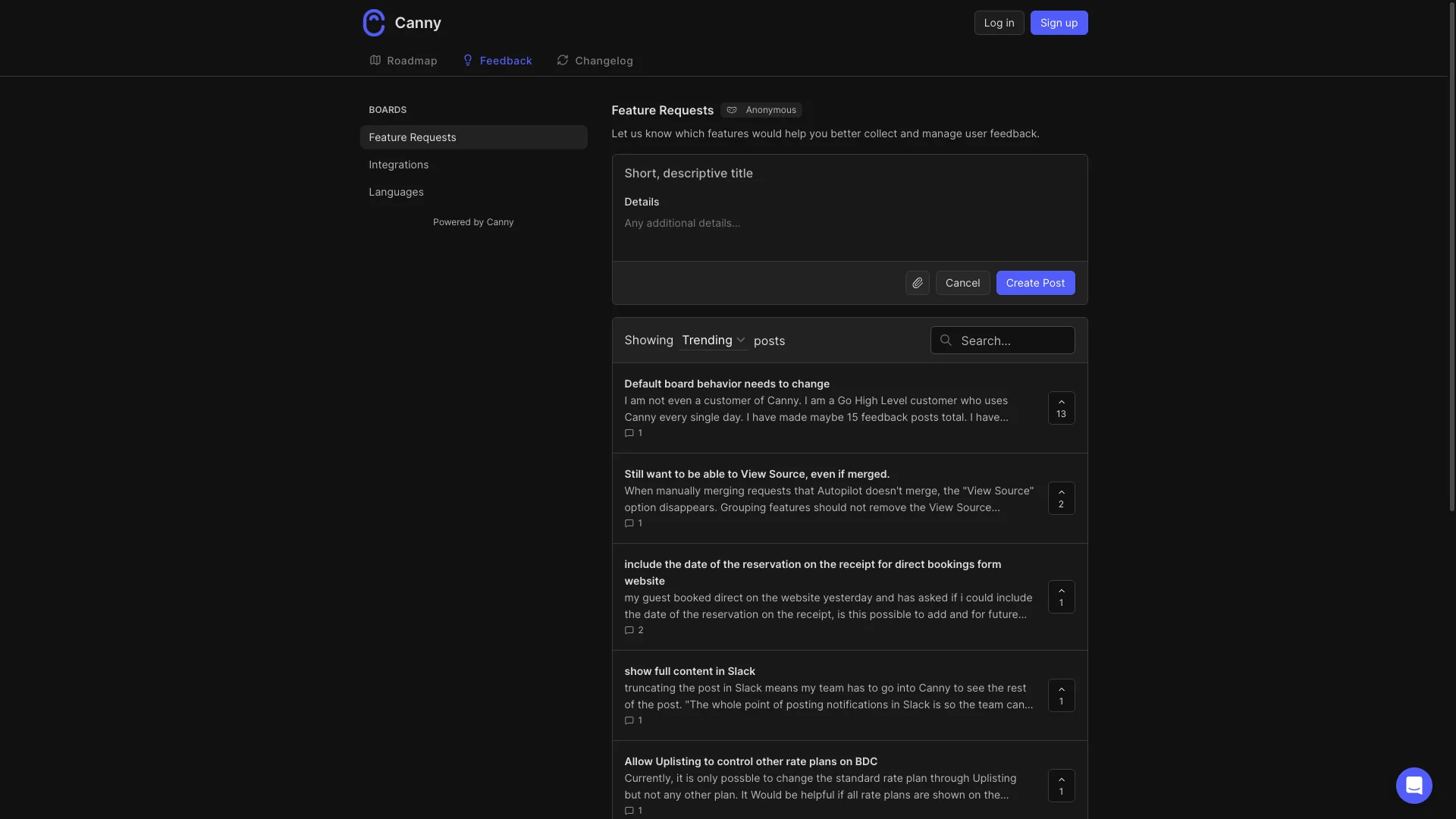
Canny feature requests

What Canny Does Well

Why SaaS Teams Choose Canny

Early-stage SaaS teams choose Canny for:

The Tracked User Pricing Trap

Canny's pricing page shows $19/mo (Core) and $79/mo (Pro), but those are the starting prices for ~100 tracked users only. The cost scales with your user count:

That's a 21x price increase on Core from the advertised $19/mo as you grow. Many SaaS companies hit this wall and switch to flat-pricing tools.

Why SaaS Teams Leave Canny

What Users Say

"Canny looked cheap at $79/mo but at 700 users we were paying $379/mo. Switched to ProductLift—$42/mo flat for our 3-person team with all features included." – SaaS Founder

Who should use Canny: Early-stage SaaS (<25 tracked users) with GitHub workflow serving English-only markets.

Who should look elsewhere: Growing SaaS, international products, teams needing predictable pricing or anonymous voting.

3. Productboard – Best for Advanced Customer Research

⭐ G2 Rating: 4.3/5 | 💰 Starting Price: Free (Starter), $19/maker/mo (Essentials), $59/maker/mo (Pro)

Best for: SaaS product teams ($1M+ ARR) who need customer research workflows beyond simple voting

What Productboard Does Well

Why SaaS Teams Choose Productboard

Growth SaaS ($1M-$50M ARR) with dedicated product teams choose Productboard when they need:

Why SaaS Teams Avoid Productboard

Pricing Reality

A 10-maker team pays $590/mo on Pro = $7,080/year.

Who should use Productboard: SaaS product teams at $1M+ ARR with complex customer research needs and budget.

Who should look elsewhere: Early-stage SaaS, teams needing simple voting, or anyone wanting integrated changelog.

4-8. Mid-Tier Feature Request Tools

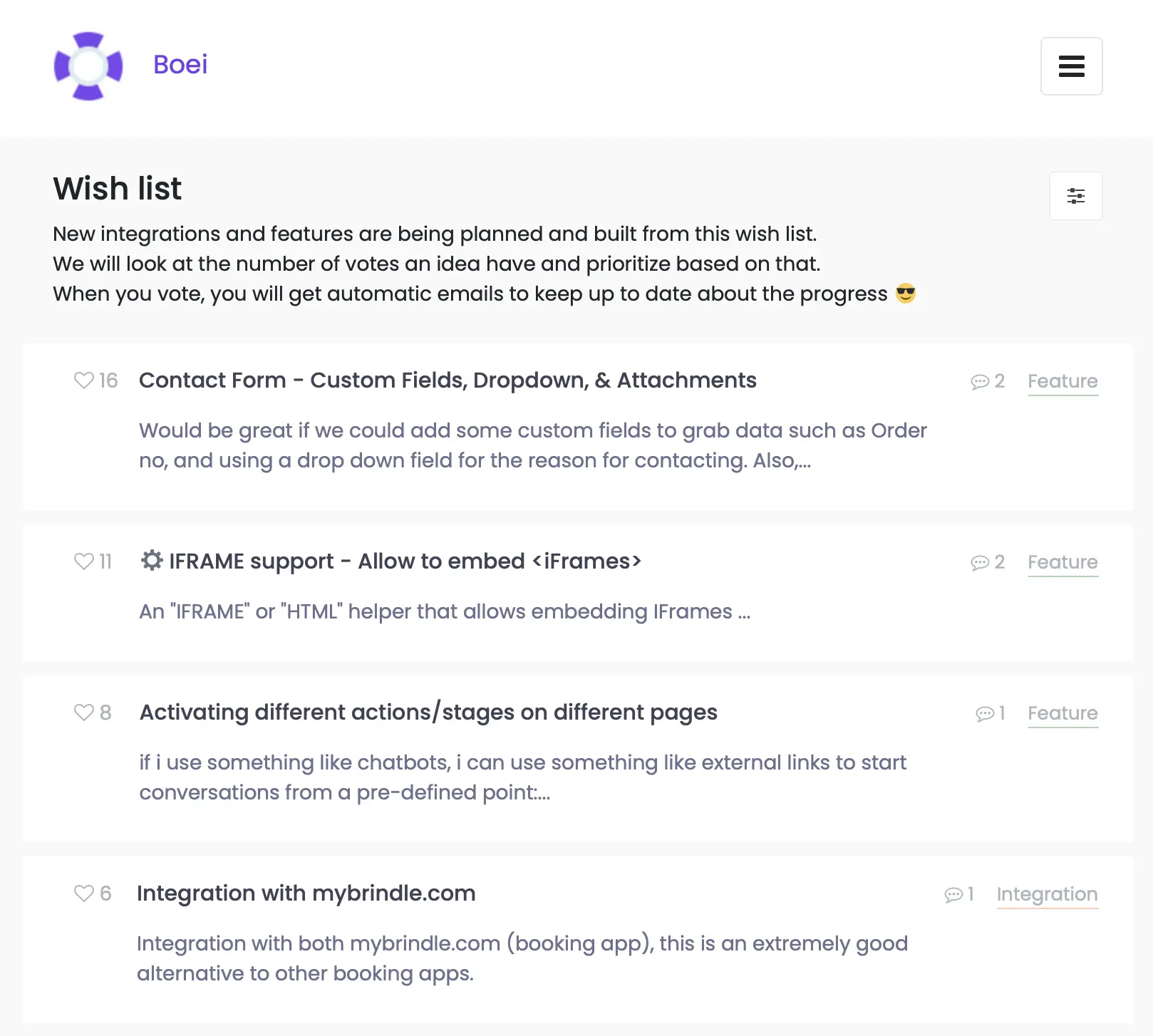
FeatureBase – Modern All-in-One

💰 Price: Free tier, paid from $49/mo | ⭐ G2: 4.9/5
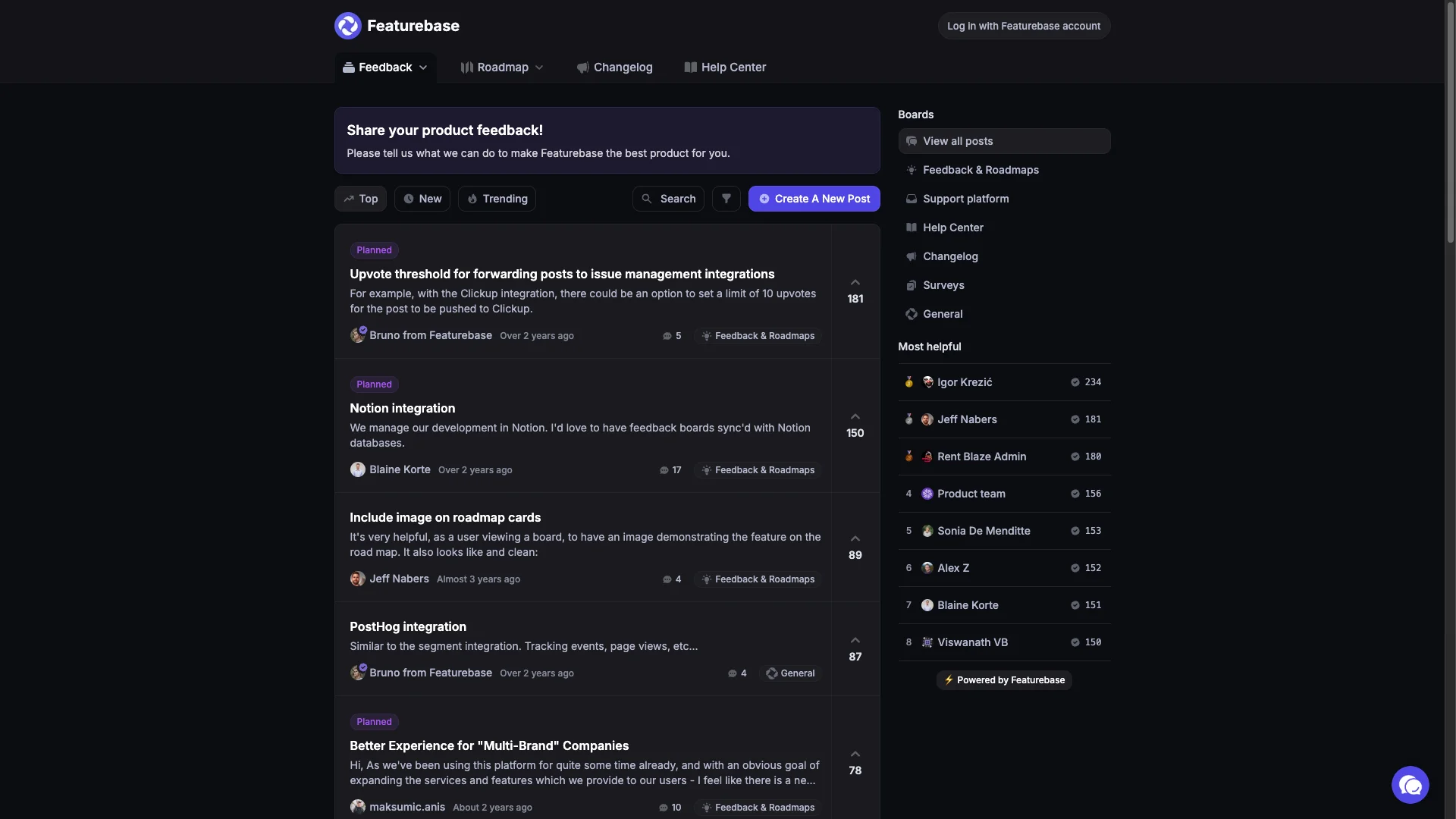
FeatureBase

Why SaaS teams choose it: Modern UI with AI features (duplicate detection, content generation). Includes requests, roadmap, changelog, help desk. Growing fast, good free tier.

Why SaaS teams avoid it: Newer player (less proven at scale). Pricing increases at higher tiers. Some features locked behind premium. No anonymous voting.


Aha! Ideas – Enterprise Feature Request Platform

💰 Price: $39/user/mo (Ideas), $59/user/mo (Roadmaps) | ⭐ G2: 4.3/5
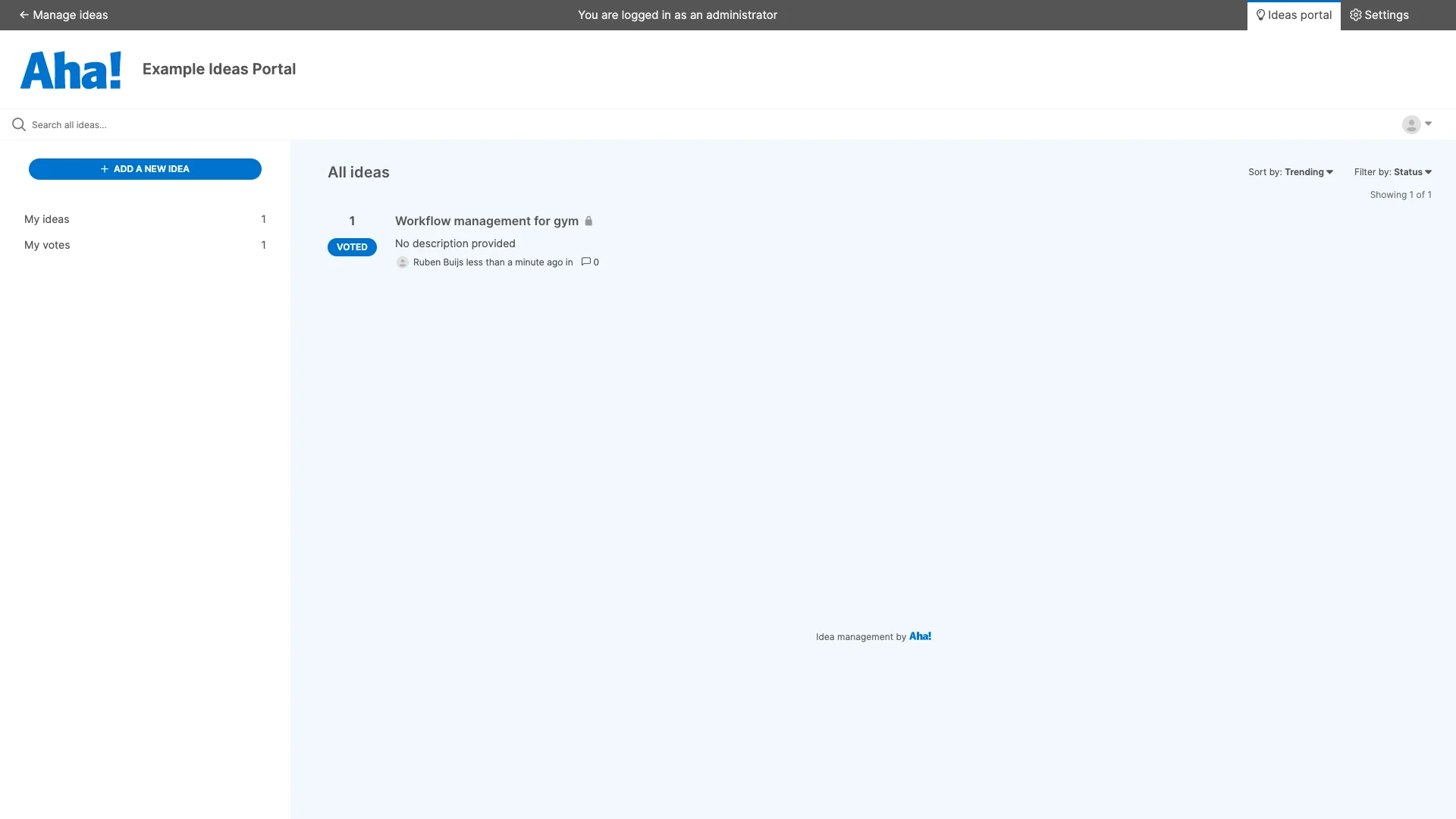
Aha!

Why SaaS teams choose it: Enterprise SaaS ($10M+ ARR) need Aha!'s complete suite with strategy mapping and goal tracking. Powerful prioritization.

Why SaaS teams avoid it: Steep learning curve ("weeks of training"), dated UI, expensive ($195-295/mo for 5 users), too complex for simple request management.


UserVoice – Enterprise Legacy Player

💰 Price: $1,333/month ($16,000/year) minimum (enterprise only) | ⭐ Trustpilot: 2.8/5 (⚠️)

Why SaaS teams choose it: Enterprise SaaS with compliance needs. Trusted by Fortune 500. Advanced analytics. 30-day free trial available. No per-seat charges.

Why SaaS teams avoid it: Expensive ($1,333-2,000+/mo), sales-driven pricing, long sales cycle just to get quote. Trustpilot 2.8/5 is concerning. No self-serve signup.


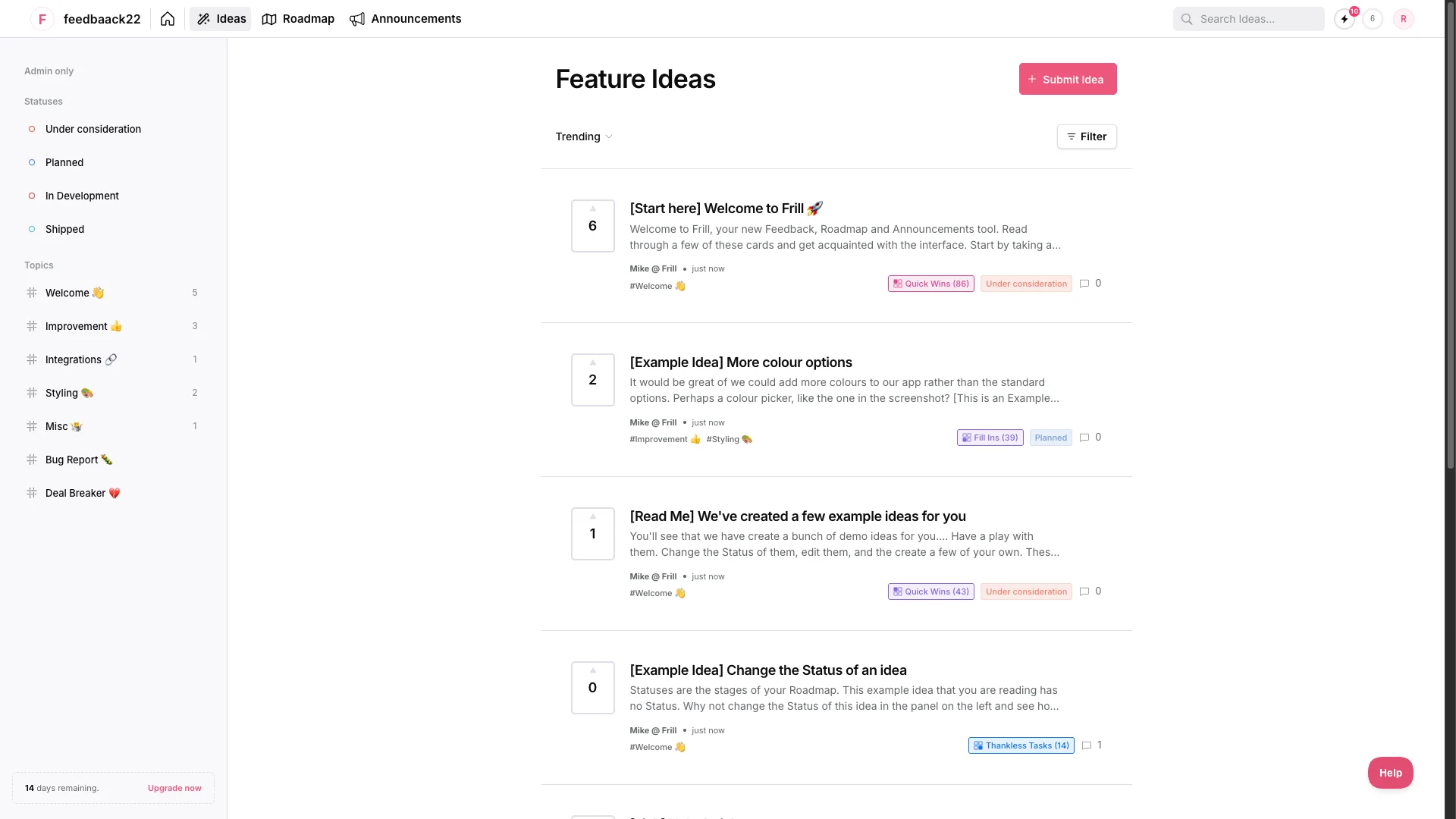
Frill – Budget-Friendly Option

💰 Price: $25/mo flat | ⭐ G2: 4.7/5
Frill

Why SaaS teams choose it: Affordable alternative to Canny. Flat $25/mo (no per-user pricing). Includes requests, roadmap, changelog. GitHub/Jira integration.

Why SaaS teams avoid it: English-only (dealbreaker for international SaaS). No internal comments. No knowledge base. Simpler feature set.


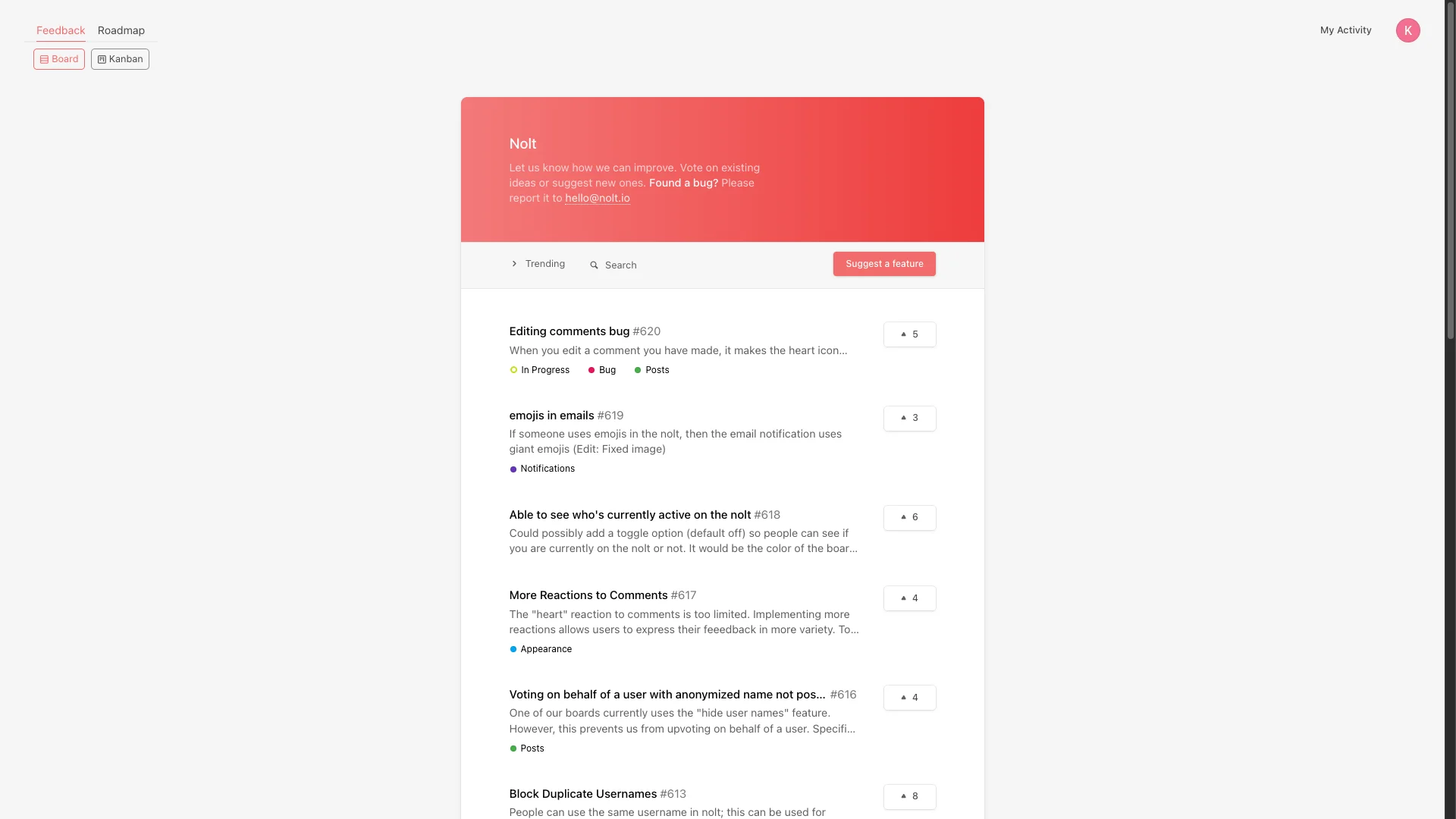
Nolt – Simple & Beautiful

💰 Price: $25/mo flat | ⭐ G2: 5.0/5
Nolt

Why SaaS teams choose it: Beautiful UI, simple feature voting. Perfect for tiny SaaS teams who just need basics. $25/mo flat, no complexity.

Why SaaS teams avoid it: Too simple—no API, no Jira, no prioritization scoring, English-only. Teams outgrow it quickly.

9-14. Budget & Specialized Tools

Upvoty – Cheapest Option with Anonymous Voting

💰 Price: $15/mo flat | ⭐ G2: 4.6/5

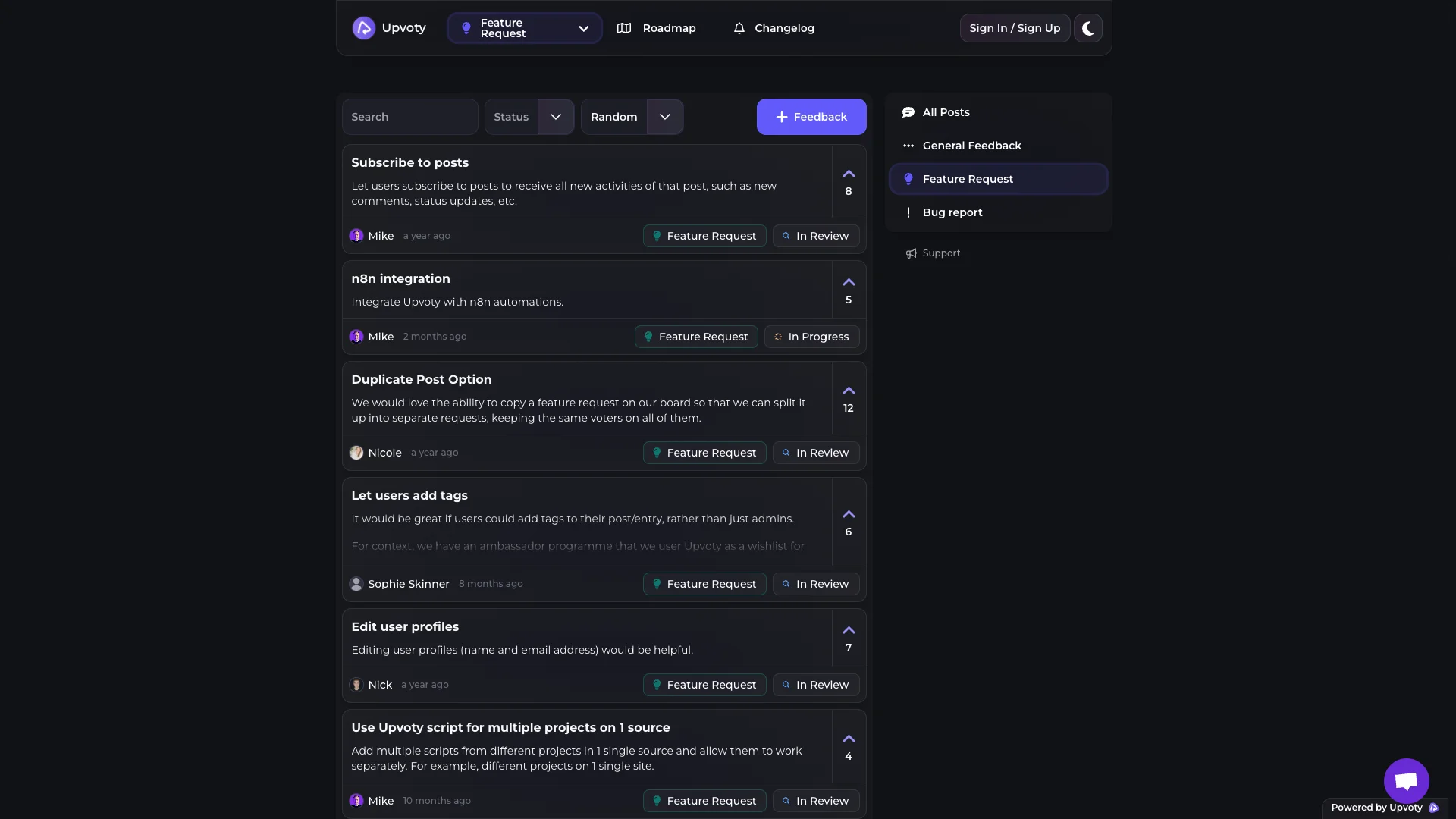
Upvoty

Why SaaS teams choose it: Cheapest tool with anonymous voting. $15/mo flat. Basic voting + roadmap. Good for bootstrapped startups.

Why SaaS teams avoid it: No AI, no prioritization frameworks, no Jira, no knowledge base, no changelog. Outgrow it fast.


Fider – Best Open Source

💰 Price: Free (self-hosted) | ⭐ GitHub: 3K+ stars

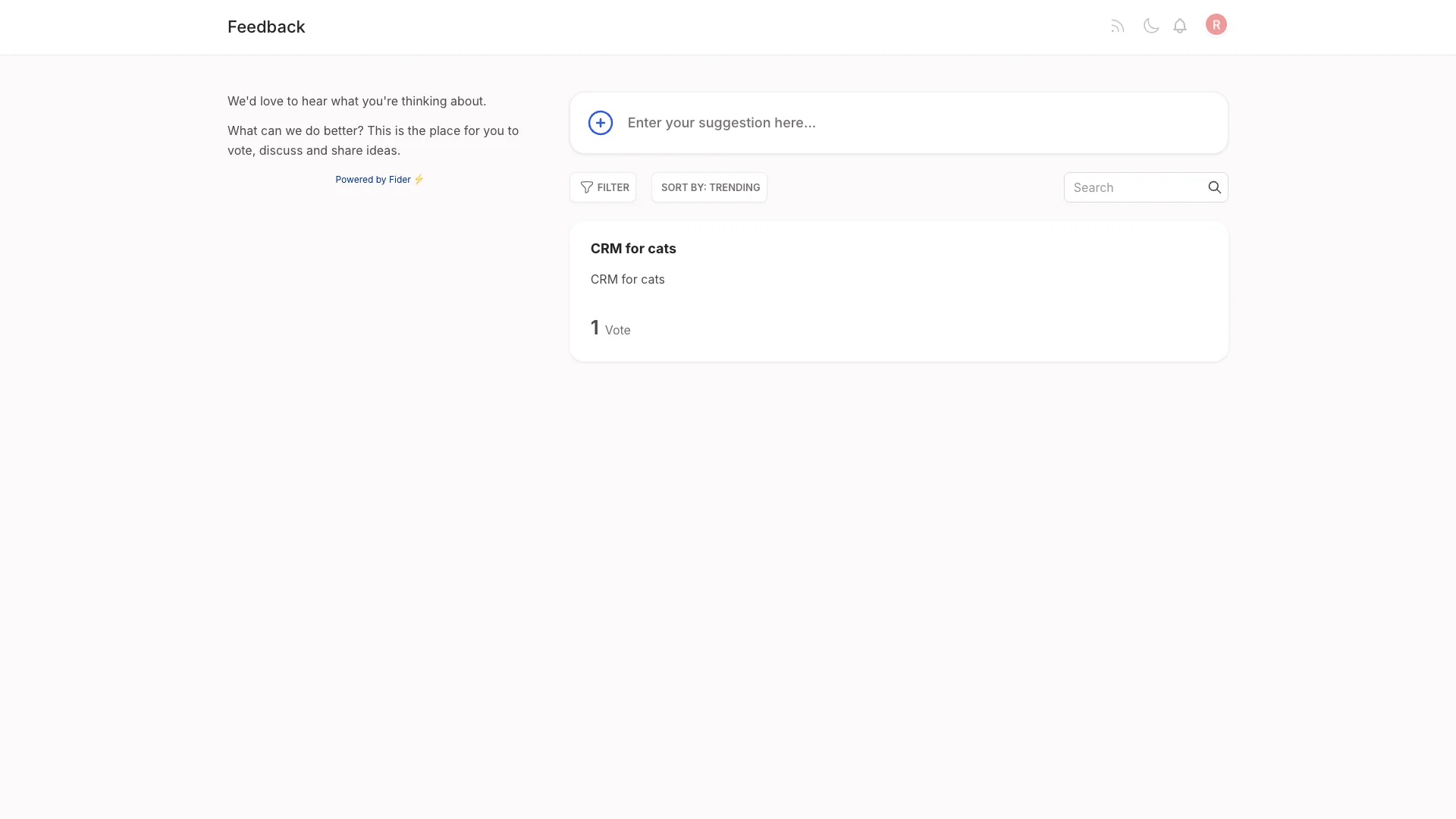
Fider

Why SaaS teams choose it: Open source, self-hosted, free. Full control over data. Good for privacy-focused or technical SaaS teams.

Why SaaS teams avoid it: Requires DevOps time (server, backups, security). Basic features (no RICE scoring, no roadmap integration). You're responsible for uptime.


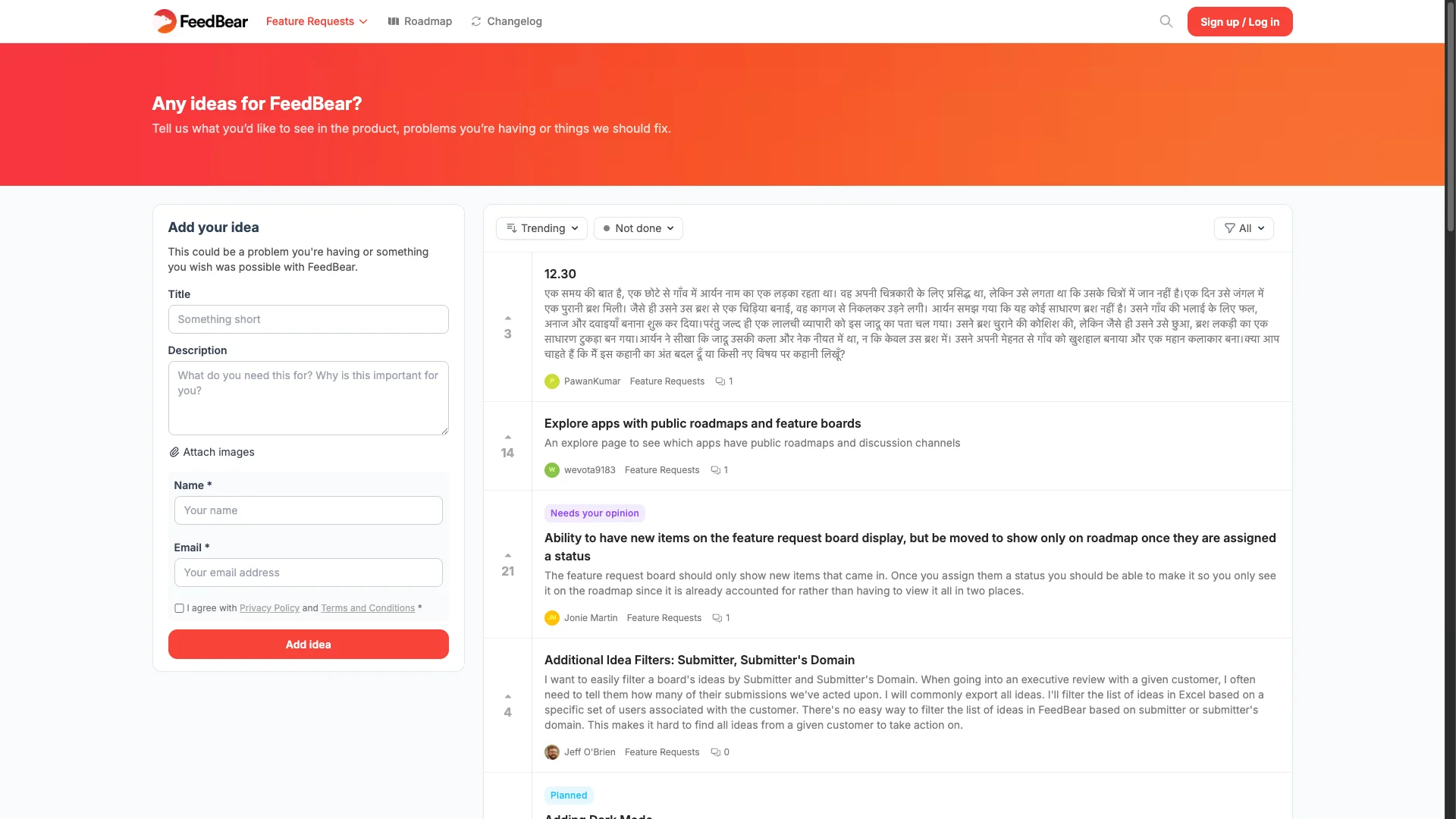
FeedBear – Solid Core Features

💰 Price: $49/mo | ⭐ G2: 4.8/5

FeedBear

Why SaaS teams choose it: Solid voting + roadmap + changelog. Simple, works well. Good for small SaaS teams.

Why SaaS teams avoid it: Limited integrations. No AI features. No advanced prioritization. No anonymous voting.


Sleekplan – Satisfaction Surveys Built-In

💰 Price: $15/mo | ⭐ G2: 4.7/5

Why SaaS teams choose it: Feature requests + CSAT/NPS surveys in one tool. $15/mo flat. Good value.

Why SaaS teams avoid it: No private boards, no AI, no anonymous voting, English-only.


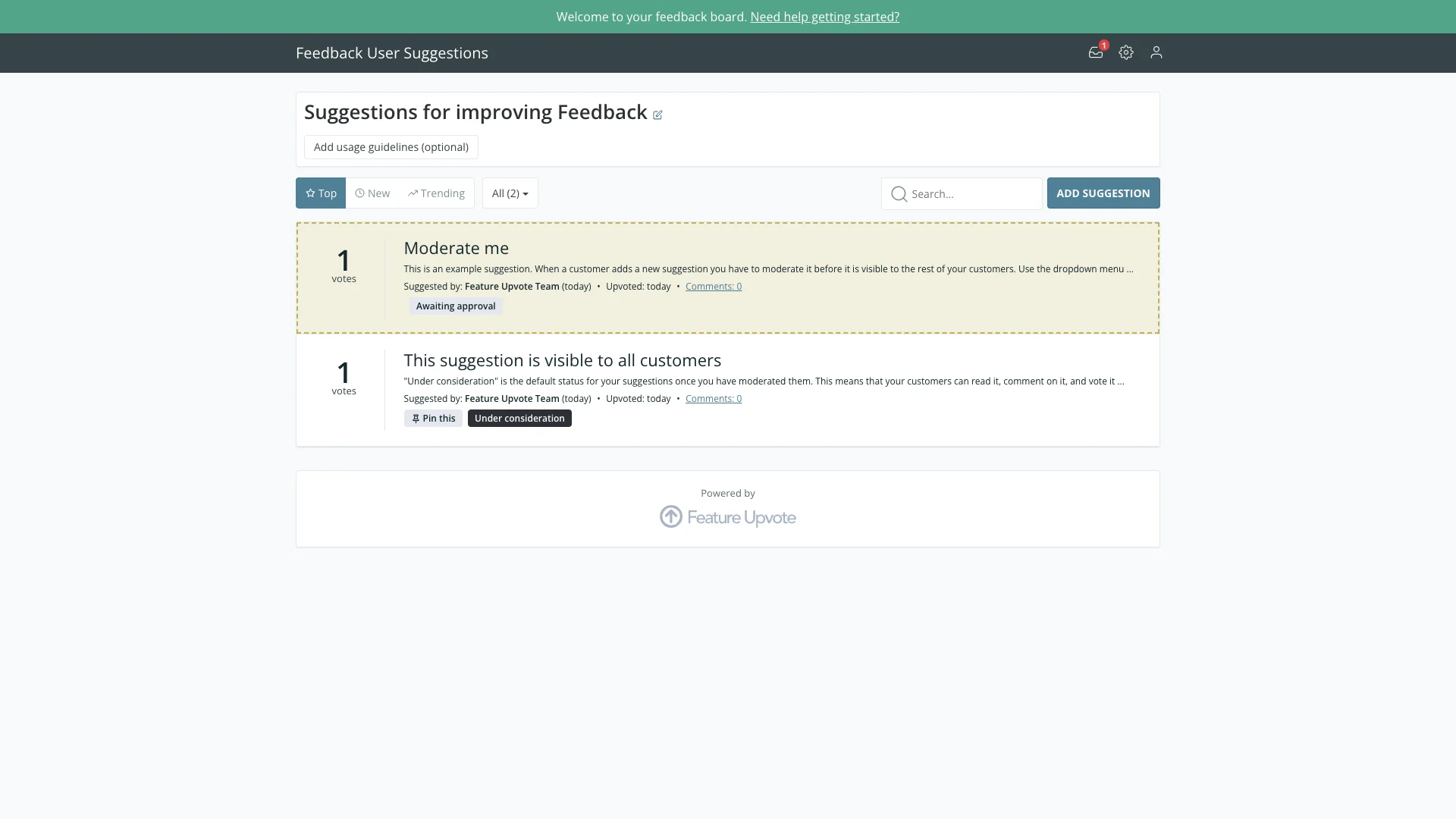
Feature Upvote – Minimalist Approach

💰 Price: $29/mo | ⭐ G2: 4.8/5

Feature Upvote

Why SaaS teams choose it: Simple, focused on core voting. No feature bloat. Easy setup.

Why SaaS teams avoid it: Too minimal—no roadmap, no changelog, no integrations. Just voting.


Trello/Notion – DIY Feature Requests

💰 Price: Free-$10/user/mo | ⭐ G2: 4.4-4.7/5

Why SaaS teams use it: Pre-revenue startups create public board using Trello or Notion. $0 cost, full control.

Why SaaS teams outgrow it: Manual everything—no voting, no auto-notifications, no analytics. Works for 2-3 person teams, breaks at scale.

Feature Comparison

Feature ProductLift Canny Productboard Frill Upvoty
Public Voting
Anonymous Voting
Auto-Notify Voters⚠️ Manual⚠️ Manual⚠️ Manual
Journey Model (Request→Roadmap)✅ Auto⚠️ Manual⚠️ Manual⚠️ Manual⚠️ Manual
Prioritization (RICE/ICE)✅ Advanced
Revenue Weighting (Stripe)⚠️ Manual
Duplicate Detection✅ AI✅ AI⚠️ Manual⚠️ Manual⚠️ Manual
Vote on Behalf
Internal Comments
Changelog Included
Multi-Language✅ (22)
GitHub Integration✅ Best
Jira Integration

Pricing Reality

Tool 100 Voters 500 Voters 1,000 Voters Pricing Model
ProductLift (5 admins)$70/mo$70/mo$70/moFlat per admin
Canny (Pro)$79/mo~$279/mo~$529/moTracked users
Productboard (5 makers)$295/mo$295/mo$295/moPer maker (Pro)
Frill$25/mo$25/mo$25/moFlat rate
Upvoty$15/mo$15/mo$15/moFlat rate
Nolt$25/mo$25/mo$25/moFlat rate
Aha! (5 users)$195/mo$195/mo$195/moPer user (Ideas)
UserVoice$1,333+/mo$1,333+/mo$1,333+/moEnterprise (no per-seat)
FiderFree*Free*Free*Self-hosted

*Fider is free software but requires server costs ($10-50/mo) and DevOps time.

Key Insight: Canny's advertised $19-79/mo prices are for ~100 users. At 1,000 users, you're paying $250-529/mo. Flat pricing (ProductLift, Frill, Upvoty, Nolt) stays predictable regardless of user count.

Which Feature Request Tool Should You Choose?

🚀 Early-Stage SaaS (<$100K ARR)

Choose ProductLift ($42/mo for 3 admins) if you want requests → roadmap → changelog automated workflow.

Choose Canny (free) if you have <25 tracked users and live in GitHub.

Choose Upvoty ($15/mo) if you need anonymous voting on tightest budget.

Choose Frill ($25/mo) if you need GitHub/Jira integration + flat pricing.

📈 Growth SaaS ($100K-$1M ARR)

Choose ProductLift ($140/mo for 10 admins) if you want integrated workflow and predictable pricing.

Choose Productboard ($295-590/mo) if you have budget and need advanced customer research.

Choose FeatureBase ($49+/mo) if you want modern all-in-one with AI features.

🏢 Scale SaaS ($1M+ ARR)

Choose Productboard ($590-1,180/mo) for enterprise customer insights and strategic alignment.

Choose Aha! ($195-590/mo) if you need complete product suite with strategy mapping.

Choose UserVoice ($1,333-2,000/mo) for enterprise compliance and Fortune 500 features.

🎯 Specific Scenarios

Need anonymous voting: ProductLift > Upvoty (only two options)

Need automatic workflow (request → roadmap → ship → notify): ProductLift (only option)

GitHub-centric team: Canny > Frill > Productboard

Jira-native team: ProductLift > Canny > Frill > Productboard

International SaaS (multilingual): ProductLift (22 languages) only option

Need MRR-based prioritization: ProductLift (Stripe integration) only option

Need RICE/ICE scoring: ProductLift > Productboard > Aha!

Bootstrapped, minimal budget: Fider (free, self-host) > Upvoty ($15) > Frill ($25)

Feature Request FAQs

Should I allow anonymous feature requests and voting?

Yes, if you want maximum participation. Anonymous voting drives 3-10x more engagement than login-required tools. Without login: customers vote with one click. With login: 90-95% bounce (friction). Only ProductLift and Upvoty support true anonymous voting. Downside: Can't email voters directly (but ProductLift links anonymous votes to user accounts if they later sign in).

How do I prioritize feature requests beyond vote count?

Use frameworks: RICE (Reach × Impact × Confidence / Effort), ICE (Impact × Confidence × Ease), or MoSCoW (Must/Should/Could/Won't). Better yet, weight votes by revenue—200 votes from free users ≠ 20 votes from enterprise customers paying $10K/year. ProductLift does this via Stripe integration (auto-fetches MRR). Productboard lets you create custom formulas. Canny, Frill, Nolt only offer vote counts.

What happens after customers vote on requests?

In most tools, nothing automatic. You manually decide to build it, create roadmap item, ship it, then manually email voters (or forget). ProductLift automates this: request gets votes → automatically on roadmap → mark shipped → changelog created → voters auto-notified. This closes the loop and shows customers you listen. Traditional tools (Canny, Productboard) require manual work at each step.

How do I collect requests from sales calls and support tickets?

Use "vote on behalf" feature. When sales says "Customer X wants SSO," add vote on their behalf. Tools with this: ProductLift, Canny, Productboard, Frill. Better approach: integrate with your support tool. Canny → Intercom (best integration), Productboard → Zendesk/Salesforce. ProductLift doesn't have Intercom yet but you can manually add votes in 10 seconds.

Should I make my feature request board public or private?

Public. Modern SaaS companies have public voting boards (portal.yourcompany.com). Benefits: customers see you listen, vote drives engagement, reduces "Will you add X?" questions, builds community. Only exception: enterprise SaaS with competitive concerns might use private portal (customers-only). All tools reviewed support public boards. ProductLift and Canny make public the default.

How do I prevent duplicate feature requests?

Use AI duplicate detection (ProductLift, Canny, FeatureBase). AI suggests: "This request is similar to 'Add SSO' (200 votes)—merge?" For manual tools (Frill, Upvoty, Nolt), you merge duplicates yourself. Best practice: when customer submits request, show similar existing requests before they click submit. This prevents 50-70% of duplicates.

Can I connect feature requests to my development workflow (Jira/GitHub)?

Yes. Most tools sync requests to dev tools: Canny → GitHub (best integration), ProductLift → Jira/Azure DevOps, Productboard → Jira/GitHub, Frill → GitHub/Jira. How it works: Request gets 200 votes → Create Jira epic → Link request to epic → Devs build it → Mark done in Jira → Request auto-updates to Shipped. Saves manual syncing.

What's the difference between feature request tool and feedback tool?

Same thing, different names. "Feature request tool" emphasizes voting/prioritization. "Feedback tool" emphasizes collection. All tools reviewed do both: collect feedback AND let customers vote on it. Some (ProductLift, Canny, FeatureBase) also include roadmap + changelog. Others (UserVoice, Productboard) focus more on internal research than public voting.

How much should I pay for feature request software?

Budget tier: $15-25/mo flat (Upvoty, Frill, Nolt) for basics. Mid-tier: $42-140/mo (ProductLift 3-10 admins, Canny <25 users free). Growing tier: $150-500/mo (Canny 500+ users, Productboard 5+ makers, FeatureBase). Enterprise: $500-2,000/mo (Productboard 10+ makers, Aha!, UserVoice). Watch out for per-user pricing—can 10x as you grow. Flat pricing (ProductLift, Frill, Upvoty) is predictable.

Can I migrate feature requests from one tool to another?

Yes. Export requests as CSV (most tools support this), import to new tool, notify customers about new voting URL. ProductLift offers free migration assistance. Timeline: 2-4 hours for 100-500 requests. Challenges: vote counts reset (voters need to re-vote), comments might not transfer, historical data may be lost. Best practice: migrate during slow period, email customers explaining benefits of new tool.

Related Comparison Guides

Explore more tool comparisons to find the right software for your team:

Browse all comparison guides

Stop Losing Feature Requests in Email

ProductLift gives you public voting board, automatic roadmap, and voter notifications when you ship. All for $14/mo per admin.

No credit card required · 14-day free trial · Anonymous voting (no login required) · Auto-notify voters when you ship