The Opportunity Scoring Model is a valuable tool used in product management to evaluate and prioritize potential opportunities for a product or service. It provides a systematic approach to assess and compare various opportunities based on predefined criteria. By assigning scores to different factors, this model helps product managers make informed decisions and allocate resources effectively.
Importance of Opportunity Scoring Model
The Opportunity Scoring Model is crucial for product managers as it enables them to objectively evaluate and compare different opportunities. It helps in identifying the most promising opportunities that align with the product's goals and target market. By using this model, product managers can prioritize their efforts, focus on opportunities with the highest potential, and maximize the return on investment.
How to use the Opportunity Scoring Model
-
Identify the criteria: Begin by determining the criteria that are important for evaluating opportunities. These criteria can vary depending on the product, industry, and market conditions. Common criteria include market size, growth potential, competitive landscape, customer demand, technical feasibility, and financial viability.
-
Assign weightage: Assign weightage to each criterion based on its relative importance. The weightage should reflect the product manager's priorities and the overall strategy of the organization. For example, if customer demand is a key focus, it can be assigned a higher weightage than other criteria.
-
Score opportunities: Evaluate each opportunity against the predefined criteria and assign scores accordingly. The scoring can be done on a numerical scale, such as 1 to 10, or in relative terms like low, medium, and high. The scores should be based on thorough research, market analysis, and expert insights.
-
Calculate total scores: Multiply the scores of each criterion by their assigned weightage and calculate the total score for each opportunity. This step helps in aggregating the data and providing a comprehensive view of the opportunities.
-
Compare and prioritize: Compare the total scores of different opportunities to determine their relative attractiveness. Higher scores indicate greater potential and should be given higher priority. Product managers can then create a prioritized list of opportunities based on their scores.
Examples of Opportunity Scoring Model
- Opportunity A: Market Size - 8, Growth Potential - 7, Competitive Landscape - 6, Customer Demand - 9, Technical Feasibility - 7, Financial Viability - 8. Total Score: 45.
- Opportunity B: Market Size - 7, Growth Potential - 9, Competitive Landscape - 8, Customer Demand - 6, Technical Feasibility - 7, Financial Viability - 6. Total Score: 43.
- Opportunity C: Market Size - 6, Growth Potential - 8, Competitive Landscape - 7, Customer Demand - 7, Technical Feasibility - 9, Financial Viability - 7. Total Score: 44.
In this example, Opportunity A has the highest total score and should be prioritized over Opportunity B and C.
Useful Tips for Opportunity Scoring Model
- Regularly review and update the criteria and weightage to ensure they align with the evolving market conditions and business goals.
- Involve key stakeholders and subject matter experts in the scoring process to gain diverse perspectives and insights.
- Consider conducting a risk analysis for each opportunity to evaluate potential challenges and uncertainties.
Related terms
- Market analysis
- Product prioritization
- SWOT analysis
- Competitive landscape
- Customer segmentation
- Return on investment (ROI)
- Market research
- Feasibility study
- Business case
- Value proposition
FAQ
What is an Opportunity Scoring Model?
Why is an Opportunity Scoring Model important?
How does an Opportunity Scoring Model work?
What are the key criteria used in an Opportunity Scoring Model?
Who is responsible for developing an Opportunity Scoring Model?
How often should an Opportunity Scoring Model be updated?
What are the benefits of using an Opportunity Scoring Model?
Are there any limitations to an Opportunity Scoring Model?
Can an Opportunity Scoring Model be customized for different industries or companies?
What other factors should be considered alongside an Opportunity Scoring Model?
The faster, easier way to capture user feedback at scale
Join over 5,204 product managers and see how easy it is to build products people love.





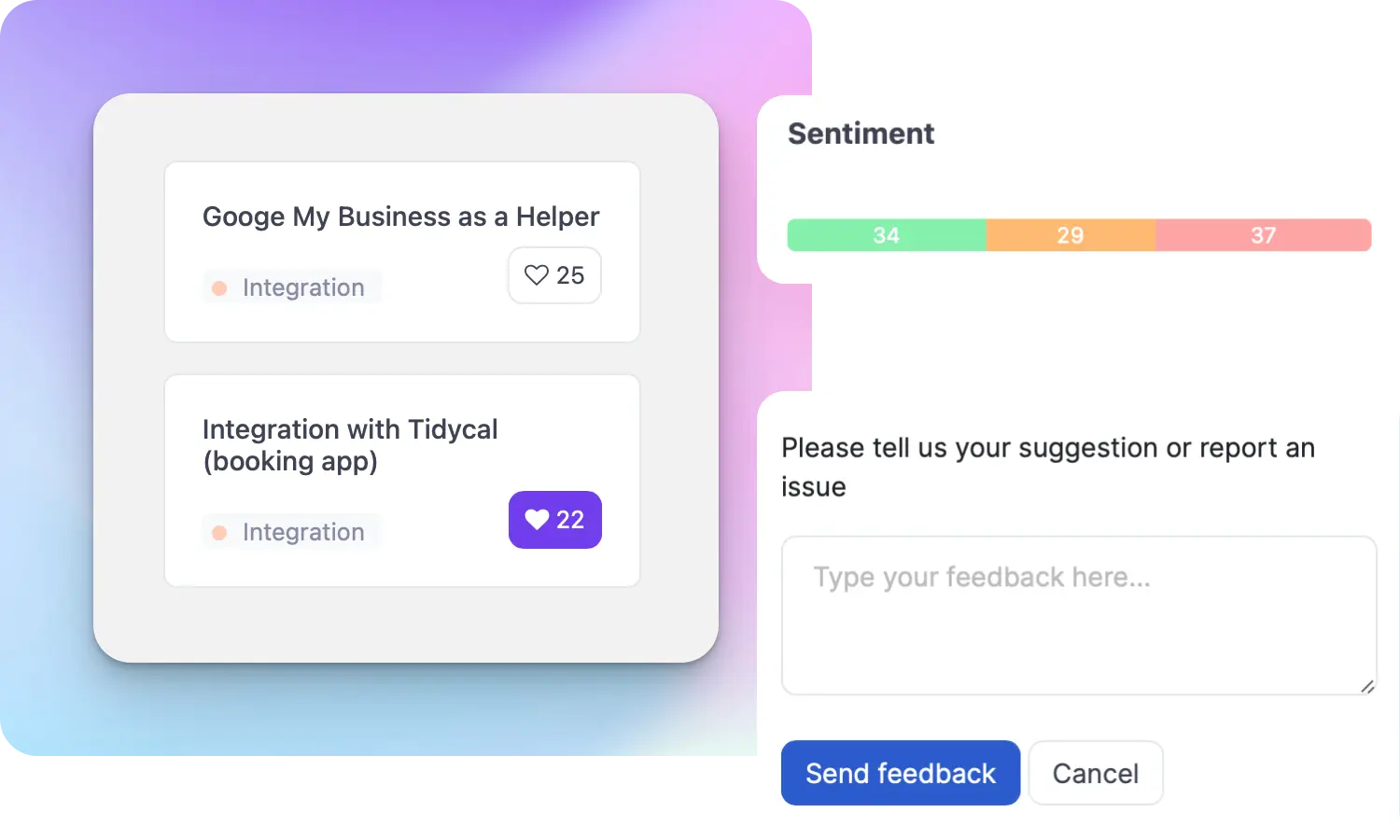
Did you know 80% of software features are rarely or never used? That's a lot of wasted effort.
SaaS software companies spend billions on unused features. In 2025, it was $29.5 billion.
We saw this problem and decided to do something about it. Product teams needed a better way to decide what to build.
That's why we created ProductLift - to put all feedback in one place, helping teams easily see what features matter most.
In the last five years, we've helped over 5,204 product teams (like yours) double feature adoption and halve the costs. I'd love for you to give it a try.

Ruben Buijs
Founder & Digital Consultant