 Ruben Buijs
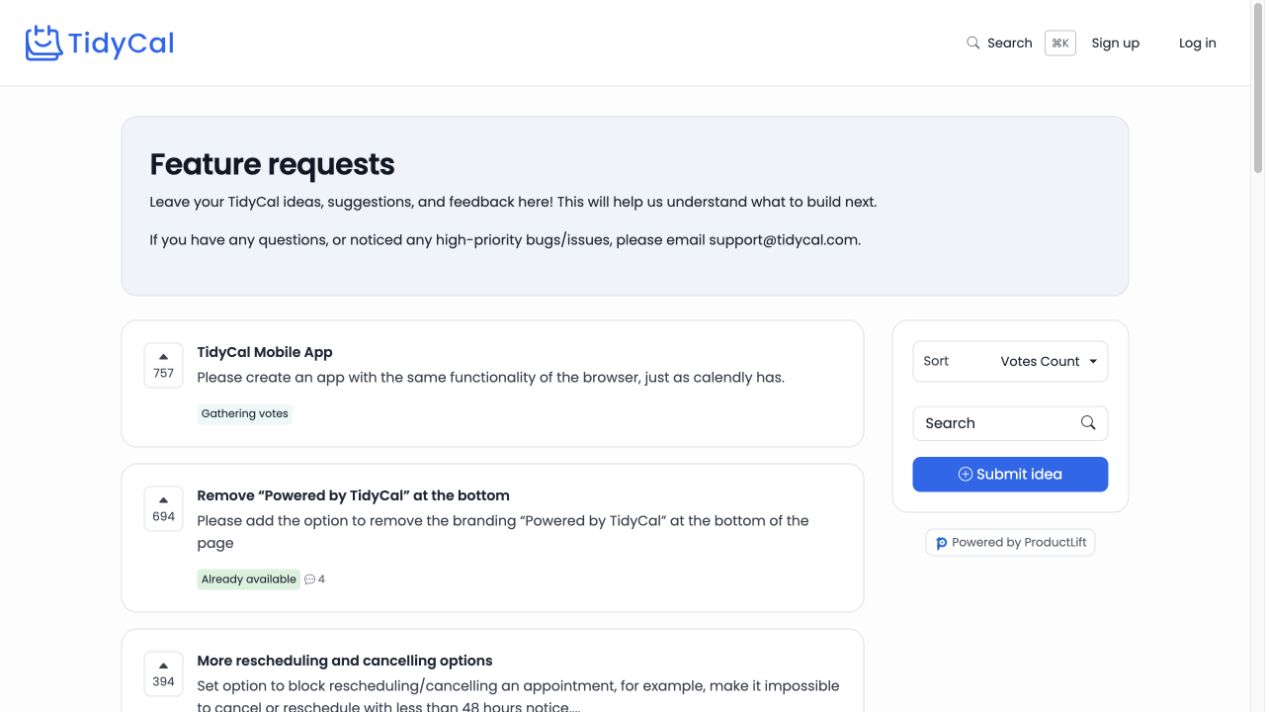
TidyCal uses ProductLift to give customers a public place to request improvements, vote on ideas and see the team's response. Its board lives at roadmap.tidycal.com, with TidyCal's own name and branding.
TidyCal is part of AppSumo Originals, alongside products such as BreezeDoc, FormRobin and SendFox. Each product serves a different audience. The shared question is simple: how do you hear what customers want and show them what happens next?
A place where customers can see demand
For a scheduling product, requests can range from booking-page details to a mobile app. A public feedback board brings those ideas into one place. Customers can find a request that already describes their need, add a vote and read the discussion.
That is different from sending a suggestion to a private support inbox. Other customers can see the idea too. The team has a place to explain its decision, and the explanation stays attached to the request.
On 25 November 2026, the TidyCal Mobile App request showed 757 votes. That is a useful signal of interest. A vote count gives the team one input for deciding what to build, alongside the work involved and the product's direction.
What David Kelly values about the setup
David Kelly, Advisor at AppSumo Originals, describes how the team uses ProductLift:
"I really like ProductLift's advanced capabilities to track customer feedback, embed directly in our site, and use the API to analyze tickets and take actions directly from agentic tools like Claude Code. It's a clean, simple product that gets the job done for understanding what customers want."
David Kelly, Advisor, AppSumo Originals
The combination matters for a portfolio of products. Customers need a clear place to contribute. The team also needs ways to work with that feedback beyond the public board. David's example connects the customer-facing board with the API the team uses in its own work.
A useful answer is not always a new feature
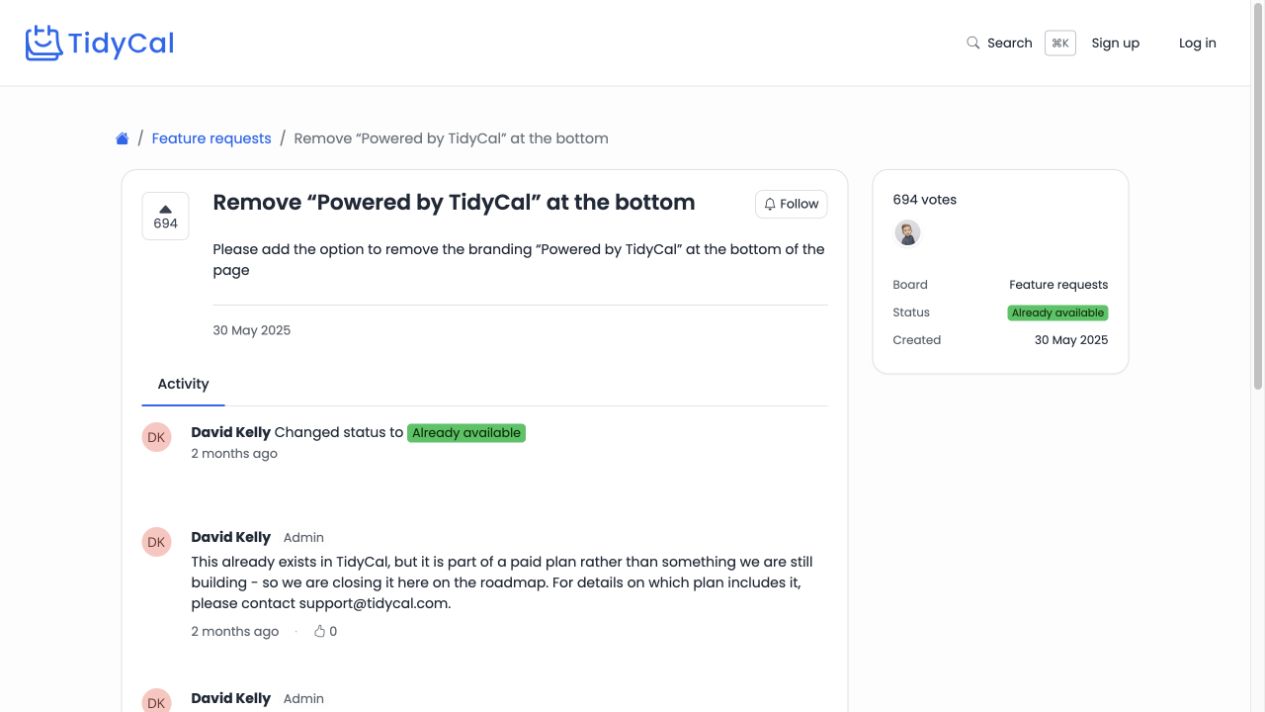
One of TidyCal's requests asks to remove the "Powered by TidyCal" branding from booking pages. When checked on 25 November 2026, it had 694 votes and the status "Already available."
David's reply explains that this option already exists in a paid plan. He closes the roadmap item and points customers to support for the relevant plan details. The activity also records several similar requests merged into this one.
This is a useful example of closing the feedback loop. The team does not leave customers guessing whether the idea is still being built. It explains that the option exists and gives them a next step. Keeping similar requests together also gives later visitors one place to find that answer.
Read the public request and the team's reply.
A branded destination with a clear purpose
The board uses a TidyCal subdomain, so customers can find feedback under the product's own address. The current page also displays a "Powered by ProductLift" footer link. A custom domain gives the board a familiar home while ProductLift handles the feedback experience behind it.
For TidyCal, the visible pattern is practical: collect ideas, let customers show interest, combine overlapping requests and explain the outcome. The same public item can hold the original need, the discussion and the team's answer.
Explore feedback boards and public roadmaps to see how you could give your own customers a place to contribute. Or book a demo to discuss your setup.