Pendo is a product experience platform known for its powerful analytics and in-app guides. But if you have ever tried to find out what Pendo actually costs, you know the frustration: there is no public pricing page. Every paid plan says "Request pricing" and you must sit through a sales demo to get a quote.
In this guide, we pull together everything known about Pendo's pricing in 2026 and explain what each plan includes. We also cover estimated costs based on user reports and compare it against a flat-rate alternative for teams that primarily need feedback and roadmap tools.
Quick verdict: Pendo is an analytics-first platform with feedback bolted on. If product analytics and in-app guides are your top priority, Pendo is excellent. If your primary need is customer feedback collection, public roadmaps, or changelogs, Pendo is expensive overkill. You will pay enterprise prices for features that are secondary in Pendo's product.
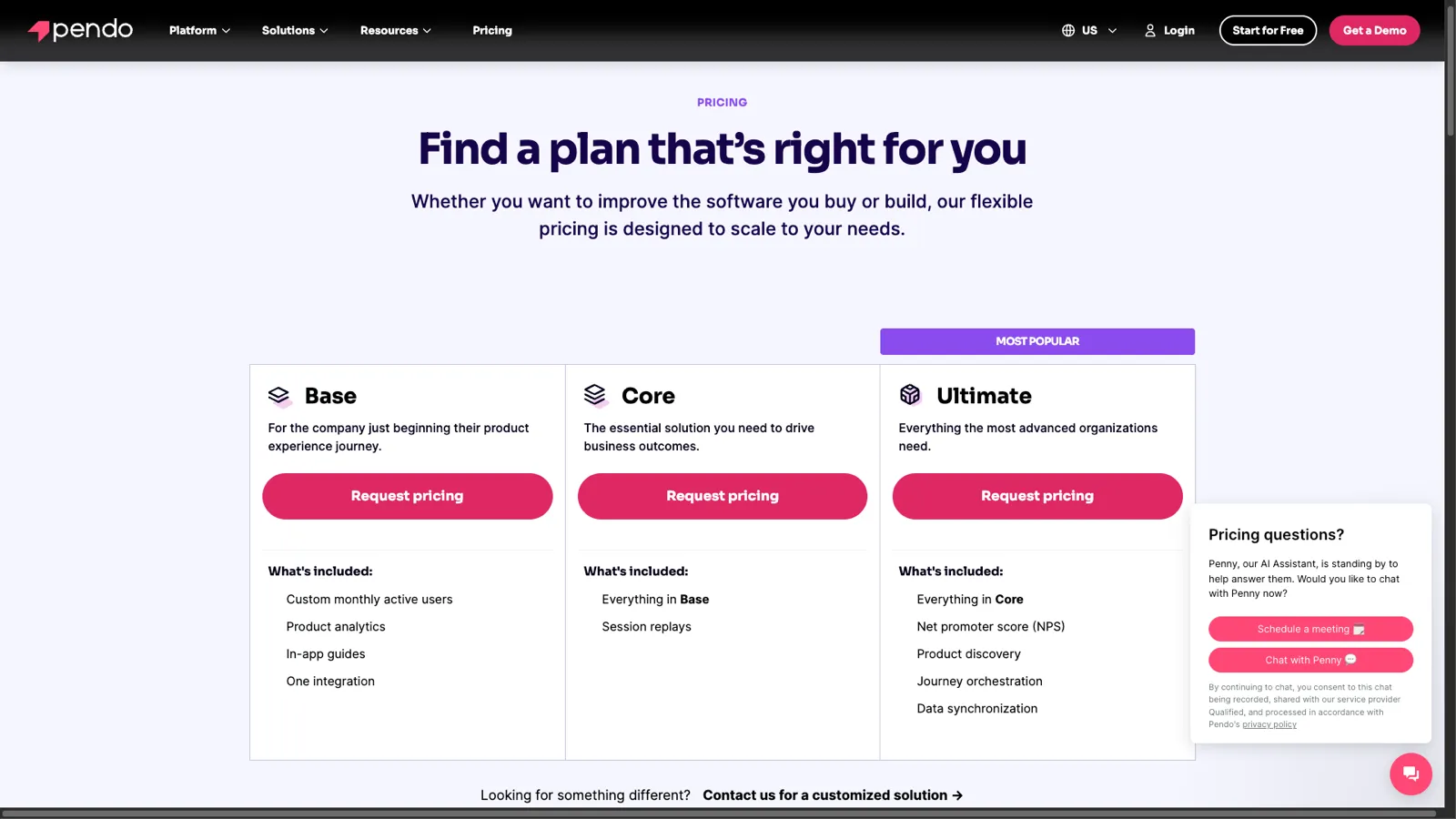
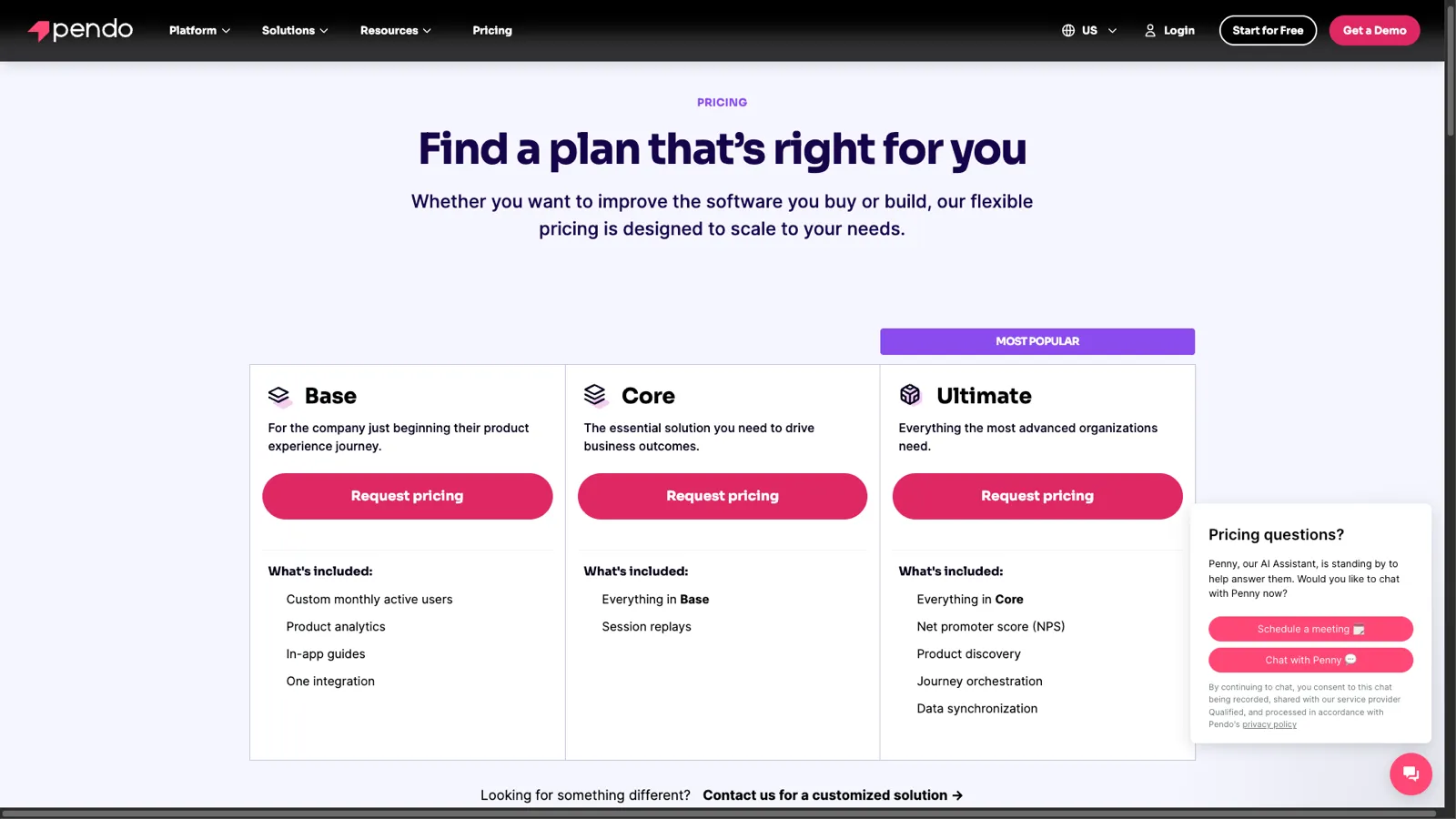
Pendo does not publish its pricing openly. All paid plans display "Request pricing" on their website. The plan details below are based on Pendo's current pricing page, and cost estimates are compiled from G2 reviews, Reddit discussions, and verified customer reports.
Pendo's website includes a "Start for Free" button, suggesting a limited free option still exists separate from the main pricing tiers.
| Detail | Info |
|---|---|
| Price | $0 |
| Availability | Limited free option (separate from paid tiers) |
| What you get | Basic analytics, limited in-app guides |
| What you don't get | Full analytics, session replays, NPS, product discovery, advanced integrations |
| Detail | Info |
|---|---|
| Price | Request pricing (custom quote) |
| Description | "For the company just beginning their product experience journey" |
| MAU Limit | Custom monthly active users (negotiated) |
| What you get | Product analytics, in-app guides, one integration |
| What you don't get | Session replays, NPS, product discovery, journey orchestration, data synchronization |
| Detail | Info |
|---|---|
| Price | Request pricing (custom quote) |
| Description | "The essential solution you need to drive business outcomes" |
| MAU Limit | Custom monthly active users (negotiated) |
| What you get | Everything in Base, plus session replays |
| What you don't get | NPS, product discovery, journey orchestration, data synchronization |
| Detail | Info |
|---|---|
| Price | Request pricing (custom quote) |
| Description | "Everything the most advanced organizations need" |
| MAU Limit | Custom monthly active users (negotiated) |
| What you get | Everything in Core, plus NPS, product discovery, journey orchestration, data synchronization |
Pendo also notes: "Looking for something different? Contact us for a customized solution." All Pendo plans require annual contracts. Monthly billing is not available.
Pendo's pricing is primarily driven by your monthly active users (MAU), not your team size. Since all plans require custom quotes, the actual cost depends on your MAU count, feature requirements, and negotiation. This means the bill grows as your product grows, creating unpredictable cost escalation.
The following estimates are based on publicly reported figures from G2 reviews, Reddit discussions, and verified customer reports. These are not official Pendo prices and your actual quote may differ significantly.
| MAU | Estimated Plan | Estimated Annual Cost | Monthly Equivalent |
|---|---|---|---|
| 500 | Free | $0 | $0 |
| 2,000 | Base (low) | ~$7,000 (reported) | ~$583 |
| 5,000 | Base (mid) | ~$9,000 (reported) | ~$750 |
| 10,000 | Base/Core | ~$12,000 (reported) | ~$1,000 |
| 25,000 | Core | ~$20,000 (reported) | ~$1,667 |
| 50,000 | Core/Ultimate | ~$28,000 (reported) | ~$2,333 |
| 100,000 | Ultimate | ~$35,000+ (reported) | ~$2,917+ |
These are rough estimates only. Since Pendo does not publish any pricing, every contract is individually negotiated. Your actual quote will depend on your specific MAU count, selected plan tier, and feature requirements.
The MAU-based model means your Pendo bill scales with your success. As one user described it:
"Pricing increased significantly as our MAU grew."
If your product goes from 5,000 to 50,000 active users, your Pendo bill could increase 3-4x. This is a fundamentally different model from per-seat pricing, and it punishes product-led growth.
"Had to sit through a 45-minute demo just to get pricing."
This is the most consistent complaint about Pendo. You cannot self-serve pricing. Every plan says "Request pricing." Your team invests hours before you even know if Pendo fits your budget.
"The feedback features feel like an afterthought compared to analytics."
Pendo added feedback collection to complement its analytics suite, but it is not the core product. The feedback module lacks dedicated voting boards, a public changelog, a knowledge base, and prioritization frameworks that purpose-built feedback tools include.
If your MAU exceeds your contracted tier, you will face overage charges or be pushed to upgrade mid-contract. Since MAU can spike during launches or marketing campaigns, this introduces billing unpredictability.
Pendo requires a JavaScript snippet in your product, data configuration, and analytics setup. The implementation is more involved than a standalone feedback portal and typically requires engineering involvement.
All paid Pendo plans are annual. There is no monthly option. You are committing to a custom-quoted annual contract before you know if the product delivers value for your team.
Real quotes from G2 and Reddit reviews:
"Great for analytics but if you just need feedback, it's expensive overkill."
"Had to sit through a 45-minute demo just to get pricing."
"The feedback features feel like an afterthought compared to analytics."
"Pricing increased significantly as our MAU grew."
"We were paying $18,000/year for Pendo and only using the feedback and NPS features. Realized we could get better feedback tools for a tenth of the price."
The pattern is clear: teams that use Pendo primarily for product analytics find strong value. Teams that adopted Pendo hoping for a complete feedback and roadmap solution often feel they are overpaying for analytics they do not need.
This comparison focuses on feedback and roadmap capabilities, since that is where these products overlap. ProductLift offers tiered plans starting at $19/month (annual) with unlimited end-users and all features included.
Pendo estimates below are based on user-reported figures and may not reflect your actual quote.
| Scenario | Pendo (Estimated from user reports) | ProductLift |
|---|---|---|
| Small team, 500 MAU | $0 (Free, limited) | From $19/mo (Starter, 2 admins) |
| Growing team, 5,000 MAU | ~$750/mo (~$9,000/yr reported) | From $49/mo (Pro, 5 admins) |
| Scaling team, 25,000 MAU | ~$1,667/mo (~$20,000/yr reported) | From $129/mo (Business, 25 admins) |
| Large team, 50,000 MAU | ~$2,333/mo (~$28,000/yr reported) | From $129/mo (Business, 25 admins) |
| Enterprise, 100,000+ MAU | ~$2,917+/mo (~$35,000+/yr reported) | From $129/mo (Business, 25 admins) |
Note: ProductLift has no MAU limits. Whether you have 500 or 500,000 tracked users, the price stays the same. Plans are tiered by number of admins, not by usage.
| Feature | Pendo | ProductLift |
|---|---|---|
| Feedback boards | Basic (secondary feature) | Full-featured, purpose-built |
| Voting / upvoting | Limited | Included with anonymous voting |
| Public roadmap | Not a core feature | Included |
| Changelog | Not available | Included |
| Knowledge base | Not available | Included |
| Prioritization frameworks | Not available | RICE, ICE, MoSCoW included |
| Product analytics | Industry-leading | Not included (different focus) |
| In-app guides | Industry-leading | Not included (different focus) |
| Session replays | Core plan and above | Not included (different focus) |
| NPS surveys | Ultimate plan only | Not included (different focus) |
| White-label / custom domain | Limited | Included |
| SSO | Paid plans only | Included |
| Multi-language | Limited | 22 languages |
| AI features | AI-powered insights | AI-powered feedback analysis |
| Stripe integration | Not available | Included |
| Unlimited tracked users | MAU-gated pricing | Included on all plans |
| Monthly billing option | Not available | Available |
| Public pricing | Not available (request quote) | Transparent, on website |
Pendo is worth the price if product analytics and in-app guides are your primary need. The analytics depth is industry-leading. If you mainly need feedback collection, roadmaps, or a changelog, Pendo is expensive for what you will actually use. You will pay for a full analytics suite while only using the feedback module.
Pendo offers three paid tiers: Base, Core, and Ultimate. All display "Request pricing" with no public prices. Base includes product analytics, in-app guides, and one integration. Core adds session replays. Ultimate (marked as most popular) adds NPS, product discovery, journey orchestration, and data synchronization. A limited free option also appears to be available via the "Start for Free" button on their site.
Pendo's website has a "Start for Free" button, suggesting a limited free option exists. However, the free tier is separate from the main Base, Core, and Ultimate pricing plans and is likely restricted in MAU and features. Feedback, advanced analytics, and most features require a paid plan.
Pendo does not publish any prices. All three paid plans (Base, Core, and Ultimate) require you to request a custom quote. Based on user reports, costs reportedly start around $7,000/year for lower MAU counts and can reach $35,000+/year or more at scale. Your actual price depends on your MAU, selected tier, and negotiation.
Pendo's Base plan requires a custom quote and reportedly starts around $7,000/year or more for limited MAU. ProductLift starts at $228/year (Starter plan) with unlimited end-users. A team needing feedback and roadmap tools saves significantly by choosing ProductLift over Pendo, since there are no MAU limits and pricing is transparent.
Yes. MAU overages can spike your bill unexpectedly. There is no public pricing page, so you must invest time in sales calls just to learn the cost. Annual contracts lock you in. The feedback features are basic compared to purpose-built tools, so you may need additional subscriptions to fill the gaps.
Pendo's site includes a "Start for Free" button, indicating a limited free option is available. However, it is separate from the main pricing tiers (Base, Core, Ultimate) and is likely restricted in terms of MAU and available features. The feedback and advanced analytics features are not included in the free tier.
Pendo uses a sales-led model with custom quotes based on your MAU, feature requirements, and contract length. All three plans (Base, Core, Ultimate) display "Request pricing" instead of a dollar amount. This is common among enterprise SaaS products but frustrating for teams doing early-stage evaluation.
Technically yes, but it is not recommended. Pendo's feedback features are designed to complement its analytics suite. If feedback is your primary use case, you will be paying for analytics infrastructure you do not need. Purpose-built feedback tools like ProductLift offer more feedback functionality at a lower price.
Pendo counts any user who triggers at least one event in your product during a calendar month. This includes both logged-in and anonymous users if they interact with Pendo-instrumented elements. All paid plans have custom MAU limits that are negotiated as part of your contract.
If you need product analytics and in-app onboarding guides, Pendo's free option is a reasonable starting point for exploration. You will likely need to move to the Base plan quickly, which requires a custom quote and annual commitment. Based on user reports, paid plans start around $7,000/year, which is steep for small teams. For feedback and roadmap needs, a dedicated tool is more cost-effective.
Choose Pendo if:
Choose ProductLift if:
Pendo and ProductLift serve fundamentally different primary use cases. Pendo is an analytics platform with feedback features. ProductLift is a feedback platform with everything you need to collect, prioritize, and communicate product decisions. If you need analytics, use Pendo (or a dedicated analytics tool). If you need feedback, roadmaps, changelogs, and a knowledge base, ProductLift delivers all of that starting at $19/month with no MAU limits.
For a broader comparison, see our guide to the best feedback tools for SaaS.
Try ProductLift free and compare it against your Pendo feedback workflow.
Join over 3,051 product managers and see how easy it is to build products people love.





Did you know 80% of software features are rarely or never used? That's a lot of wasted effort.
SaaS software companies spend billions on unused features. In 2025, it was $29.5 billion.
We saw this problem and decided to do something about it. Product teams needed a better way to decide what to build.
That's why we created ProductLift - to put all feedback in one place, helping teams easily see what features matter most.
In the last five years, we've helped over 3,051 product teams (like yours) double feature adoption and halve the costs. I'd love for you to give it a try.

Founder & Digital Consultant
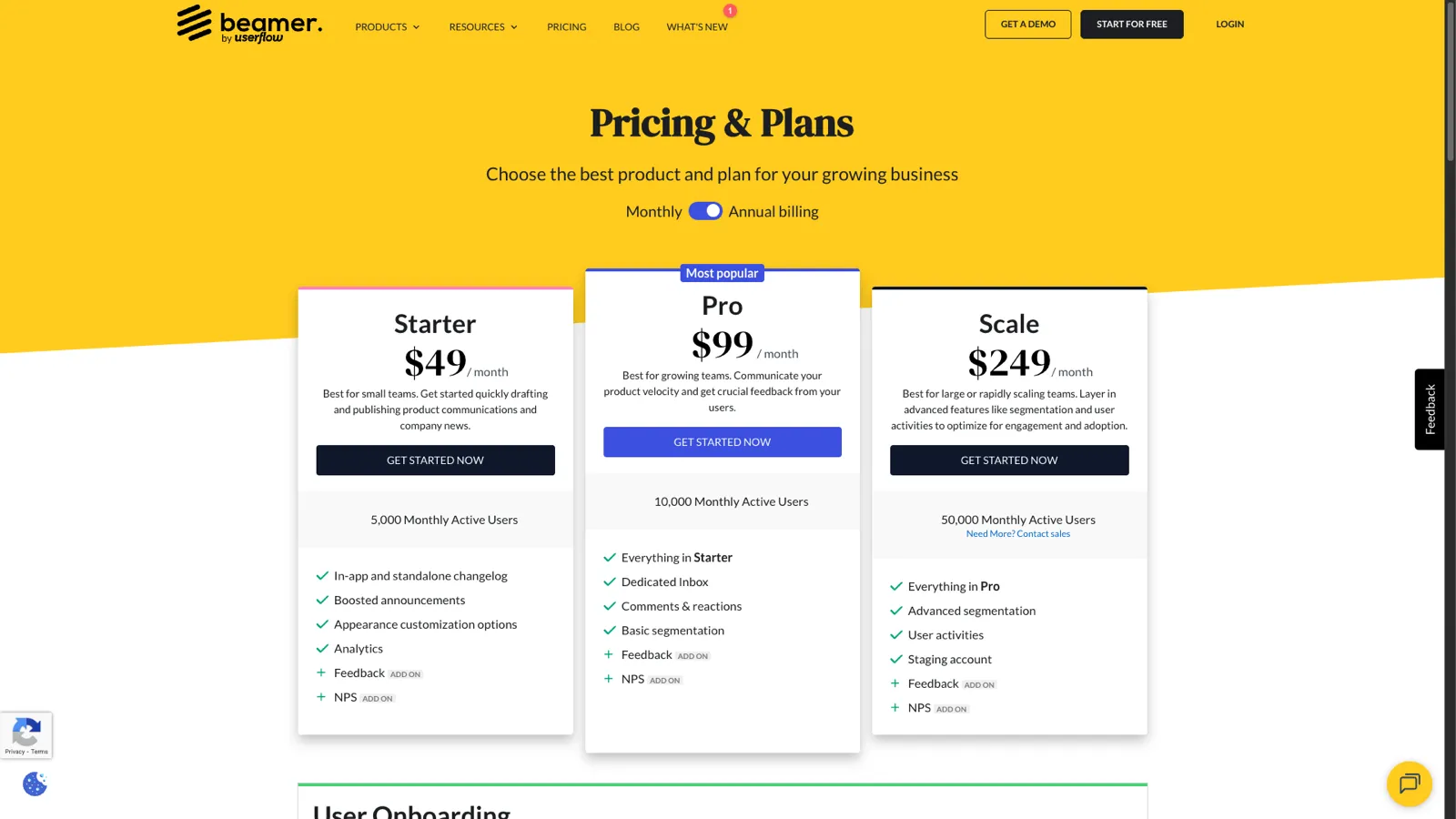
Beamer pricing starts at $49/mo (annual) for changelogs with MAU limits. Feedback is a paid add-on. Full 2026 pricing breakdown inside.
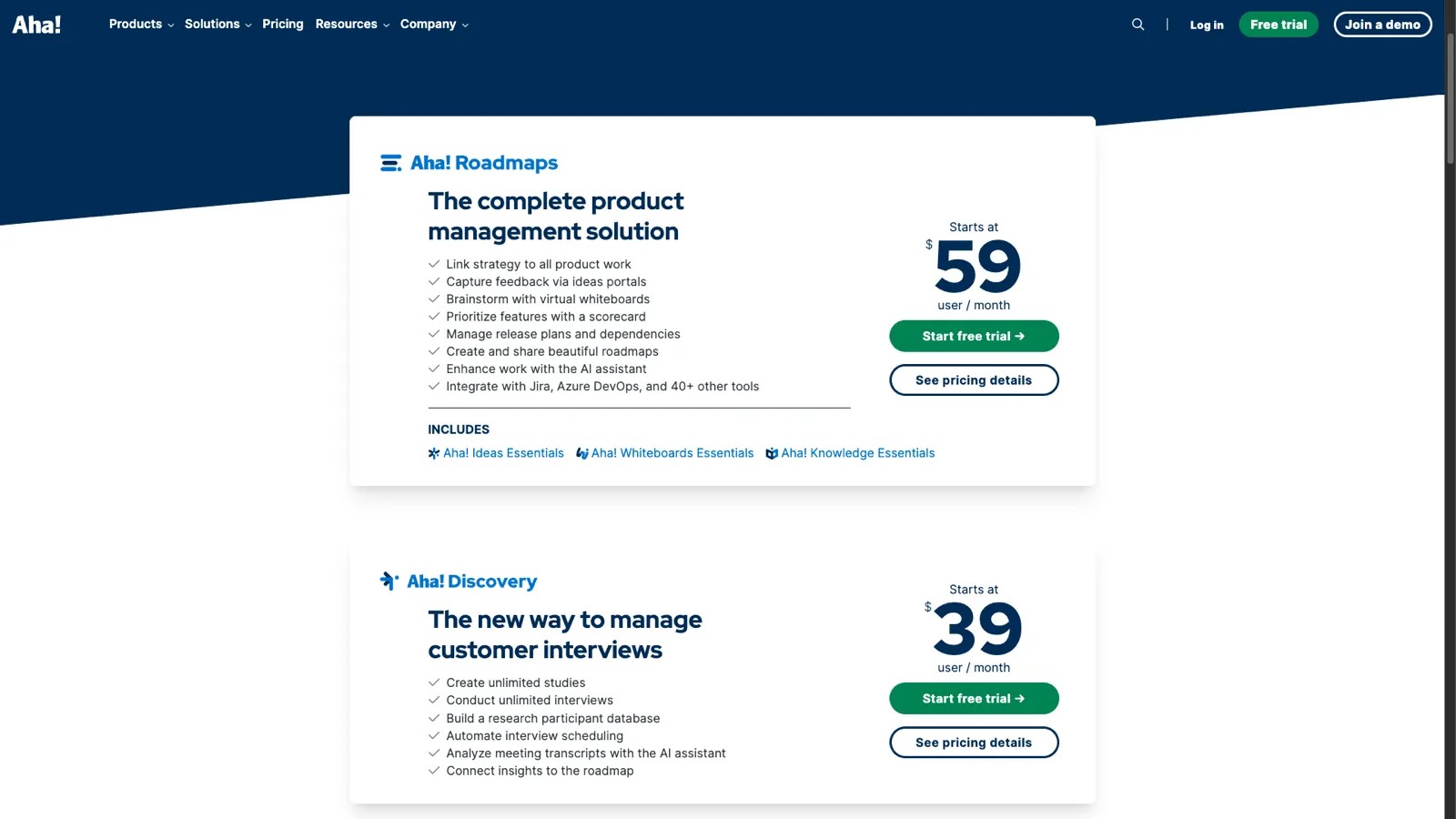
Aha! pricing starts at $39/user/month for Discovery and $59/user/month for Roadmaps (now includes Ideas Essentials). See the full 2026 cost breakdown, hidden fees, and how it compares.
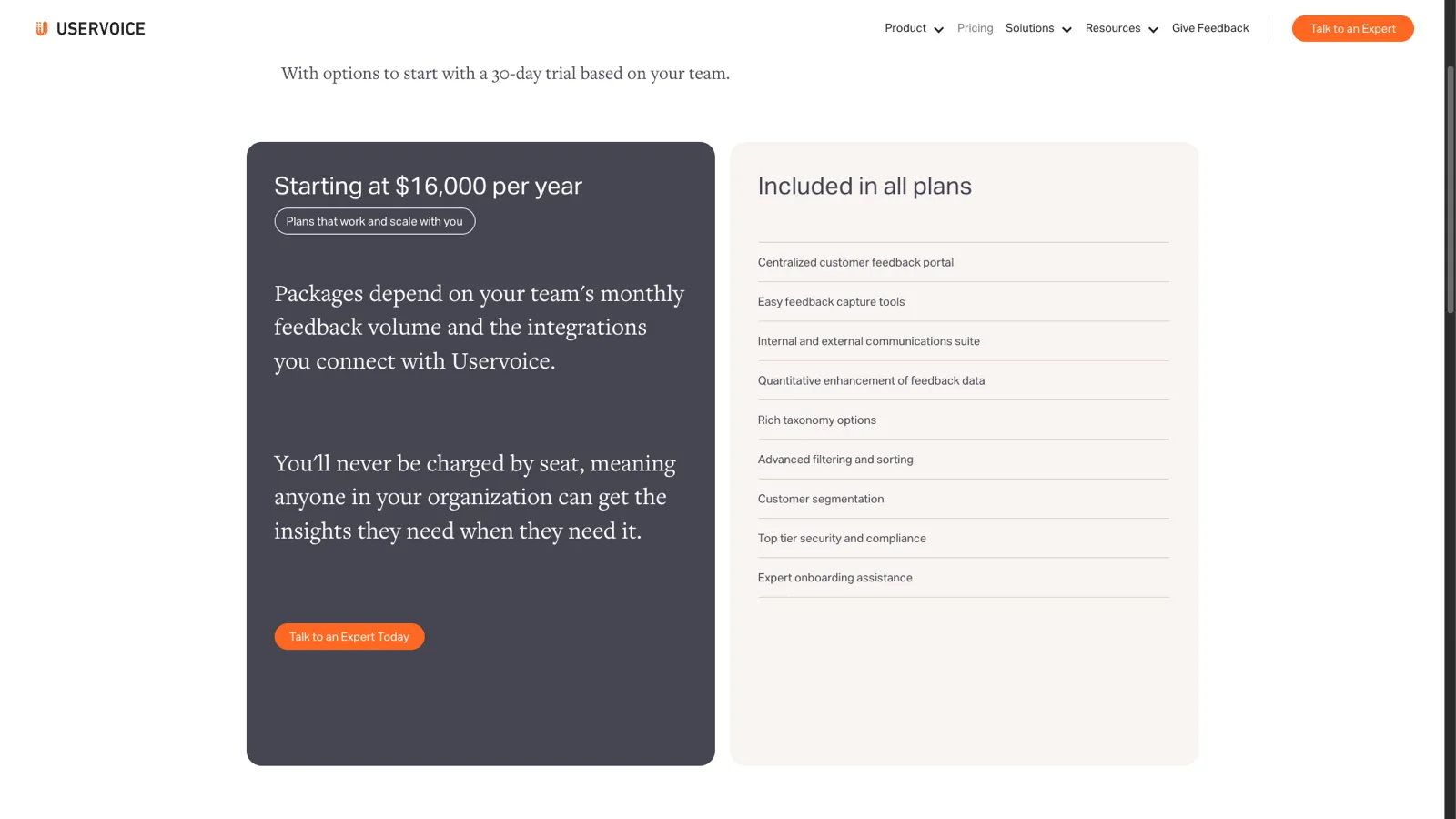
UserVoice pricing starts at $16,000/year (~$1,333/mo). No per-seat charges. 30-day trial available. See the full cost breakdown and affordable alternatives.
Productboard pricing starts free (Starter) with paid plans from $19 to custom Enterprise pricing. See real costs at 5, 10, and 20 makers, hidden upgrade traps, and how it compares.
Canny pricing starts free but jumps to $19-$79/mo with custom Business pricing. We break down every plan, hidden costs, and compare Canny vs ProductLift.
With bike energy  from Utrecht
KVK: 20145923 - BTW: NL001143413B86